
Best Video Cameras on a Budget That Actually Deliver
Budget video cameras have become incredibly powerful in the last couple of years. You can get mirrorless body that shoots 4k 60 with phase detection autofocus for what a mid-range camcorder cost five years ago. But "budget" means different things to different photographers and the best budget camera is dependant on what you're actually shooting. A YouTube creator has different needs than someone filming a short or covering live events.
So we looked at five cameras across different categories and price points all of which sit firmly in the budget territory. The Sony ZV-E10 II is our top pick overall but every camera on this list earns its spot for a specific use case. We used heavily on B&H user reviews to figure out what actually holds up on real shoots not just spec sheets.
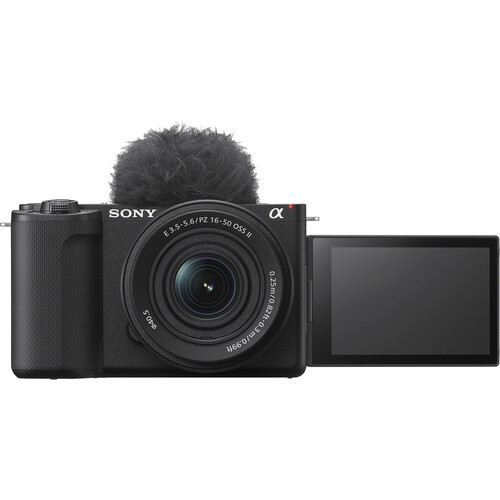
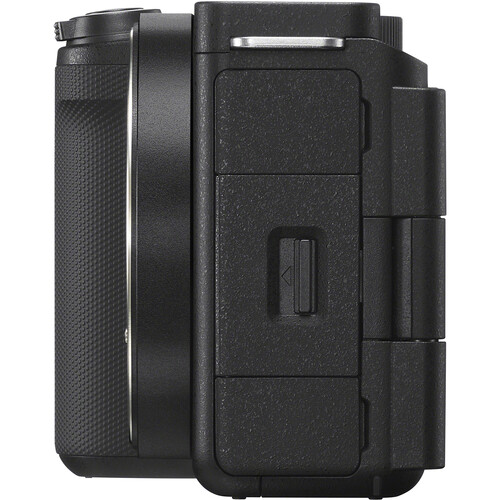
Sony ZV-E10 II: Best Overall Budget Video Camera
The ZV-E10 II is the camera Sony built specifically for content creators and it shows. You get a 26MP APS-C sensor that shoots UHD 4K at up to 60fps, 759-point hybrid phase detection AF and an articulating touchscreen that flips all the way around for self-shooting.
It runs on the same NP-FZ100 battery as Sony's higher-end bodies which means you're not constantly swapping cells mid-shoot. And the Sony E mount gives you access to a massive lens ecosystem from cheap vintage glass with adapters to Sony's own compact primes.
B&H reviewers consistently call this camera beginner-friendly and fast. One user noted the autofocus locks on and writes to the card extremely fast while several praise how lightweight and comfortable it is to carry around all day. The electronic stabilization works well enough for walk-and-talk vlogging though you'll want a gimbal or monopod for anything more demanding.
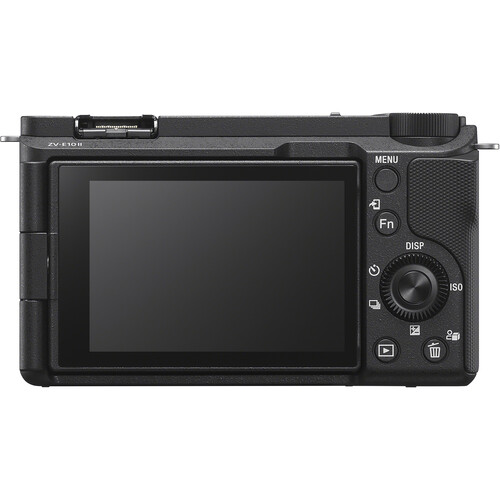
The Overheating Issue
Here's what you need to know. Some B&H reviewers report overheating during extended 4K recording particularly when connected to an external device via USB. One user described the camera shutting down after about 10 minutes of 4K timelapse then progressively shorter recording times each restart.
This is a real limitation if your workflow involves long continuous takes. For shorter clips, B-roll and typical YouTube segments of 10-15 minutes it's not usually a problem. But if you need to run for 30+ minutes straight in 4K keep reading because the Canon Vixia HF G70 handles that much better.
Who Should Buy It
The ZV-E10 II is the best all-around budget video camera for YouTube creators, vloggers and anyone who wants interchangeable lenses without spending serious cash. You can also compare prices on Amazon if B&H is out of stock.
Canon EOS R50: Best for Beginners Who Want Canon
If you're already in the Canon ecosystem or you just want something that's dead simple to pick up and use the Canon EOS R50 is worth a serious look. It packs a 24.2MP APS-C sensor, 4K video up to 30fps and Canon's Dual Pixel CMOS AF II system into a body that weighs practically nothing.
The RF mount is newer than the old EF system and Canon has been steadily building out the RF-S lens lineup with affordable options.
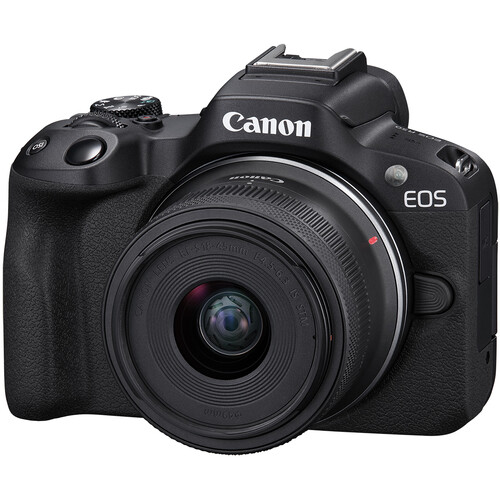
B&H reviewers are split on this one. Several users say it exceeded their expectations with fast, reliable performance and praise the shipping and overall package. But one reviewer called it "mediocre" and "slow", specifically pointing out the lack of command dials as a dealbreaker for manual control.
And that's a fair critique. The R50 leans heavily on auto mode and touchscreen controls. If you're the type of shooter who wants to ride the exposure dial during a take, this camera will frustrate you. But if you mostly let the camera handle exposure and focus while you concentrate on composition and content, it's a solid budget video camera that produces clean, color-accurate footage right out of the box.
Canon's color science has always been a strong point, and the R50 continues that tradition. Skin tones look natural without much grading, which is a big deal if you're shooting talking-head content and don't want to spend hours in DaVinci Resolve fixing your look. It's also available on Amazon with various kit configurations.
Canon Vixia HF G70: Best Budget Camcorder
Not everyone wants a mirrorless camera. And honestly, for certain types of shooting a dedicated camcorder still makes more sense. The Canon Vixia HF G70 is a UHD 4K camcorder with a built-in 20x optical zoom, optical image stabilization and dual SD card slots.
You pick it up hit record and it just works. No fiddling with lenses, no menu diving, no overheating shutdowns.
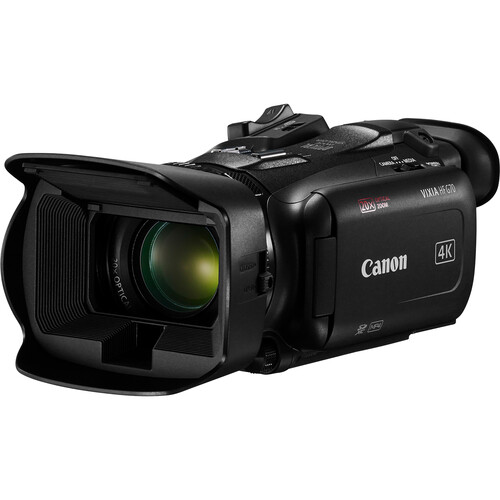
B&H reviewers who upgraded from older Canon camcorders love it. One user moved from a 13-year-old HF G20 and praised the updated features while noting it still supports 1080p at 60fps which is their preferred mode for smooth motion. The ergonomics get consistent praise too with users saying the camera fits comfortably in the hand for long shoots.
On the negative side reviewers point out there's no built-in storage (just the SD card slots) and one reviewer noted the camera can't be set to power on immediately when the LCD is opened which slows down quick-draw situations.
When a Camcorder Beats a Mirrorless
The G70 makes sense for event videographers, church recordings, school plays, youth sports and anywhere you need to record continuously for 30-60+ minutes without worrying about overheating. The 1/2.3" sensor is smaller than what you'll find in mirrorless cameras so low light performance isn't as strong and you won't get that shallow depth of field look.
But the built-in zoom and stabilization mean you can shoot a whole event without ever changing a lens. If you're covering sports video the optical zoom is a huge advantage over prime lenses on a mirrorless body.
Panasonic Lumix G100D: Best for Vlogging on a Budget
The Panasonic Lumix G100D is ideal for the one-man band. It is a pocketable camera that allows you to use multiple lenses. The Lumix G100D includes a 20.3 MP Micro Four Thirds sensor, records 4K at 30 frames per second, and includes Nokia's OZO spatial audio technology inside of the camera's three internal microphones.
The audio technology is truly ingenious. It can identify if the sound source is located in front of or behind the camera and adjust the recording based upon that identification. This results in quite good usable audio without needing to utilize an external microphone.
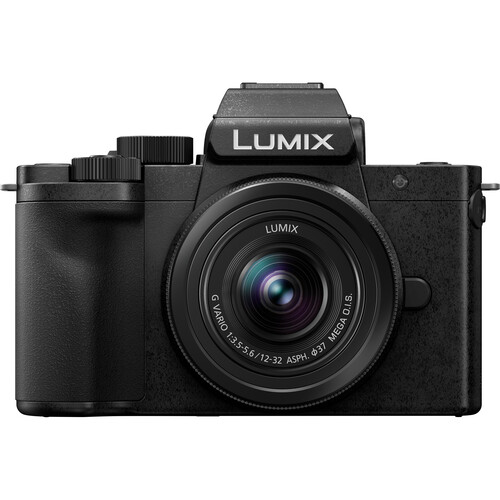
Micro Four Thirds is an incredibly flexible mounting platform. It has a wide array of compact, budget-friendly lenses available. The camera body is very small and lightweight. It is therefore easily portable and you can toss it into a bag for traveling or when using the camera for run-and-gun style filming.
The electronic stabilization does help with handheld filming. However, it does not do so as well as the stabilization systems offered by Sony or Canon. The video output is capped at 4:2:2 8-bit over HDMI. This is completely fine for YouTube and social media content. However, it does limit your grading headroom when compared to the 10-bit output offered by the ZV-E10 II.
If you're a video blogger who prioritizes portability and built-in audio over raw video specs the G100D makes a strong case. The Micro Four Thirds system also has some of the best budget zoom lenses available and the 2x crop factor gives you extra reach on telephoto glass.
DJI Osmo Action 4: Best Budget Action Camera
If you need something truly rugged and pocketable the DJI Osmo Action 4 brings a 1/1.3" CMOS sensor with an f/2.8 aperture and 155-degree field of view into a waterproof, shock-resistant package. It shoots 4K at up to 120fps and the electronic stabilization is genuinely impressive for an action camera.
You can mount it on a helmet, strap it to a drone or just hold it in your hand for walk-around B-roll.
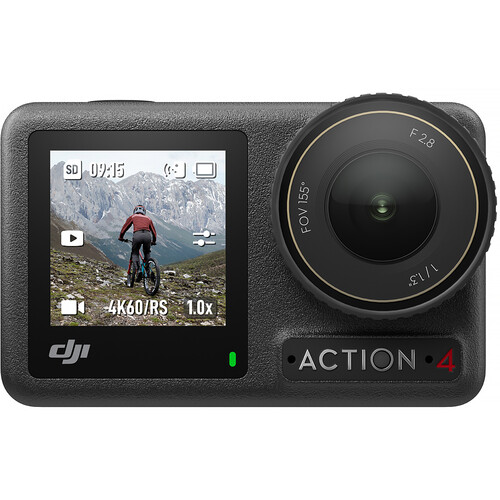
The larger sensor (compared to GoPro's 1/1.9" chip) means noticeably better low-light performance and the dual-screen design with both front and rear displays makes it easy to frame yourself for vlog-style content. It's also available on Amazon in various combo packages. The trade-off is that you're locked into a fixed ultra-wide lens which isn't ideal for everything. But for action footage, travel content and supplementary B-roll on a bigger production it's hard to beat at this price point.
Buying Tips and Frequently Asked Questions
The biggest mistake budget shooters make is buying for specs instead of workflow. A 4K60 mirrorless camera sounds great until you realize you need to record for 45 minutes continuously for a church service, and the camera will overheat after only 12 minutes. Consider what you really plan to shoot, how long your takes last, and how much time you want to spend in post.
If you go mirrorless, budget for another lens within the next few months. The best lenses for video don't have to be expensive, particularly on the Sony E and Micro Four Thirds mounts where third party options by Sigma and Viltrox are exceptional. And don't overlook good lighting either.
Both the Sony ZV-E10 II and Panasonic G100D have better-than-average built-in microphones but any of these cameras will benefit from an external mic. Bad audio kills a video faster than a soft image ever will.
What is the best budget video camera for YouTube?
The Sony ZV-E10 II is our top pick for YouTube. It was designed specifically for content creators with features like a product showcase mode, background defocus button and an articulating screen. B&H reviewers consistently praise its autofocus speed and beginner-friendly interface. You can check current pricing at B&H Photo.
Can I shoot a short film on a budget camera?
Absolutely. The Sony ZV-E10 II and Canon EOS R50 both shoot 4K with enough dynamic range and color depth to create cinematic-looking footage especially if you pair them with decent glass and proper lighting. Plenty of indie films have been shot on cameras with lesser specs. The limitation is usually the filmmaker not the camera.
Is a camcorder better than a mirrorless camera for video?
It depends on the shoot. Camcorders like the Canon Vixia HF G70 excel at long continuous recordings, have built-in optical zoom and require zero lens selection. Mirrorless cameras provide better image quality, shallower depth of field and interchangeable lenses.
Camcorders are more practical for event and run-and-gun style filming. Mirrorless cameras are better for controlled, short-form content.
Do I need 4K for YouTube videos?
You do not need 4K. However, it is helpful. When shooting 4K, you have the option to crop and reframe your footage in post-production while maintaining a clean 1080p output. Most of the cameras on this list shoot 4K and it's become a standard feature even at budget price points. That said, solid 1080p footage with good audio and lighting will always beat poorly lit 4K.
What accessories should I buy first for a budget video camera?
A good SD card (V30 or higher for 4K recording), a spare battery and an external microphone. Those three things will have the biggest impact on your shooting experience. After that, consider a basic tripod or monopod for stability and a simple LED panel for lighting.
How much should I spend on a budget video camera?
The cameras in this roundup range from action camera pricing on the DJI Osmo Action 4 up to mid-range mirrorless pricing on the Sony ZV-E10 II. You can find good options at B&H Photo across all price points. The sweet spot for most beginners is the kit lens bundle tier which gets you a capable body and a versatile zoom lens to start with.