
The Best Lens for Video: Sigma 18-35mm f/1.8 Art and Four Alternatives
A lens that's great for photos isn't always great for video. Video asks for things a stills shooter rarely notices: a fast aperture that stays the same as you zoom, focus that moves smoothly instead of hunting, and an aperture you can change in the middle of a shot without a click.
That's why one lens has stayed a favorite with video shooters for so long, even as cameras have changed around it. It isn't right for every body, though, and the best alternative depends on your mount and how wide you need to go.
Below is what makes a video lens different, why the Sigma 18-35 still wins, two wide alternatives and a compact prime.
The Sigma 18-35mm f/1.8 Art remains the champion for video because its f/1.8 aperture across a zoom is unheard of when used with a speed booster on MFT or natively on APS-C. You'll find the Tamron 17-35 is a budget-friendly wide zoom for Nikon, though it's not entirely sharp when you zoom in too far.
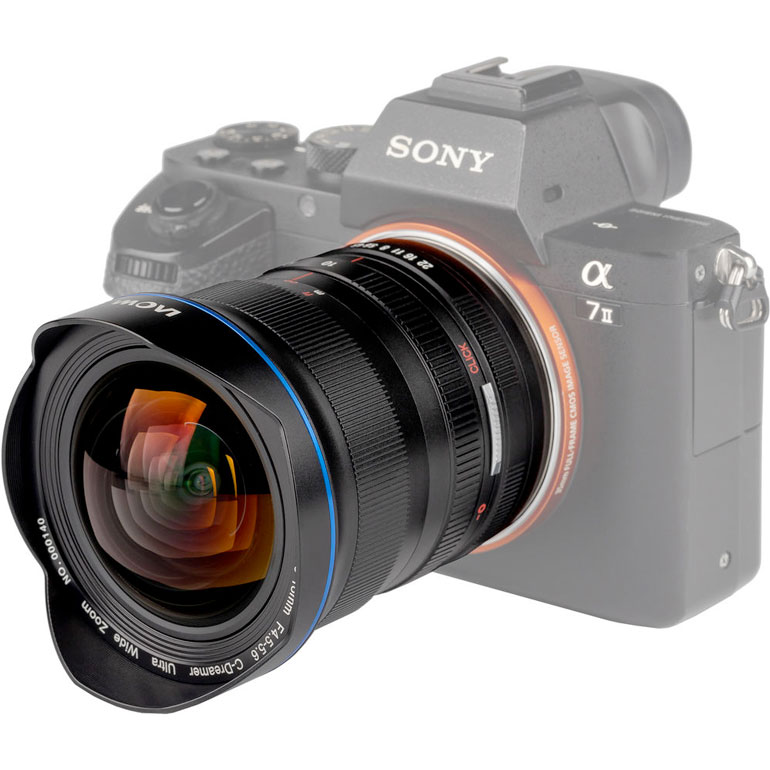
The Laowa 10-18 offers an ultra-wide view for Sony E with a de-clicked aperture, but the corners are disappointingly soft. The Sony FE 35mm f/1.8 is the compact prime path when the zoom stays home.
What Makes a Video Lens Different
A video lens keeps the light steady as you zoom, and the constant aperture is what stops exposure from jumping mid-shot - the difference between a cut that blends and one that flashes.
The Sigma 18-35 stays at f/1.8, so the background stays blurred while you move between focal lengths. Most zoom lenses lose light as they grow, which makes them hard to use in dark spots. This steady brightness ensures your footage looks professional, even if you change the frame quickly.
Focus breathing makes the frame widen or tighten as focus racks, and de-clicked aperture rings keep the audio track clean while you ride exposure. Venus Optics builds the Laowa 10-18mm line with a de-click switch on its aperture ring, so exposure rides silently while the camera records - a mechanical detail stills shooters never think to check.
A heavy lens can ruin a gimbal setup because it strains the motors, which means you have to consider the weight before you spend your hard money.
Stills spec sheets ignore how a lens behaves while moving, and focus pullers live in that gap - ring throw, breathing, and balance on the gimbal. A prime wins on raw sharpness per dollar, but reframing means moving your feet, and documentary shooting rarely allows that. You should pick gear that fits your rig, rather than just looking at the numbers on the box.
Sigma 18-35mm f/1.8 Art: The Winner Again
Sigma's own product page hosts the 18-35mm f/1.8 Art, and it stays at the top because the f/1.8 aperture spans the whole zoom range, which is something you can rarely find even when you look at prime lenses.
Most wide zooms shed a stop or more as they extend, but this glass keeps the f/1.8 opening across the range - the reason low-light interiors stay shootable without cranking ISO. It works like a prime for those who need to change frames without switching gear.
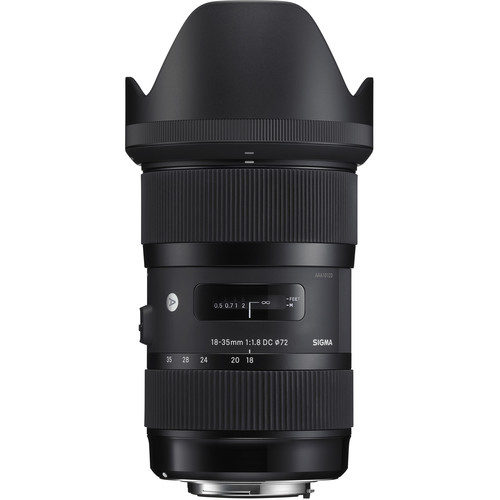
The verified pairing that keeps coming up is a Panasonic GH4, a Metabones Speed Booster and this Sigma - one owner calls it an awesome trifecta that has done everything they've asked of it, and it's the same lens family our a7III guide covers from the full-frame side.
The booster adapts the Canon EF mount onto Micro Four-Third bodies and concentrates the light, so the lens behaves closer to a 25mm f/1.2 equivalent. The added stop of light helps the camera find focus when things move, and that is the whole argument for the pairing.
On a full-frame body, or when you need a long focal end for tight landscapes, you should probably skip this lens.
The lens is for APS-C, so it won't give you the reach you want on a full rig. Force it onto full frame and the image circle either vignettes or the camera crops, which throws away resolution you paid for. It's better to spend money on a lens that fits your body without needing adapters.
Tamron 17-35mm and Laowa 10-18mm: Wide and Ultra-Wide Alternatives
The Tamron 17-35mm f/2.8-4 Di OSD carries a 4.2 rating across 59 buyers, and the standout verified line is a strong one: an owner says it 'blows away' his very expensive Nikon 17-35 f/2.8 'in corner sharpness' at similar or better center sharpness - a comparison that lands harder because the Nikon cost several times as much when new.
The caveats land in the middle of the range: the same owner notes optical sharpness falls off 'when zooming in just a tad' past the ends, so the sweet spots are 17mm and 35mm.
The quality-control story is the rougher one: one buyer shipped a unit that needed a firmware update before it would work at all through an FTZ adapter, a miss they call 'completely unacceptable.'
The Laowa 10-18mm f/4.5-5.6 for Sony E sits at 3.4 across just 18 ratings, and the complaints cluster where ultra-wide glass usually does: 'way too soft focus on the edges,' and corners that 'suffer at 10mm.'
What keeps it in the conversation is the price and the de-clicked aperture ring - a mechanical detail most budget ultra-wides skip. Accept softer corners and you get a true 10mm field of view on a full-frame Sony body for a fraction of the native alternatives.
Sony FE 35mm f/1.8: The Compact Prime Path
For a lens that stays light and sharp without the weight of a heavy zoom, this 35mm prime is a sharp option with fast focus.
Focus speed runs fast enough for run-and-gun framing, which matters when the camera moves and the subject moves independently. There's a caveat: one owner has found the build could be better next to the much more solid Zeiss 55mm, and has called it a bit overpriced while still rating it four stars.
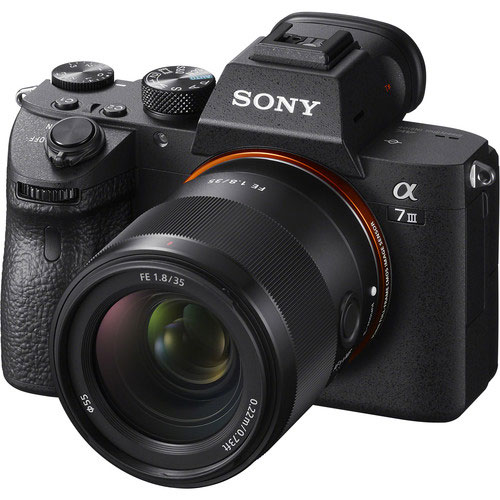
While the Sigma 18-35mm lets you be flexible, you might pick this prime if you value a compact setup that won't tire you out during long days of filming on the street. In dim indoor spaces the f/1.8 aperture pulls its weight, and the sharpness holds up on the timeline without heavy sharpening.
For creators whose whole rig is a body, one lens and a bag that fits under an airline seat, the 35mm f/1.8 is the whole kit - our camera pick for video pairs well with it.
Frequently Asked Questions
Can I use the Sigma 18-35mm on a full-frame camera?
Not natively - the 18-35mm is an APS-C DC design, so a full-frame body either crops or needs the framing planned around the smaller image circle. The speedbooster route goes the other direction, concentrating full-frame light onto smaller sensors.
Is the Sigma 18-35mm good for filmmaking?
Yes - the constant f/1.8 aperture, short zoom throw and sharp rendering are why it shows up in budget cinema rigs. Pair it with a variable ND - our ND filter guide covers the picks - because f/1.8 in daylight will force shutter-angle compromises otherwise.
Which cameras does the Sigma 18-35mm work best with?
Canon EF-mount bodies natively, Micro Four-Third through a Metabones Speed Booster (the verified 'awesome trifecta' pairing), and Nikon F via simple adapters - B&H's Sigma 18-35 listings show both mount variants with current pricing. Check the mount version before buying, because Canon EF and Nikon F ship as separate SKUs with different part numbers - third-party listings sometimes mix them up.
What filter size does the Sigma 18-35mm take?
72mm threads on the front element - the same family as many wide zooms, so one 72mm filter set covers both if your kit carries the Sigma and a second wide.