
ND Filters for Video: PolarPro, NiSi, Tiffen, Freewell and Tilta Compared
Shooting video outdoors runs into a basic problem: the shutter speed that gives natural motion lets in far too much light on a sunny day. Stopping down the lens or raising the shutter speed fixes the exposure but changes the look, which is why ND filters exist.
Which kind to buy is less obvious. Variable NDs are fast but can add color casts or a dark X at the strong end, fixed filters are cleaner but slower to swap, and magnetic and matte-box systems trade money for speed. The filter size you need and how many stops you'll actually use matter as much as the brand.
Below are the variable default, the color-accuracy case, a budget standard, a magnetic system and a matte-box option, plus the practical math on size, stops and stacking.
The PolarPro Peter McKinnon II stays the variable default, with its 2-5 stop limit flagged for f2.8 glass in direct sun. The NiSi True Color wins on color accuracy, the Tiffen is the budget standard with a three-neutral-stop ceiling, the Freewell magnetic system is the speed pick with a documented color cast, and the Tilta Mirage serves matte-box rigs.
PolarPro Peter McKinnon II: The Variable Default
The PolarPro Peter McKinnon II holds a 4.4 rating across 331 buyers, and the recurring 5-star line is 'this filter is the business' - with a second verified note that adjusting the stops is 'easy and does not get stuck'. That rotation feel matters more than spec sheets suggest, because a VND you can't set precisely mid-shot is a VND you stop using.
The honest catch sits in the range: one critical reviewer spells out that '2-5 stops is not suitable for f2.8 lenses in mornings and noon (direct sunlight)' and adds that 'this info is never mentioned in almost all reviews.'
One reviewer adds that the glass 'scratches very easy' and picked up minor scuffs from normal handling. Buy it for the twist feel and the color, and respect the ceiling - or pair it with a stronger fixed ND for bright-climate work.
NiSi True Color and the Color-Accuracy Case
Log grading pipelines live or die on neutral capture, and the NiSi True Color VND keeps tones natural while the light level swings. That is the reason it earns a place on gimbal and documentary kits, where matching a hundred clips by hand is not a schedule anyone can hold.
The glass spans 1 to 5 stops of density (0.3 to 1.5 optical), which covers most outdoor exposure swings. You won't see the tint that cheaper variable filters throw across bright scenes, which saves a color-matching pass in the edit on every clip the filter touches.
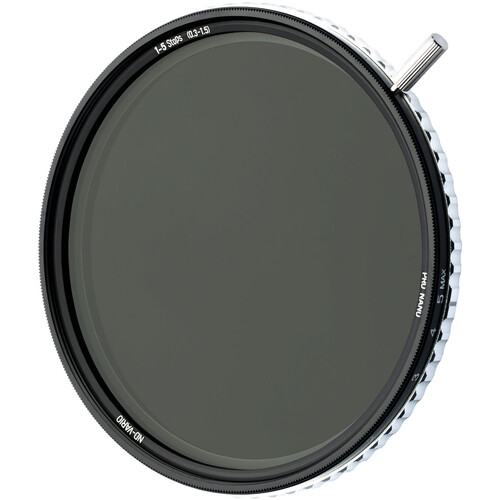
The markings run one to five stops (0.3 to 1.5 density), so exposure adjustments happen fast without the color shifting under them - which matters most when the footage feeds a log grading pipeline. You'll find that the white balance stays true, even when you move the dial across the full span. What you frame is what the timeline receives - no cast to correct.
Tiffen: The Budget Standard
For a variable ND that won't break the bank, the Tiffen is the budget standard, and it carries the biggest owner sample of any filter here. This filter carries a 4.5 rating across 1,922 buyers - the deepest sample in this guide - which makes the complaint pattern below statistically meaningful rather than anecdotal.
The glass is thick, and it lacks the protective front element that pricier filters include. No hard stops means the ring spins past the useful range and into the X-pattern zone, so dialing by feel takes practice.
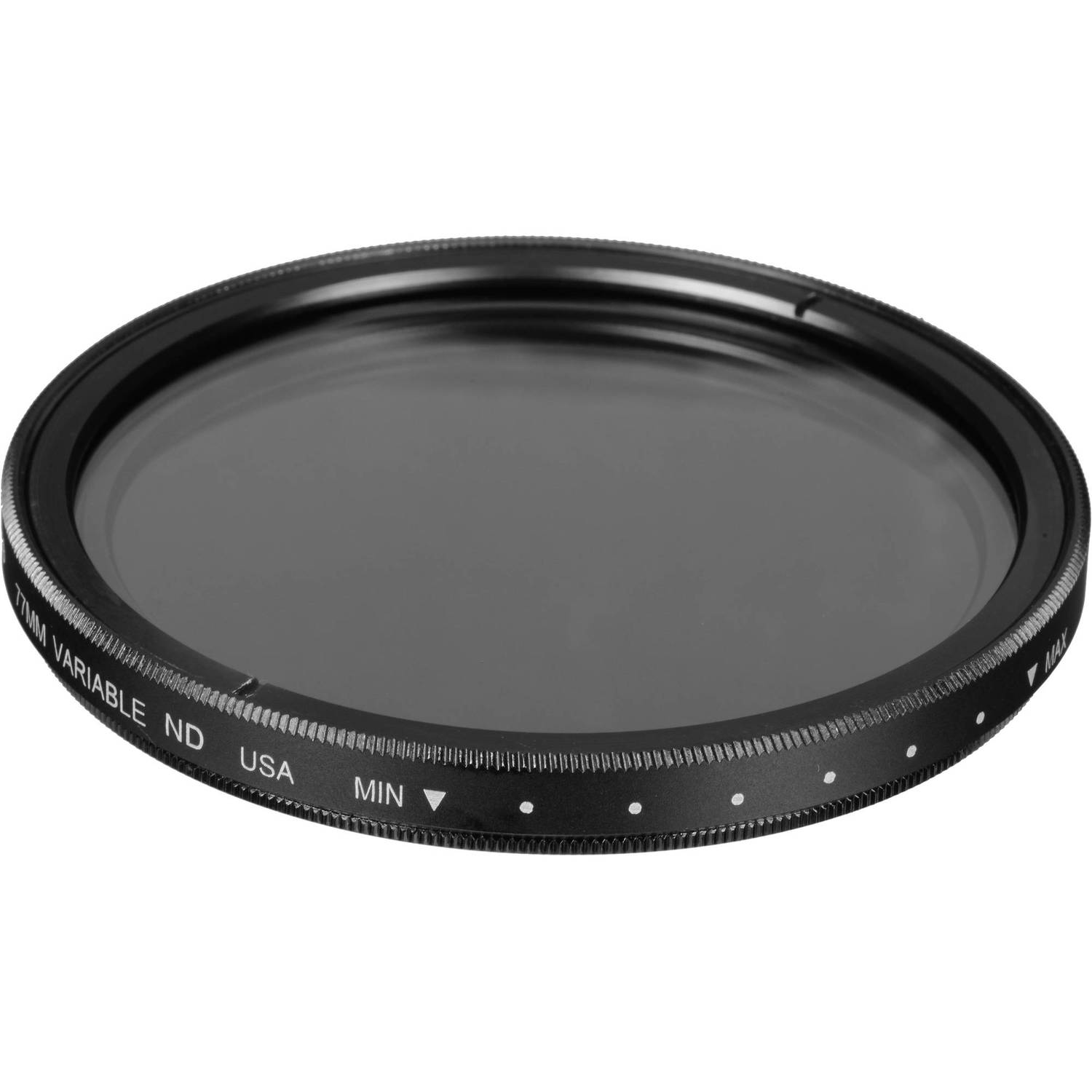
One owner has noted that only the first three stops stay neutral, which breaks exactly when you need the most darkening - bright light. Once you go past those three stops, the colors might shift in ways that are hard to fix later in edit. The shift makes shot-to-shot consistency tricky across a single scene, because the glass only stays neutral through its first third of travel.
The low price explains the popularity, but the three-neutral-stop ceiling means high-contrast midday scenes push the glass past its honest range. Pair it with one of the low cost video cameras and the total spend stays friendly. Expect a grading pass on anything shot past the third stop - the ceiling is part of what the discount buys.
For run-and-gun family footage it does the job, and for color-critical work the ceiling shows.
Freewell Magnetic and the Tilta Mirage
The Freewell magnetic system earns its speed honestly: the filters snap on and off in a second, which is the difference between grabbing the shot and missing it during run-and-gun work where screw threads cost seconds. However, one buyer documented a strong yellow cast that resisted color correction, which turns the speed advantage into a grading tax on every clip that passes through the glass.
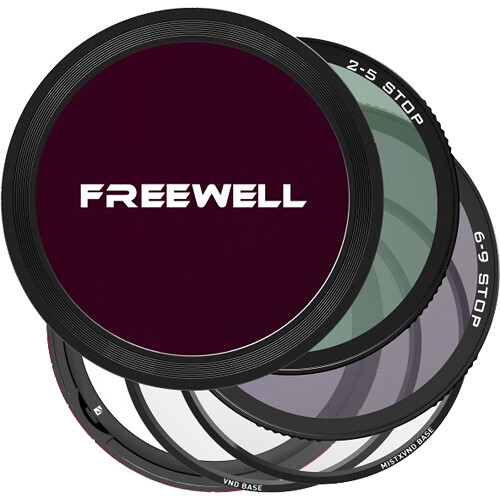
The magnetic FX filters are physically smaller than the VND's front element, which one owner has called an oversight that severely cripples the system, because stacking the kit's own filters isn't possible, and third-party magnetic filters rarely match the thread either. An owner has also found the filter comes out when removing the cap, so the magnet strength has a ceiling too.
On higher-end sets the Tilta Mirage changes the workflow structurally - one owner paired it with Sony lenses and a RED Komodo and called it a transformation for ND management, because the matte box holds the VND plus stacked filters without re-threading anything.
Yet, a studio test showed that the VND has a terrible green color cast at all stops, which is a big flaw. A green cast at every stop is disqualifying for color-critical work - buy the Mirage matte box for its build, not its VND.
Both systems buy speed with a color bill attached: the yellow cast on the Freewell, the green cast on the Tilta VND. Pay the grading tax knowingly or pick one of the screw-thread filters above.
The Buying Reality: Size, Stops and Stacking
Measure the lens thread before anything else - 77mm and 82mm cover most video glass, and step-up rings let one filter serve several lenses at the cost of extra front weight. For pocket rigs, the Freewell filters built for the Osmo Pocket take a different approach entirely.
Frequently Asked Questions
Should I get a variable or fixed ND filter?
Variable filters buy speed for run-and-gun work, and fixed filters buy the cleanest possible image - one filter per stop, threaded in pairs, with zero polarization crossover risk.
Why does an X-pattern appear on my footage?
Two polarizing layers crossing is the physics behind every variable ND - push the ring past its maximum and the layers approach full crossover, which prints the X-pattern across the frame. The dark cross-shaped shading ruins the take, and no amount of grading pulls it back cleanly.
How much density do I need for outdoor shooting?
You often need six stops of density when using wide apertures in bright sunlight - the same trade-offs our budget variable ND guide covers from the cheaper end of the market. One PolarPro owner's complaint doubles as buying advice: two to five stops leaves an f2.8 lens overexposed in direct noon sun, so plan a 6-9 stop option or a strong fixed ND for bright-climate work.
Is an expensive ND filter worth the money?
Cheap variable filters shift color as the ring turns, and the premium options hold neutrality across the range - the price gap is mostly a color-purity gap. Note that the Tiffen model only stays neutral for the first three stops of adjustment in many cases.
Can I use a matte box on a gimbal?
Weight decides gimbal stability, and the Tilta Mirage stays compact enough to keep the motors honest - a heavy matte box turns balanced motors into struggling ones halfway through a long take.