
Best Lenses for Wedding Video: 5 Picks for the Big Day
Wedding video is perhaps the most demanding type of shooting. There's no second take on vows, only one first dance, and endless lighting transitions, from a dim church to a bright outdoor reception to a dimly lit dance floor, all of which require a lens that can adapt quickly without compromising performance.
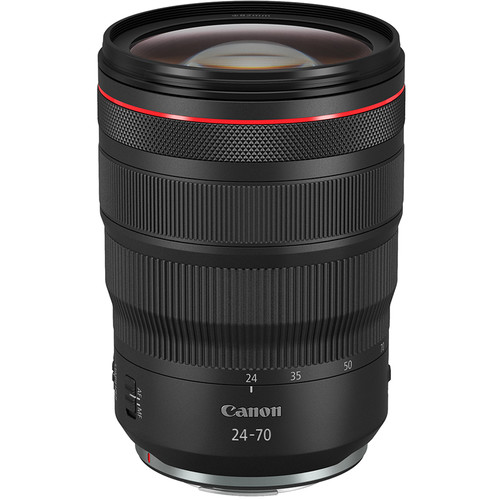
Your lens choice on a wedding day may result in missed opportunities, but it could also result in missed moments that cannot be reshot. After researching what actual working wedding videographers are carrying and sifting through over 300 B&H user reviews, the Canon RF 24-70mm f/2.8 L IS USM is clearly the single best lens for wedding video shooting on Canon RF.
It provides the focal length you need most often, has a fast-enough focus speed to handle those unplanned moments, and the built-in image stabilization actually helps with hand-holding for eight hours. While it isn't the only good lens for wedding videography, this article will cover the top five lenses (across multiple mounts and focal lengths) that wedding videographers trust.
Why 24-70mm Dominates Wedding Video
There is a reason why virtually every serious wedding videographer owns some version of a 24-70mm f/2.8. The 24-70mm focal length range captures approximately 80% of what you need to capture on a wedding day. At 24mm, you're able to capture the full venue, wide establishing shots of the ceremony space and large group moments that you need to fit many subjects into the frame.
When you zoom to 70mm, you're able to pull in tight on the ring exchange, tears of joy, and other details such as table settings and flowers, without being intrusive on the subject.
You need f/2.8 for wedding work. Churches are dark. Reception halls are even darker. And when the DJ reduces the light for the first dance, you'll appreciate having a lens that is capable of capturing images at f/2.8 instead of f/4 or f/5.6.
At f/2.8, you have enough light to maintain a reasonable ISO while still achieving a shallow depth of field separation that allows wedding footage to appear professional instead of documentary.
AF Speed Under Pressure
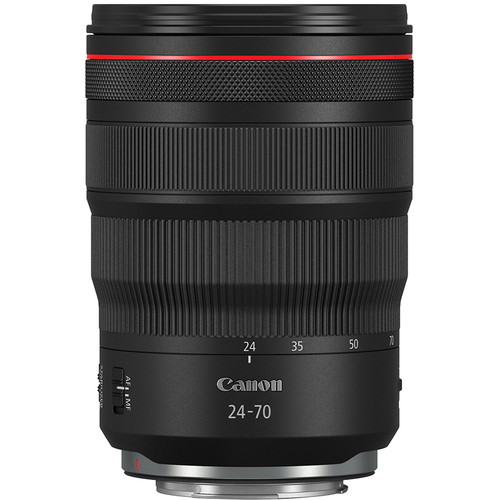
Canon's RF 24-70mm f/2.8 truly delivers here. Canon's Nano USM autofocus system is both quick and quiet, which matters greatly when you're three feet away from the couple during the ceremony. B&H reviewers continually mention how fast and accurate this lens locks onto focus, regardless of whether you're in low-contrast lighting conditions or high-contrast.
In fact, one reviewer mentioned that the combined IS and IBIS system provided by pairing this lens with the R6 series of cameras make handheld shooting for extended periods of time (e.g., a full wedding event day) reliable.
In regards to wedding video specifically, you need a lens that won't hunt (i.e., a focus motor that hesitates or continuously racks back and forth). A focus motor that hunts during the vows will be the quickest way to ruin irreplaceable footage. The Nano USM system is one of the most quiet and confident autofocus systems available, and it seamlessly transitions from wide to tight throughout your video recordings.
The Top Five Best Lenses for Wedding Video
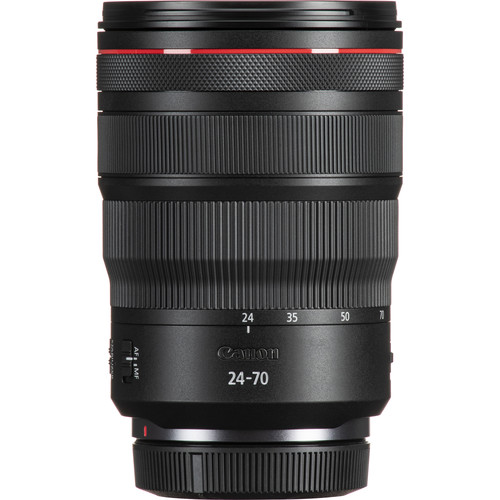
1. Canon RF 24-70mm f/2.8 L IS USM
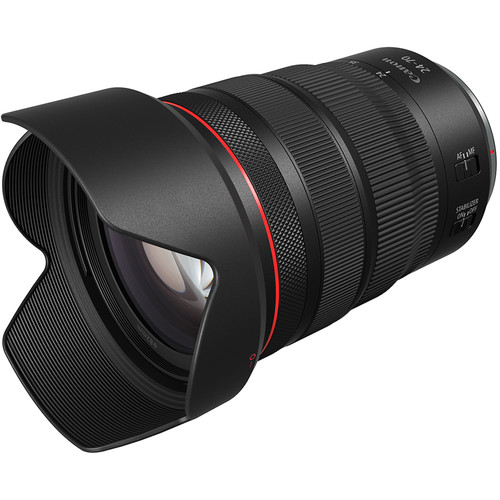
This is the workhorse. It is a full-frame, constant f/2.8 lens with 5 stops of optical image stabilization and weather-sealing, providing the confidence needed to shoot outdoor weddings. The Canon RF 24-70mm at B&H is not inexpensive, but for Canon RF shooters who are shooting professionally for weddings, it's difficult to think of another lens to use as your primary lens.
The Canon RF 24-70mm features three aspherical elements and three ultra-low dispersion elements to minimize chromatic aberrations at wide apertures. Additionally, the Air Sphere Coating minimizes flare, particularly when shooting against backlighting through windows during the ceremony.
B&H reviewers have reported excellent sharpness across the entire zoom range, and the customizable Control Ring on the front of the lens provides a great option to add a tactile feel to adjusting exposures while recording.
While it weighs in at 900 grams, it's certainly not excessively heavy, and it's not unreasonably heavy for a full-day of shooting. The 82mm filter thread is slightly larger than average if you prefer to standardize filter sizes across your gear.
2. Tamron 35-150mm f/2-2.8 Di III VXD
If you're interested in a single lens that can cover nearly everything you need to capture on a wedding day, the Tamron 35-150mm f/2-2.8 is probably the closest to a single-lens wedding kit. The range from 35mm wide to 150mm telephoto allows you to capture the ceremony from the back of the church, and get tight close-ups without having to swap lenses.
The f/2 aperture at the wide end is a full-stop faster than the Canon, which is important for shooting in low-light areas.
However, there is a trade-off for the additional capabilities of the Tamron 35-150mm. It is significantly heavier than the Canon 24-70mm. Also, the wide end is limited to 35mm, which might be too narrow for smaller interior venues and very wide-angle shots. Check Tamron 35-150mm pricing at B&H. Available for Sony E-mount and Nikon Z, it would likely be a solid option if you were in either ecosystem.
3. Sony FE 24-70mm f/2.8 GM II
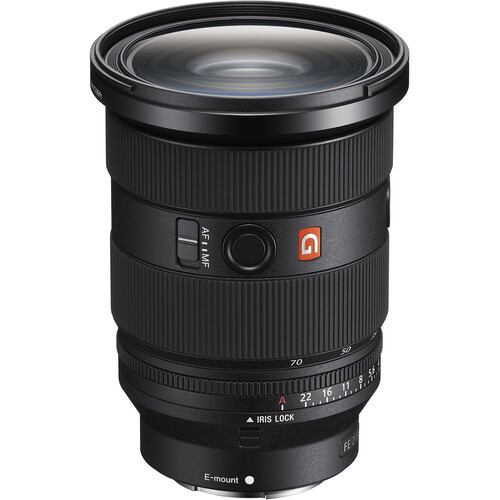
Sony shooters receive their version of the workhorse zoom with the GM II. The GM II is significantly lighter than the original GM at approximately 695 grams, which is a noticeable difference when shooting for an entire day.
Sony's newest camera firmware allows the autofocus on the GM II to perform extremely well, and the optical quality is comparable to, if not better than, the Canon in virtually all real-world applications.
See the Sony 24-70mm GM II at B&H. If you're shooting on an A7 IV, FX3, or A7S III for wedding video, this is the go-to recommendation.
Sony's Eye AF for video is among the best tracking systems currently available, and when paired with this lens, the two create a formidable combination that can track fast action at receptions with confidence. It's also available on Amazon if you want to compare pricing.
4. Sigma 24-70mm f/2.8 DG DN Art
The Sigma Art series has earned a reputation for delivering optical quality that competes with first-party glass at a lower price. The 24-70mm f/2.8 DG DN Art is available for both Sony E-mount and L-mount, and it's a legitimate alternative to the Sony GM II or the Panasonic equivalent.
The autofocus isn't quite as fast as the native Sony option, but it's close enough that most wedding videographers won't notice the difference in practice. Where the Sigma really stands out is value. It costs meaningfully less than the first-party alternatives while delivering comparable image quality. For videographers who are building a kit on a budget but don't want to compromise on optical quality, this is the move.
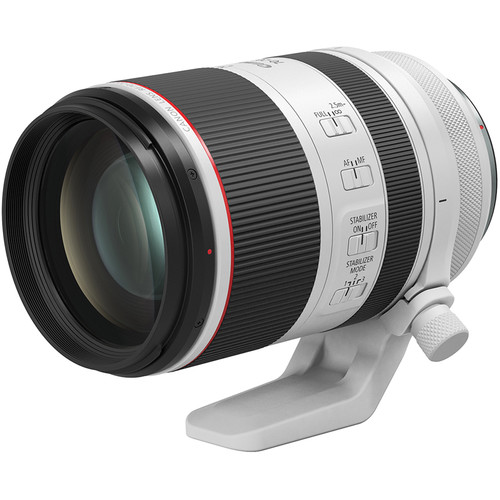
5. Canon RF 70-200mm f/2.8 L IS USM
Every wedding videographer needs a telephoto option, and the 70-200mm f/2.8 is the standard. This lens covers the ceremony shots where you can't physically be close to the couple, the candid reception moments from across the room, and the compressed background look that gives wedding footage that cinematic feel.
The Canon RF version is internal zoom, meaning the barrel doesn't extend when you zoom. That matters for gimbal work and overall balance. The IS system provides up to 5 stops of stabilization and the Dual Nano USM autofocus keeps up with dancing and movement during receptions.
See Canon RF 70-200mm at B&H. It pairs naturally with the 24-70mm for a two-lens wedding kit that covers almost every situation you'll encounter. Also compare prices on Amazon for this lens.
Quick Comparison
| Lens | Mount | Focal Length | Max Aperture | IS | Weight | Best For |
|---|---|---|---|---|---|---|
| Canon RF 24-70mm f/2.8 L IS | Canon RF | 24-70mm | f/2.8 | Yes (5-stop) | 900g | All-day workhorse |
| Tamron 35-150mm f/2-2.8 Di III VXD | Sony E / Nikon Z | 35-150mm | f/2-2.8 | No | 1,165g | Single-lens coverage |
| Sony FE 24-70mm f/2.8 GM II | Sony E | 24-70mm | f/2.8 | No | 695g | Lightweight Sony option |
| Sigma 24-70mm f/2.8 DG DN Art | Sony E / L-mount | 24-70mm | f/2.8 | No | 835g | Budget-friendly quality |
| Canon RF 70-200mm f/2.8 L IS | Canon RF | 70-200mm | f/2.8 | Yes (5-stop) | 1,070g | Ceremony, candids |
Building Your Wedding Video Lens Kit
Most working wedding videographers have two cameras and two to three lenses. Most commonly, they will shoot a 24-70mm f/2.8 on one camera and a 70-200mm f/2.8 on the second camera. With these two lenses, they can cover about 95% of the entire wedding day.
Many videographers choose to add a fast prime (such as a 35mm f/1.4 or 85mm f/1.8) for specific shots where they need extreme low light capabilities or a shallow depth of field look.
If you are new to wedding videography and only able to purchase one lens, get the 24-70mm f/2.8 in whatever mount you are shooting. While this may not cover every shot you need to take, it will provide you the widest range of focal lengths that you can capture the majority of the wedding day. You can then add a telephoto lens as your business grows. Check our best lens for video guide for more general recommendations across different shooting styles, and the best Canon lens for video guide if you're specifically in the Canon ecosystem.
Stabilization Matters More Than You Think
Wedding video is primarily shot handheld or on a small gimbal. As such, you will be constantly moving to follow the bride and groom, to position yourself during the speeches and to become invisible while capturing the action.
While your arms will tire and your footage will begin to show signs of shaking over the course of an 8 hour wedding day, the built-in stabilization in your lenses and camera body will help to catch the minute movements and fatigue related shakes that will ultimately ruin the footage.
While you will be utilizing a gimbal for some of the ceremony and reception coverage, the weight of the lenses will still play a role in the longevity of the gimbal. Take a look at our gimbal guide for options that balance well with the heavier zoom lenses typically used in wedding work.
What B&H Reviewers Say About Wedding Shooting
Reviewers of the Canon RF 24-70mm f/2.8 L IS USM purchased for wedding and event work were extremely satisfied with the performance of the lens. Many reviewers mentioned the excellent sharpness throughout the zoom range and the reliability of the autofocus system.
In fact, one reviewer stated that the combination of this lens with IBIS created a "handholding image capturing beast" that is perfect for the demands of shooting all day without a tripod.
Many reviewers praised the customizable Control Ring located on the front of the lens that enables quick exposure adjustments without needing to reach for the camera body dials. This feature is very beneficial during wedding ceremonies where slight exposure adjustments are required based upon the location of the bride and groom within the venue.
The two major complaints reviewers had about the lens were its weight (900g) and the 82mm filter size (which is larger than many other lenses). After shooting for 8 hours, the weight becomes a factor.
Several reviewers noted that they needed to purchase additional filters due to the 82mm filter size if they were going to use NDs or polarizers. For the body to pair with these lenses, check our mirrorless camera for filmmaking breakdown, which covers the Canon R6 Mark II that most of these reviewers are using.
Frequently Asked Questions
What is the most ideal focal length for wedding video?
A 24-70mm range will cover approximately 80% of a normal wedding day. It will allow you to capture wide venue shots at 24mm, medium shots of the bride and groom at 50mm and tight detail shots at 70mm. If you can only afford one lens for weddings, a 24-70mm f/2.8 is the most recommended lens from working professionals in each camera system.
Do I need f/2.8 or can I use an f/4 zoom for weddings?
You need a f/2.8. Venues are typically darker than you anticipate for weddings, especially churches, reception halls and evening outdoor events. Using a zoom at f/4 will require you to push your ISO levels higher to compensate, which will degrade the image quality.
The Canon RF 24-70mm f/2.8 delivers that f/2.8 with optical IS, which helps keep your footage stable in low-light situations. Additionally, the f/2.8 aperture will allow you to separate the subject from the background, which is a key component of making wedding video appear polished versus flat.
Primes or zooms, which is better for wedding video?
For wedding video, zooms are better. Having the ability to reframe without switching lenses is essential when moments occur quickly and you cannot ask the bride and groom to stop. While primes will offer superior low-light capabilities and bokeh, the amount of time spent switching lenses will be lost as you miss potential shots. Most working professionals utilize a zoom as their primary lens and will occasionally use a fast prime as a specialty lens for certain moments (i.e., the first dance).
What is the best two-lens wedding video kit?
The best two-lens wedding video kit is a 24-70mm f/2.8 on one body and a 70-200mm f/2.8 on another body. This combination will cover nearly every scenario, from wide ceremony shots to tight telephoto candids from across the room. You can find both the 24-70mm and 70-200mm options at B&H to build this kit.
Is image stabilization important for wedding video?
Yes, image stabilization is important for wedding video. Wedding video is primarily shot handheld or on a gimbal, and you will be shooting for 8-12 hours. The optical image stabilization in the lens, combined with the camera body's IBIS, will catch the minute movements and fatigue-related shake that will accumulate over a long day. Even if you are using a gimbal, having IS as a back-up will help to smooth out the footage. Check our best on-camera monitor guide too, since a good monitor helps you confirm your stabilization is working during the shoot.
Can I use vintage or manual lenses for wedding video?
Yes, you can use vintage or manual lenses for wedding video, however, there is a risk involved in using them for commercial wedding work. When using manual focus, you will need to pull focus manually during the ceremony, which will require a high level of skill and concentration.
Modern autofocus systems (like Canon's Dual Pixel and Sony's Eye AF) are reliable enough that manual focus is now a creative decision rather than a necessity for wedding work where you cannot re-shoot the moment. For wedding work, where you cannot re-shoot moments, the reliability of autofocus on a lens like the Canon RF 24-70mm is worth the investment.