
Mirrorless Camera for Filmmaking: Why the Canon R6 Mark II Leads
Mirrorless cameras have become the default for a lot of independent filmmaking, and for good reason: they record high-quality video straight to the card, focus reliably on faces, and keep handheld shots steady in a body you can carry all day.
The hard part is that most of them claim the same features. What separates a camera that's great for film from one that's merely good at video is the detail: internal 10-bit recording, a log profile that grades well, autofocus you trust, stabilization and two card slots.
Below is the camera that hits that balance, how the log profiles compare, and what now separates mirrorless from DSLR.
The Canon EOS R6 Mark II lets filmmakers disappear into their creative workflow because it captures 4K60p 10-bit video internally alongside Dual Pixel AF II, real IBIS, and C-Log 3 without needing any external recorder.
You won't have to worry about bulky hardware since the internal tools handle the heavy lifting for you while you shoot. This body lets you focus on the story: the autofocus stays locked, and the stabilization keeps footage steady while you move.
Canon EOS R6 Mark II: The Sweet Spot
The spec sheet is the argument: 4K 60p 10-bit recorded internally, Dual Pixel CMOS AF II covering the frame with 1,053 phase-detection points and subject tracking, five-axis IBIS in the body, and C-Log 3 for grading. Dual card slots keep a shoot alive when one fails. DPReview's R6 Mark II analysis documents the full list - the 24.2-megapixel full-frame sensor, the 40fps electronic shutter, and the 6K oversampled 4K.
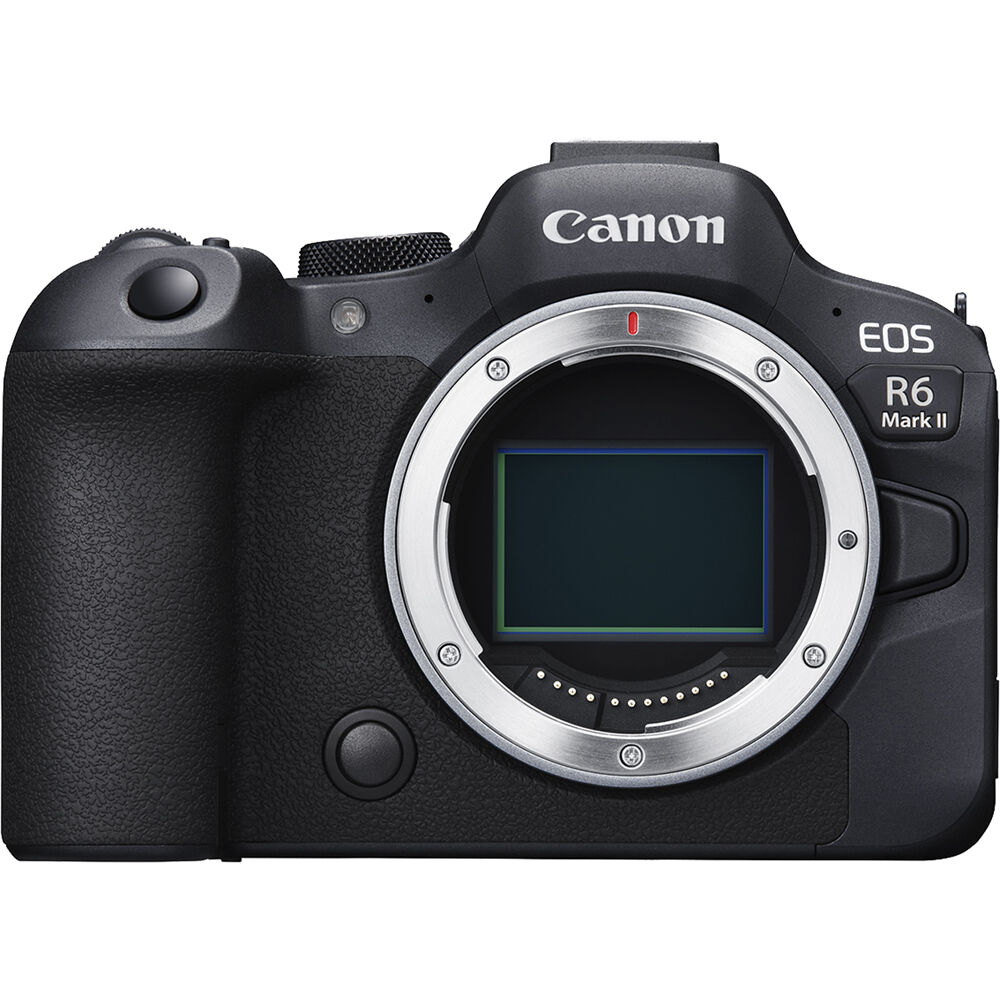
Nothing about that list needs an external recorder, which is the practical difference between a body that travels in one bag and a rig that needs a table. For a solo shooter, that is the whole decision - and it is why the body keeps appearing in one-bag kits where a cinema rig would need a van.
Log Gamma: C-Log 3, S-Log 3, V-Log
Using a flat profile like C-Log 3 on this camera keeps detail in the brightest highlights and deepest shadows, which is vital when grading later - the single habit that separates footage that grades from footage that breaks. The Cambridge in Colour log guide explains why the flat image matters before you ever press record.
You won't watch this footage straight - the image looks grey and washed out on screen by design, and the unfamiliarity is why beginners abandon it. The ones who push through never go back.
The difference shows up the first time you push an exposure a full stop in post: 8-bit steps, 10-bit slides. That gap is why the internal recorder matters more than any single spec. Ten-bit files hold the color data, so grading has room to move - fixing lighting mistakes without the banding that 8-bit produces.
While the R6 II offers strong 10-bit depth, some shooters look toward the a7S III for its dual-native ISO when the job is extreme dynamic range in low light - the trade is paying more for a body that does less stills work. C-Log 3 provides a solid range for filmmakers who want the professional look without a colorist on call.
Harsh sun is exactly where it earns its keep - the profile holds the sky against faces and leaves the shadow side of a building recoverable. Outdoor interviews without control over the sun are the case that pays for the camera. You'll find that shadow detail stays clean even when you push the exposure a bit.
Skip the flat profiles and you will clip highlights or lose shadows you cannot bring back. The exposure triangle guide covers the aperture-shutter-ISO half of the same lesson - get the capture right and grading becomes taste instead of rescue.
Ten-bit internal recording means colors survive grading without breaking. Start with log and the final film looks the way you intended - skip it and every fix in post is a compromise. The order matters: profile first, exposure second, grade last.
What Separates Mirrorless from DSLR Now
Older cameras relied on a few central focus points. The R6 II covers the whole frame with Dual Pixel AF II, so focus rarely drops even when subjects move fast. Five-axis IBIS in the body keeps handheld shots steady enough to skip the gimbal for most walking shots - and for the shots where you do need one, the body is small enough that the rig stays shoulderable rather than cart-bound.
The silent shutter keeps you quiet - useful when filming people in tight spaces, interviews especially. It also removes the mechanical-shutter flicker that ruins footage under cheap LED lights, which is a real problem in community halls.
An adapter mounts EF glass on the RF body without losing the fast Canon autofocus. Every EF lens in the closet becomes a working option, and the AF performance penalty is near zero - Canon designed the protocol for exactly this handoff, and it shows in the focus pull speed. Buy the adapter the same day as the body - it is not optional.
Native RF glass is faster, but the EF bin is where the value is: decades of lenses at used-market prices, all of them AF-capable on this body.
The existing investment survives the system upgrade - the same adapter-path logic the lens guide covers for other mounts. A DSLR still makes sense for long battery life or an optical viewfinder that never lags - the used DSLR argument holds for stills-first shooters.
For anyone whose work is half video, the mirrorless path wins on every feature that touches the recording - and gives you tools the older tech simply could not offer.
Frequently Asked Questions
Canon R6 Mark II vs Sony a7S III?
The R6 II captures internal 4K60p 10-bit video with Canon autofocus and five-axis IBIS. The a7S III answers with dual native ISO for very dark environments. Choose the Sony when the job is mostly darkness - concerts, night streets - and the Canon when the job is everything else in one body, which is most jobs.
Do I need an external recorder for R6 II?
The body records 4K60p at 10-bit depth internally, so no external device is needed for high-quality color files.
The 6K oversampling makes the 4K sharper than sensor-native capture would suggest, and the rolling shutter is fast enough that skew stays out of ordinary pans. Dual card slots mean a card failure costs a card, not the shoot. Internal recording saves weight and setup time on long shoots - one bag instead of a cart, which is the difference between shooting and hauling.
Can I use old EF lenses on the R6 Mark II?
An adapter mounts EF glass on the RF body without losing the fast Canon autofocus. Every EF lens in the closet becomes a working option, and the AF performance penalty is near zero - Canon designed the protocol for exactly this. The existing investment survives the system upgrade - the same adapter-path logic the lens guide covers for other mounts.
How does the camera perform in low light video?
Five-axis IBIS and C-Log 3 keep images clean in limited light. Most indoor and evening events stay usable without heavy lights - though a single budget light still beats relying on IBIS alone, because stabilization fixes shake, not shadow. The two tools solve different problems and neither substitutes for the other.
Is the Canon R6 Mark II affordable for my budget?
The body sits in the mid-range money category - professional tools without cinema-gear prices. Used units carry the same logic the used camera argument makes: the previous owner absorbed the depreciation, and the remaining risk is shutter count, not sensor quality. Check B&H's current R6 II stock before ordering, since bodies in this tier move with promotions - the same body has sold at three different prices in one quarter.