
Best Canon EF Lenses for Video: 7 Picks That Actually Deliver
While Canon's transitioned to RF-mount, the Canon EF-mount will remain intact. Most film-makers have a vast collection of EF-mount lenses, many of which provide superior results for video production. Regardless of whether you're shooting on a Canon DSLR, a Blackmagic Pocket Cinema Camera 4K, or using a Metabones or Canon EF-EOS R lens adapter on a mirrorless body, Canon's EF-mount lenses perform wonderfully.
While the Canon EF 24-70mm f/2.8L II USM is likely the most popular choice for film-makers due to its versatility and high-quality performance, it is far from the only lens available for video production.
Here are seven (plus one honorable mention) Canon EF lenses, including the Canon EF 24-70mm f/2.8L II USM, that deliver for video shooters in 2026.
The Zoom Lenses
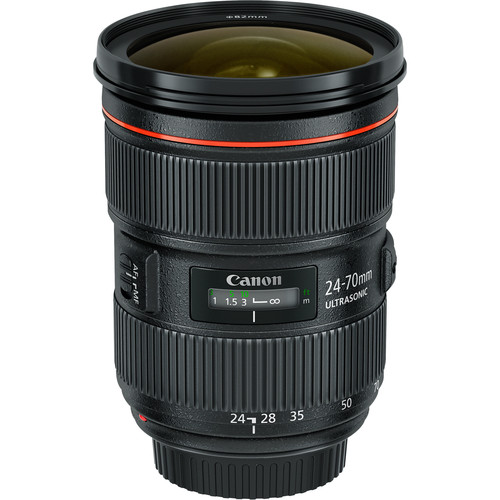
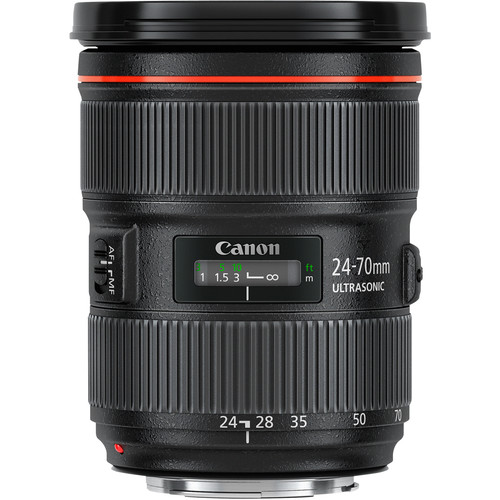
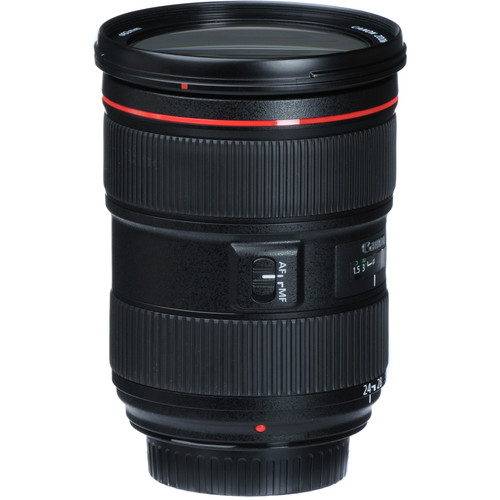
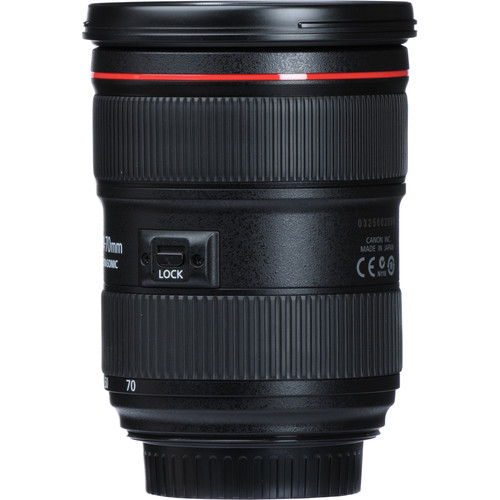
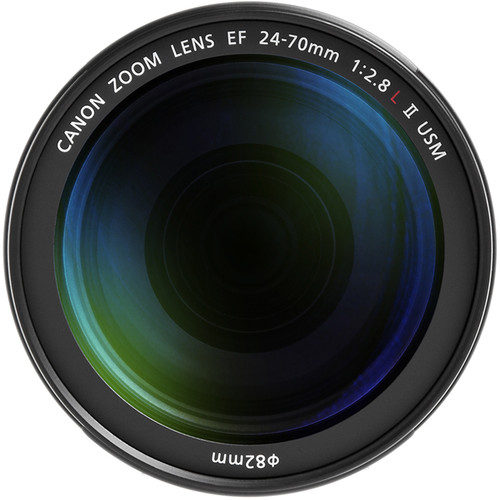
Canon EF 24-70mm f/2.8L II USM: The Workhorse
If you only plan on purchasing one EF lens for video use, this is the lens you should buy. The 24-70mm f/2.8L II provides the most useful focal length range for interviews, B-roll, and run-and-gun documentary-style work. The lens maintains exposure regardless of how much you zoom in and has outstanding optical quality.
In addition to one Super UD element and two UD elements helping to reduce chromatic aberrations, the lens contains three aspheric elements that provide sharp images from edge-to-edge.
Verified buyers on B&H consistently comment on this lens' quality. A user states that it is their "favorite lens of all time" when used on a Canon 5D Mark IV. Another user comments that they use it as their primary lens for podcasts because of its wide angle capabilities, though they would suggest moving to a 70-200mm lens for tighter framing angles.
Buyers state that the image quality produced by the lens is "superb," and several users say they use it as their primary lens for weddings, which speaks volumes about the lens' reliability in stressful situations.
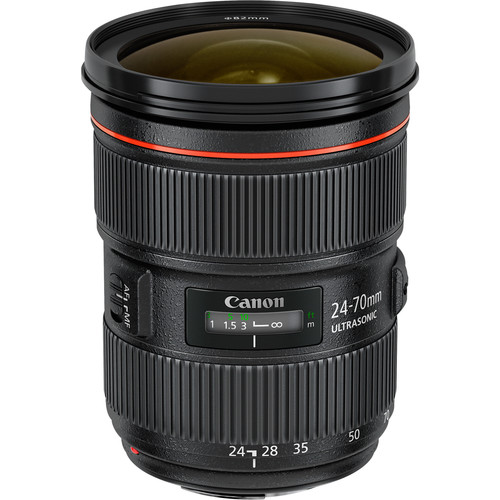
There are some negatives that may influence your decision to purchase the lens. First, it lacks image stabilization, which could be problematic for handheld video work. Several buyers point out that at 70mm, you'll need at least 1/70 shutter speed to prevent camera shake when using a full-frame body (faster shutter speeds on crop sensors).
Second, the lens weighs 805g, which is on the heavier side of the scale. Finally, it is priced higher than the average EF lens. However, for the quality you receive, most working film-makers believe the lens is money well spent. Check current pricing at B&H.
Key Specs
- Focal length: 24-70mm
- Maximum aperture: f/2.8 (constant)
- Minimum focus distance: 0.38m
- Filter size: 82mm
- Weight: 805g
- Image stabilization: No
Canon EF 70-200mm f/2.8L IS III USM: The Telephoto Standard
The 70-200mm f/2.8L IS III is the second part of the classic two-lens video kit. Using both the 24-70mm and the 70-200mm will give you the capability to capture a variety of scenes ranging from wide-angle establishing shots to tight close-up shots.
The biggest advantage of the 70-200mm is that it includes image stabilization, which will significantly aid in reducing blur when capturing handheld footage at longer focal lengths. Additionally, Canon's Air-Sphere Coating included on the III model helps to minimize flare and ghosting when capturing footage with a high number of practical light sources.
The 70-200mm is a great lens for any type of event coverage, concert, sports video, etc., and is perfect for any situation in which you cannot physically get closer to your subject. The compression you get at 200mm is fantastic for interview setups, providing a nice separation between your subject and the background with a very pleasing bokeh. The lens is large and heavy, so make sure it is mounted to a stabilizer or gimbal for long shoots..
Canon EF 16-35mm f/2.8L III USM: Wide and Sharp
Every video kit needs a wide lens option, and the 16-35mm f/2.8L III is Canon's top EF-mount wide zoom. The Mark III version provided a substantial increase in sharpness over the Mark II version, particularly in the corners, which is much more important for video than still photography.
Use this lens for any architectural B-roll, establishing shots, car interiors, etc. in which you can't back up any farther.
One of the benefits of the 16-35mm f/2.8L III is that it provides the same f/2.8 aperture as the other two lenses in Canon's L-Series Trinity, so you can switch between the 16-35mm, 24-70mm, and 70-200mm without having to readjust exposure settings.
At 16mm on a full-frame body, you get a truly wide 108 degree field of view. Although you will see some barrel distortion at the widest focal lengths, it is minimal, and most editing software can remove the distortion automatically..
Sigma 18-35mm f/1.8 DC HSM Art: The Crop Sensor King
This is not a Canon lens, but it might be the best lens for video on an APS-C body with an EF-mount. The Sigma 18-35mm f/1.8 Art is essentially a zoom lens that performs like a prime.
The f/1.8 maximum aperture throughout the entire zoom range is unique to this lens and provides a tremendous benefit for low-light shooting and creating a shallow depth of field on crop-sensor cameras.
At 18-35mm on an APS-C body, you get a roughly 29-56mm equivalent focal length range, which covers the most common interview and documentary-style focal lengths. The optical quality is genuinely impressive given the price point. Verified buyers on B&H constantly rate it as one of the sharpest lenses they've ever used, and for indie film-makers shooting on cameras such as the Blackmagic Pocket Cinema Camera 4K or Canon C-series cameras with Super 35 sensors, it is nearly a no-brainer.
However, it does not support full-frame, so do not attempt to attach it to a Canon 5D or 6D body, as it will severely vignette. Check it out at B&H.
The Prime Lenses
Canon EF 50mm f/1.2L USM: When You Need the Speed
The 50mm f/1.2L is a specialized tool. At f/1.2, it is the fastest 50mm prime lens available and provides a very shallow depth of field that can produce a dreamy, ethereal look difficult to achieve with slower lenses. For narrative work, music videos, and any project requiring a very shallow focus, it provides a unique aesthetic.
However, let's discuss the limitations of the lens. The autofocus is slower than modern standards, and for video work, you will likely pull focus manually anyway. When used wide-open at f/1.2, the lens is soft, and some shooters may even prefer this characteristic for the added character it provides. When stopped down to f/2, the lens becomes very sharp.
It is also an expensive lens, and if you don't need f/1.2, the Canon EF 50mm f/1.4 USM is capable of delivering 90% of the performance for a fraction of the cost. If you've ever attempted to shoot a poorly lit reception or a moody narrative scene and desired just one more stop of light, this lens is what will solve your problem. See pricing at B&H.
Canon EF 85mm f/1.4L IS USM: The Interview Lens
The 85mm focal length is a classic for interviews and talking-head setups. The lens produces a flattering perspective on subjects and separates subjects from environments with background compression at 85mm. The f/1.4 aperture is sufficient for low-light conditions for most scenarios, and the lens includes image stabilization, which is beneficial for handheld applications.
Canon's IS system in this lens boasts up to four stops of stabilization, and users have reported significant stabilization results even with somewhat modest shutter speeds. Additionally, the autofocus is much quicker than the 50mm f/1.2L, making it a better option for documentary or event work when you cannot rely on manual focus for a moving subject.
This is another high end purchase, but for those who shoot many interviews or portraits as video content, the combination of speed, IS, and great renderings make this one of the greatest EF primes Canon has produced. Available at B&H Photo.
Canon EF 100mm f/2.8L Macro IS USM: The Detail Specialist
The 100mm Macro may appear to be an unusual choice for a "best for video" list, but here is why it belongs. In addition to the obvious macro capabilities for product shots and detail B-roll (which every filmmaker will need at some time), it is a very capable portraiture and medium telephoto lens.
The 100mm focal length and f/2.8 provide excellent bokeh, and Canon's Hybrid IS system stabilizes both angular and shift movements, which is beneficial for close-up shooting where even the slightest camera movement shows up in the footage.
This lens is unmatched for product review videos, food content, jewelry, tech reviews, etc., for any type of content that requires getting close to show texture and detail. Due to its 1:1 macro reproduction ratio, you can completely fill the frame with objects as small as a coin.
And when you are not shooting macro, it doubles as a solid medium telephoto with beautiful renderings. The versatility of this lens earns it a place in a video kit regardless of whether you think of yourself as a "macro shooter.".
Quick Comparison
| Lens | Focal Length | Max Aperture | IS | Weight | Filter | Best For |
|---|---|---|---|---|---|---|
| Canon EF 24-70mm f/2.8L II | 24-70mm | f/2.8 | No | 805g | 82mm | Workhorse zoom, interviews |
| Canon EF 70-200mm f/2.8L IS III | 70-200mm | f/2.8 | Yes | 1,480g | 77mm | Telephoto, events, sports |
| Canon EF 16-35mm f/2.8L III | 16-35mm | f/2.8 | No | 790g | 82mm | Wide shots, architecture |
| Sigma 18-35mm f/1.8 DC HSM Art | 18-35mm | f/1.8 | No | 810g | 72mm | Crop sensor, low light |
| Canon EF 50mm f/1.2L | 50mm | f/1.2 | No | 580g | 72mm | Shallow DOF, narrative |
| Canon EF 85mm f/1.4L IS | 85mm | f/1.4 | Yes (4-stop) | 950g | 77mm | Interviews, portraits |
| Canon EF 100mm f/2.8L Macro IS | 100mm | f/2.8 | Yes (Hybrid) | 625g | 67mm | Product, detail B-roll |
Choosing the Best Lens for Your Kit
EF Lenses on Mirrorless Cameras
One of the primary benefits of buying into EF glass in 2026 is that it is adaptable. Canon's EF-EOS R adapter works perfectly with Canon's RF mount cameras and maintains full AF and electronic aperture control. Metabones and Viltrox adapters enable EF lenses to be used with Sony E-mount, Micro Four Thirds and other mounts. Therefore, even if you transition away from Canon bodies, your EF lens investment is transferable.
Budget Options
When establishing a new kit from scratch, start with the 24-70mm f/2.8L II as your foundation. Then add either the Sigma 18-35mm f/1.8 or the 70-200mm f/2.8L IS III based upon your desired telephoto range. Primes can follow once your project demands specific styles. And do not overlook the used market since EF lenses have been around for so long that you can find amazing deals on L glass in excellent condition. A good field monitor will also aid you in nailing focus with these fast primes.
Frequently Asked Questions
Are Canon EF lenses compatible with Canon mirrorless cameras?
Yes. Canon's EF-EOS R adapter provides complete compatibility with Canon's RF mount cameras without any degradation in quality. Third party adapters from Metabones, Viltrox and others allow you to use EF lenses with Sony, Panasonic, and Blackmagic bodies. Autofocus performance varies by adapter, but manual focus works on all adapters.
Is the Canon EF 24-70mm f/2.8L II worth it without image stabilization?
Absolutely. Without image stabilization, the optical quality is superb, and the lack of stabilization is irrelevant when you are on sticks (tripod or gimbal). For handheld run-and-gun shooting, you'll either need a body with IBIS (such as the Canon R5 or R6 via adapter) or you'll need to be extremely careful regarding your shutter speed. Many working filmmakers believe the 24-70L II is essential even though it lacks stabilization.
What is the best budget Canon EF lens for video?
The Canon EF 50mm f/1.8 STM (the "nifty fifty") is the classic starting point. It is incredibly sharp for the price, has adequate autofocus for video, and the f/1.8 aperture performs nicely in low light conditions. Although it didn't make our top performing lenses list because we were looking for the best overall lenses, for the cost it is extremely difficult to surpass.
Will Canon EF lenses work on the Blackmagic Pocket Cinema Camera?
Yes, the Blackmagic Pocket 4K and 6K each have EF mount options (the 6K has a native EF mount). The Blackmagic Pocket 4K utilizes Micro Four Thirds mount and therefore needs a Metabones Speed Booster or similar adapter. One of the most popular combos for indie filmmakers is the Sigma 18-35mm f/1.8 Art combined with a Speed Booster on the Blackmagic Pocket 4K.
Should I buy Canon EF or RF lenses in 2026?
If you're already investing in EF glass, continue doing so. The lenses are optically exceptional and work perfectly with RF bodies. If you're starting from scratch and plan to shoot exclusively on Canon mirrorless, RF lenses offer some advantages in terms of AF speed and newer optical design. However, the EF ecosystem offers a tremendous amount of variety, a massive used market, and cross-platform compatibility that RF does not currently offer.
Which Canon EF lens is best suited for low light video?
The Canon EF 50mm f/1.2L USM allows the most light of any lens listed above. However, the Sigma 18-35mm f/1.8 Art is possibly more practical for low light video due to the fact that it offers zoom flexibility at f/1.8, which is roughly two thirds of a stop slower than f/1.2. Zooms with f/2.8 L-series trinity (16-35, 24-70, 70-200) all perform well in moderate low light, especially on modern cameras with superior high ISO performance.