
Best Sports Video Camera Systems: Bodies, Support and Sideline Gear
Sports video is hard on gear in ways a studio never is. Players move fast and unpredictably, games run long with no breaks for battery swaps, and the light changes from a sunny field to a dim gym from one weekend to the next.
That's why a sports rig is a system, not a camera. We've spent years putting cameras on gimbals for fast documentary and corporate work, and the lesson carries over: the support, lens and audio decide as much of the result as the body does.
Below is what a sports body really needs, the base pick, alternatives by venue and budget, and the support, lenses, audio and cards that finish the system.
Building a sports video rig requires creating a complete system rather than just picking a camera body because your support, lenses, and audio gear often decide the final result more than the sensor itself.
We think the FX30 is the best base for 4K120 and internal fan cooling, while the a7S III wins in dark gyms and the R7 works if stills matter. If your budget is tight, the GH6 offers a solid 4K120 option.
What a Sports Body Actually Needs
A reliable sports camera needs fast phase-detect autofocus to keep track of athletes moving laterally across the field, and it must handle at least 4K60 to meet the basic standards of modern video.
You also want 4K120 if you want five times slow motion on a 24p timeline, which makes fast action look smooth and professional. Internal cooling is also vital so the gear doesn't overheat and shut down during the middle of a long game.
Since the NP-FZ100 battery only lasts for one to two hours, you'll need to carry spares or use USB-C power banks to keep the rig running through the event. Using an APS-C sensor gives you extra effective reach on telephoto lenses, which helps with distant field shots, but you lose some low-light performance compared to full-frame rigs.
The Sony FX30, the Base Pick
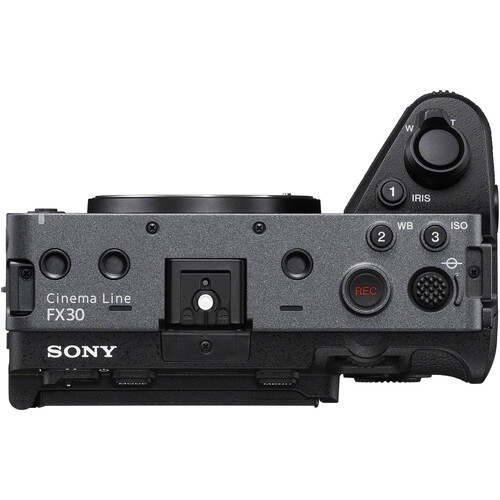
The Sony FX30 works as a solid base for sports rigs because it features an internal fan that keeps the sensor cool during long games, so you do not need a heavy cage to prevent overheating.
The FX30 at B&H records 10-bit 4:2:2 and outputs 16-bit Raw, which gives you room to grade later. You can grab 4K at 120fps with a small crop or use 1080p at 240fps for extreme slow motion.
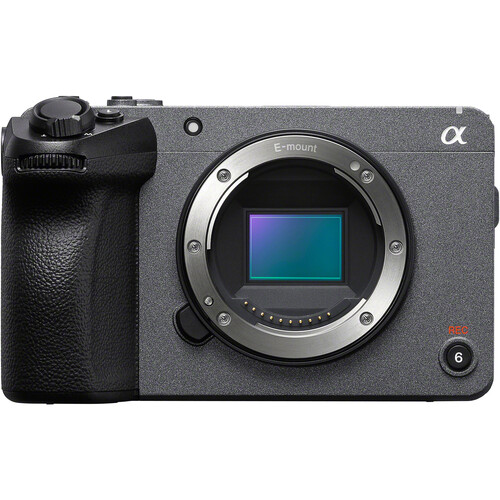
One listing quirk: B&H's key features say 26.1MP while Amazon's table says 20.1MP. Sony counts 26.1 total with about 20.1 effective for video, so both are right, but it's confusing until you know. A buyer who has shot over 45 podcasts on the FX30 calls the battery the weak point at one to two hours per NP-FZ100, so carry spares or a USB-C power bank.
A buyer reports a firmware update broke autofocus on third-party lenses entirely, 'all lenses work before update, now only Sony lenses work', so test your glass after any update.
The optional XLR audio handle takes up to four discrete sources, which is how one reviewer mixes sermon audio at a church broadcast alongside an Atomos Ninja V recorder. Be careful with certified-refurbished units: an owner got an FX30 with a faulty HDMI port, and says Sony would not honor the repair even after warranty activation. Amazon offered a refund.
The Alternatives by Venue and Budget
For dark gyms and night games where light is scarce, the Sony a7S III is the right choice because its full-frame sensor handles noise better than the smaller options. It shares the 4K120 recording modes with the FX30 but costs about twice the money at B&H. Sony's a7S III page spells out the low-light credentials. You'll want this if you need that extra low-light boost in dim arenas.
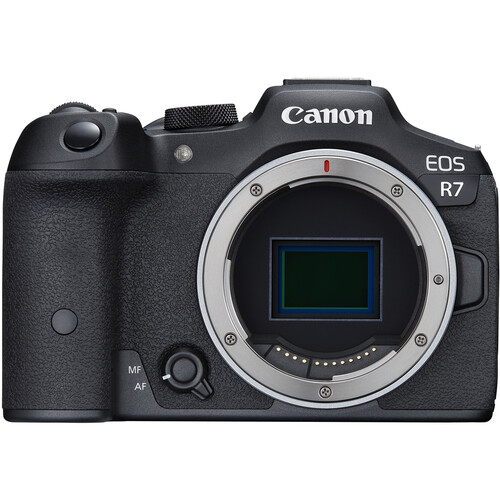
The Canon R7 is the stills-first hybrid pick at B&H, and its Dual Pixel autofocus tracks athletes well. It has no fan and tops out at 4K60, so long warm-venue shoots are where it struggles next to the FX30. It is a smart pick if you need a stills-first body that costs less.
The Panasonic GH6 is the budget pick at B&H with 5.7K recording, in-body stabilization and unlimited record times, though its Micro Four Thirds sensor is weaker in low light. Its deeper depth of field keeps the whole play in focus, which helps when you can't track every moving player. It's the cheapest body here, but it offers a lot of pro features for the money.
Support Decides More Than the Body
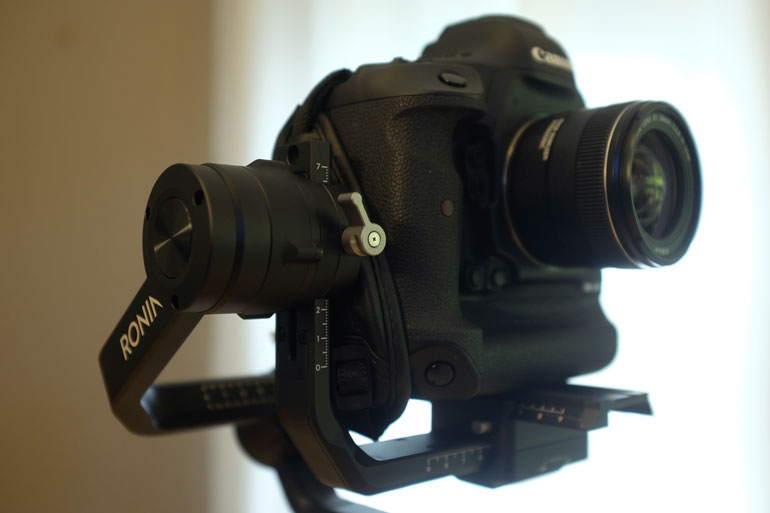
We have spent years on gimbals, from the Defy G5 to the Letus Helix Jr, and we put our Canon 1DX mkII on the Ronin-S in our Ronin-S review. Cameras have fallen off rigs on us before because of poor tightening knobs, so we check every knob before a game.
True story. In our own review of DJI's Ronin-S, User 1 is 'good for ultra quick motor response, for sports or using in a car', while User 3 gives the slow, cinematic moves. For a fast game, you want User 1.
From years of media training for radio and TV journalists, we learned newcomers will shoot handheld no matter how much you emphasize tripods, so pick a body that doesn't fight that. We still believe video monopods are the most useful tool in the business, and our monopod guide covers the current picks.
Lenses, Audio and Cards for the Sideline
You need a 70-200-class zoom for field sports, but a wider lens works best for establishing shots or indoor courts where you need to see the whole floor.
A shotgun mic mounted on the camera captures the crowd audio, which adds energy to your clips because the sounds of the fans feel real. Dual card slots let you record relay or backup, which saves the once-a-season play if a card fails.
Parents following one kid with a long-zoom camcorder have a different job, which our youth sports camcorder guide covers. For an operator building a system here, an on-camera monitor helps when sunlight washes out the LCD.
The monitor matters more than you'd think on bright sidelines. Camera LCDs are hard to read in direct sun, and if you're filming a whole game you won't review clips until it's over. An external monitor with a hood or high brightness rating lets you confirm focus and exposure while the play is still in front of you.
The FX30's flippable screen helps, but one reviewer who pairs it with an external recorder still prefers checking the bigger display.
Batteries and cards both matter because you can't stop the game to swap anything. Check both before the whistle blows.
Frequently Asked Questions
What frame rate do I need for sports video?
Treat 4K60 as the floor. 4K120 gives five times slow motion on a 24p timeline. For ten times slow motion, shoot 1080p at 240fps.
Is APS-C good enough for sports?
Yes. The crop adds effective reach on telephoto lenses, which suits distant field shots. The cost is some low-light performance, so for dark gyms step up to full frame or pick a body with dual base ISO.
Does the FX30 overheat during games?
The FX30 has a built-in fan, which is the reason B&H markets it as a compact cage-free body. Buyers report long sessions without shutdowns.
How long do FX30 batteries last?
A buyer reports one to two hours per NP-FZ100 battery. Carry spares or a USB-C power bank so a full game doesn't outlast your power.
FX30 vs a7S III for indoor sports?
The a7S III's full-frame sensor handles dim gyms and night games much better. It costs about twice what the FX30 body does at B&H, so make sure the venue is actually dark before paying for it.