
Production Video Equipment: The Gear List for Your First Real Shoot
Building your initial production video equipment package is one of the most exciting and intimidating experiences you'll encounter as a filmmaker. The problem is, there are so many categories of gear to choose from (camera, audio, lighting, etc.) that it's easy to either spend way too much money on one type of gear and not enough on others, or purchase a whole bunch of stuff you don't even need yet.
We're going to go over every necessary category and provide you with practical recommendations for the actual gear that works well on a real shoot, regardless of whether you have a budget like a studio.
The secret to assembling a quality production package is realizing what really matters when shooting on a set vs. what just appears cool in a gear review. A camera that creates visually pleasing footage doesn't matter if your audio sounds like it was captured in a tin can, and no matter how expensive the lens is, if you can't light your subject correctly, that lens isn't doing you any good.
Therefore, let's discuss how you should allocate your funds across every category that truly matters.
Camera: The Base of Your Package
Your camera is the base of your production package, but it doesn't necessarily need to be the most expensive item in your bag. The most common mistake new filmmakers make is spending the entirety of their budget on a camera body, and then attempting to film with the kit lens, no audio gear, and whatever light happens to be available. Do not do this.
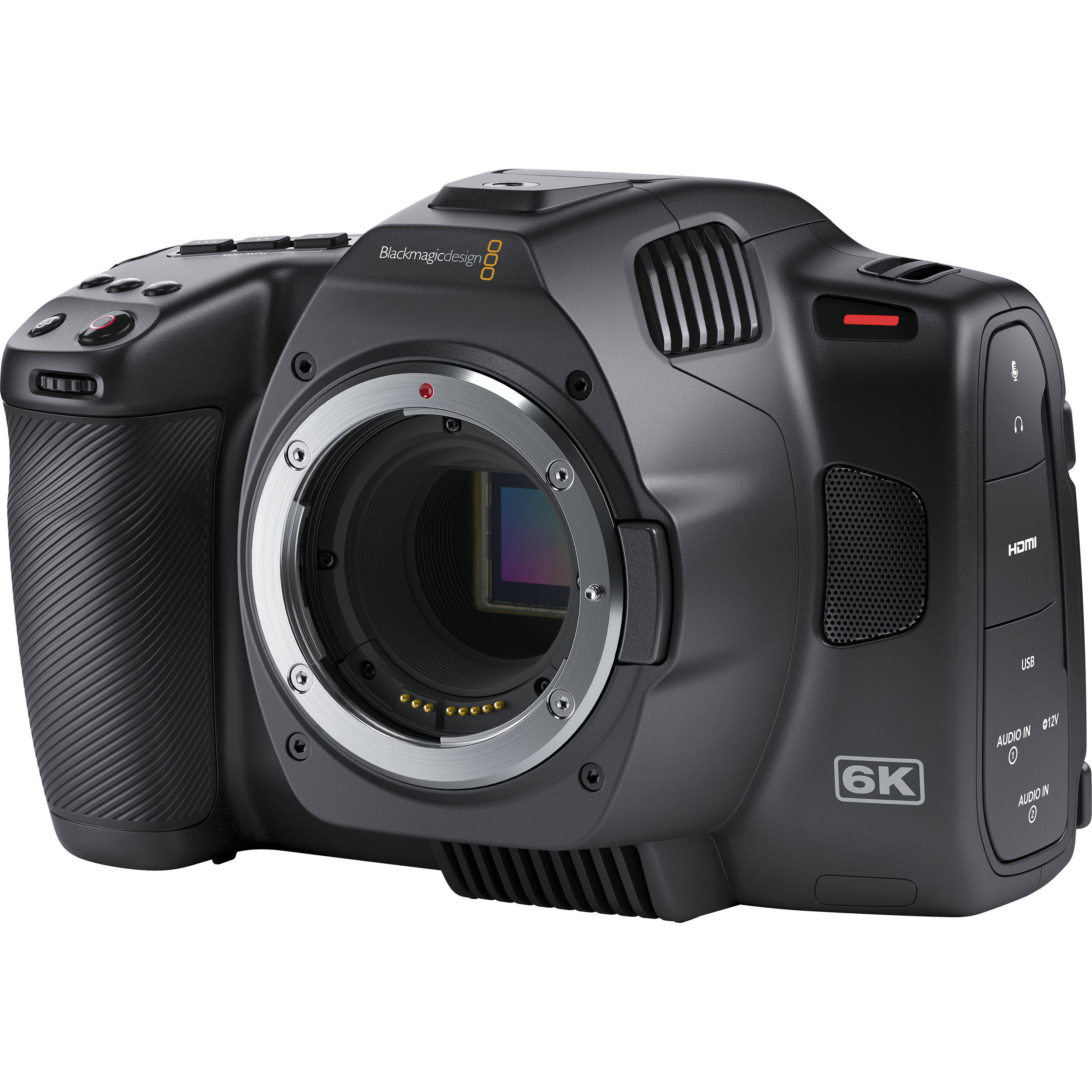
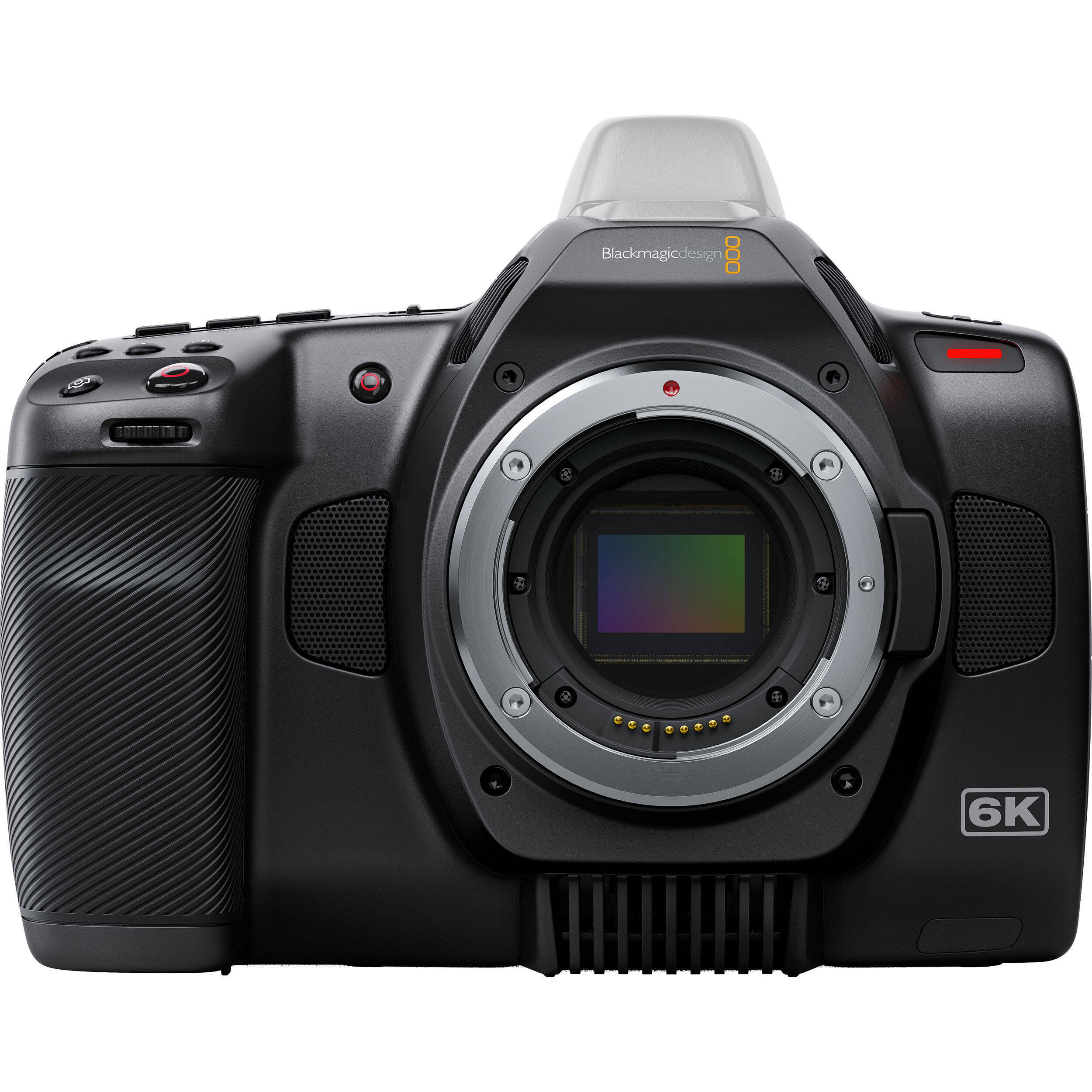
For independent productions, the Blackmagic Pocket Cinema Camera 6K G2 is still one of the best value cinema cameras currently available. This camera features a Super 35 sensor with 13 stops of dynamic range, dual native ISO at 400 and 3200, and Canon EF mount, allowing you to utilize an almost endless array of lenses. Additionally, this camera captures internally in Blackmagic RAW and ProRes, and includes a DaVinci Resolve Studio license, saving you a considerable amount of money in post-production software.
B&H reviewers repeatedly state that the Blackmagic 6K G2 offers superior image quality compared to the cost, with one reviewer stating that the bundle "is super awesome" due to the inclusion of the camera, lenses, and accessories. In contrast, a second reviewer found the image quality to be very high-quality but noticed noise greater than ISO 1000, which is definitely something to take into consideration if you are planning to shoot regularly in low-light situations.
The Blackmagic 6K G2 utilizes NP-F570 batteries, which are relatively inexpensive and readily available, however, these batteries burn down quickly. Several B&H reviewers have expressed concerns regarding the battery life, and one Q&A response recommended utilizing an external power source for extended recording sessions exceeding an hour.
If you prefer a different ecosystem, the Sony FX30 is a great alternative offering Sony's E-mount lens system. If you would prefer a smaller unit, the Sony ZV-E10 II offers a lightweight option.
Lenses: Where Your Footage Quality Will Be Determined
Your lens will determine the quality of your image more often than the body of your camera in nearly all cases of filming. A good lens on a mid-range body will always create better footage than a poor lens on a high-end body.
You will want at least two lenses for your production work to cover most scenarios.
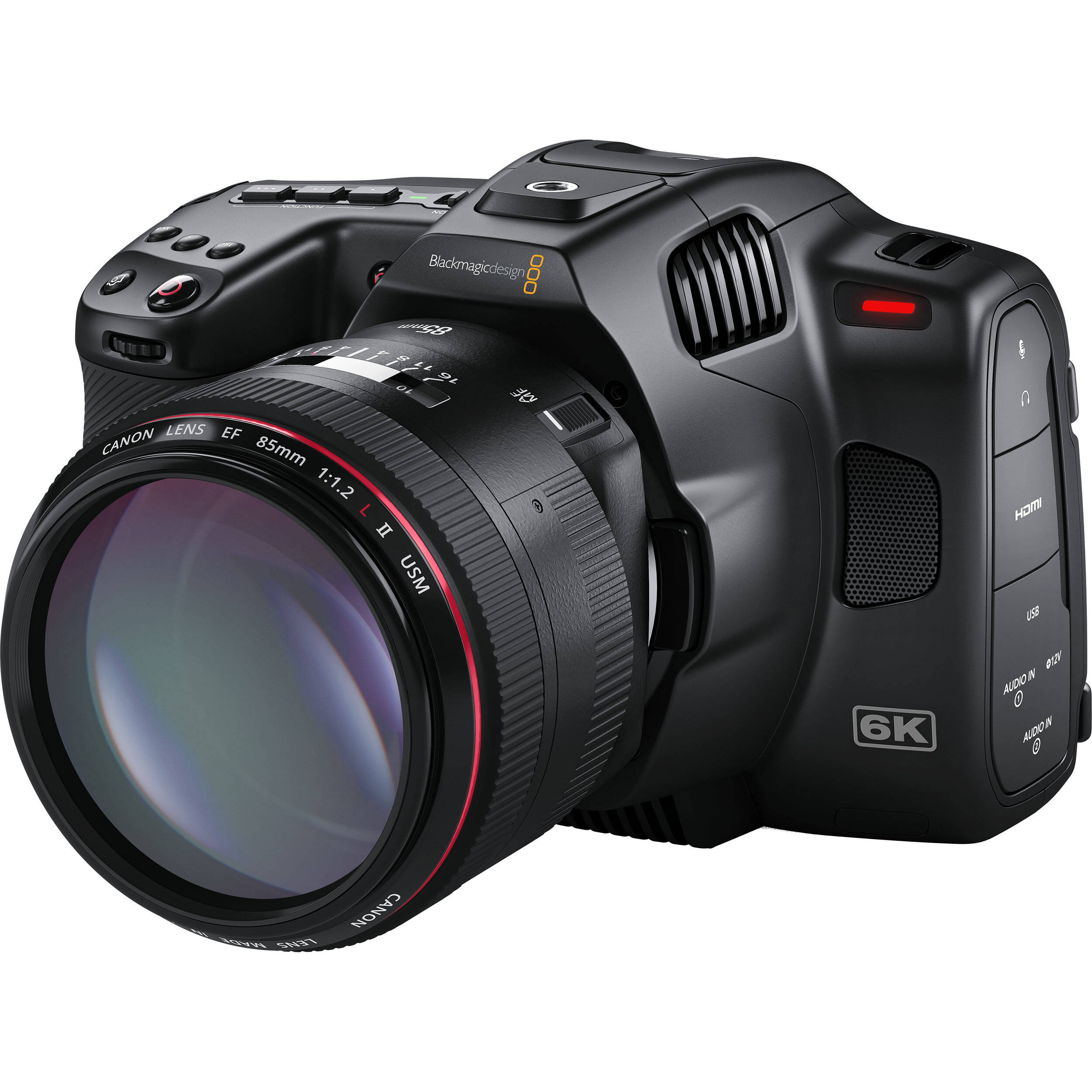
One of the best values for a versatile zoom is the Sigma 18-35mm f/1.8 with an adapter (if required). The f/1.8 aperture throughout the entire zoom provides you with exceptional low-light capabilities and the ability to achieve shallow depth of field. When you require a tighter lens, a 50mm or 85mm prime lens will capture excellent close-up and compressed B-roll footage.
If you are filming on the EF mount (such as the Blackmagic 6K G2), you have decades worth of Canon and third-party lenses to choose from at various price points. B&H sells a huge variety of EF lenses and many of the top-tier video lenses from Sigma and Tamron are offered in EF mount.
Priorities for Video Lenses
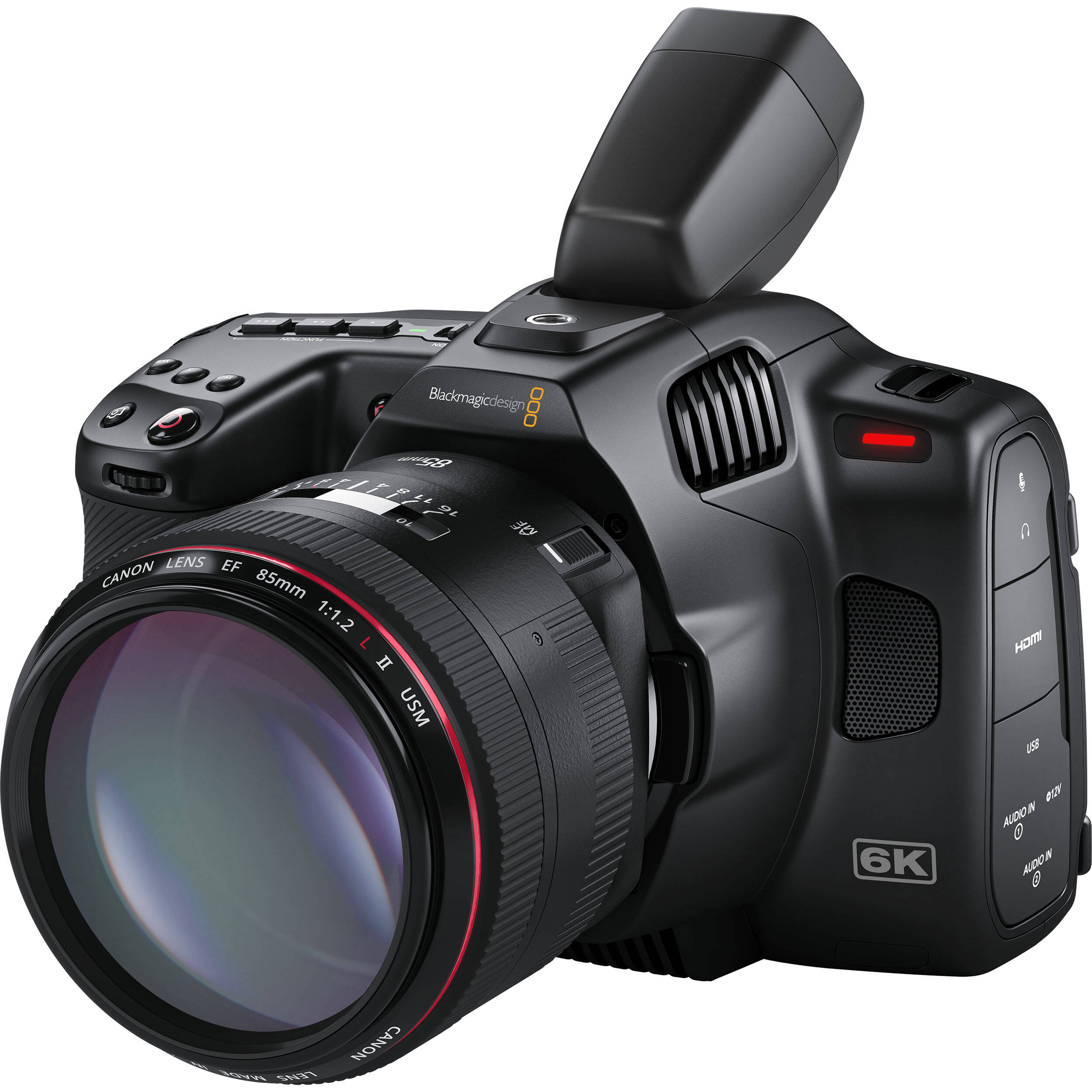
When selecting video lenses for production, priority should be given to the lens's aperture and optical quality rather than autofocus performance. The majority of commercial and narrative work is filmed with manual focus, therefore, while fast and precise autofocus may be desirable in certain applications, it is less important than sharpness, minimal focus breathing, and a wide open aperture.
If your budget permits, look for lenses with a smooth focus ring and minimal focus breathing.
Audio: The Least Glamorous Part of a Production Package
While bad video footage, shaky camera work, and subpar color will allow audiences to continue watching, bad audio will instantly stop viewers dead in their tracks. Allocate at least 20% of your total gear budget towards audio equipment.
In addition to a good shotgun microphone for on-camera or boom use, you will need at least a good boom pole and a set of XLR cables.
If you are using a camera with mini-XLR inputs such as the Blackmagic 6K G2, the double XLR inputs will enable you to record two separate channels simultaneously, which is typical of how most professionals work.
If you are conducting interviews, a pair of wireless lavalier microphones is an absolute necessity. The Rode Wireless Go II and the DJI Mic 2 are both excellent options that will not break the bank but offer dependable performance.
In addition, you will need a good pair of headphones for monitoring your audio on set. What you cannot hear during the shoot cannot be fixed after the fact.
Lighting: Control Your Vision
Lighting is what makes amateur footage appear like it was created by a pro. You can greatly improve the quality of your video with a basic three-point lighting setup. Fortunately, LED panels have become incredibly affordable and powerful in recent years.
To begin creating a lighting kit, you will need at least two LED panels and a smaller accent or fill light. Two bi-color LED panels in the 60W class will be able to adequately handle interviews, product shots, and small narrative projects.
Bi-color indicates that you can adjust the color temperature between tungsten and daylight, which is vital in order to match the existing lighting in the surrounding environment. Aputure, Godox, and Nanlite all manufacture great panels at different price points.
Additionally, you will need a few C-stands, some diffusion, and a basic collection of flags or negative fill, and you will have a lighting kit capable of handling the vast majority of your small-to-medium sized productions.
Do not forget the importance of modifiers. A bare LED panel generates flat, harsh light. Diffusion panels, softboxes, and other types of modifiers will greatly enhance the overall quality of your lighting.
Camera Support: Keep It Steady
How you support your camera matters more than most new filmmakers realize. Handheld footage has its place, but for most production work, you need proper support.
Tripod
A good fluid-head tripod is the most important piece of support equipment you'll purchase. When shopping for a tripod, ensure it has a proper fluid head (and not a photo ball head) to allow for smooth pan and tilt motions. The Manfrotto 504X or similar video tripod is a great option for many years.
Don't even think about purchasing a cheap photo tripod for video use. They simply do not provide the same level of smoothness and control when panning and tilting.
Gimbal or Stabilizer
While not necessary for static shots, for moving shots a gimbal is almost mandatory on modern shoots. The DJI RS series and the Zhiyun Crane series are the two most popular gimbal options. Be certain that the gimbal you decide on can handle the weight of your camera and the largest lens you anticipate using on your productions.
Cage and Rigging
If you're utilizing a smaller camera (such as the Blackmagic 6K G2), a cage is not an option. It protects the camera body, provides mounting points for monitors and microphones, and creates a better gripping surface.
B&H reviewers specifically noted that the Blackmagic 6K G2 does not have a hot shoe, only a 1/4-20 thread, so a cage with a cold shoe attachment is required for mounting accessories.
Monitoring and Storage
On-Camera Monitor
Most cinema cameras' built-in LCD screens are sufficient for general framing purposes, but an external monitor is well worth investing in for critical focus and exposure analysis.
An external monitor with a large enough screen size (preferably 5 or 7 inches) along with accurate color representation and waveform/histogram display will enable you to discover issues with your shot while on set versus after the fact during the edit process. Both SmallHD and Atomos produce dependable products that fit within a variety of budgets.
Storage
When filming using a camera that records to either SD or CFast cards, it is imperative to purchase reliable and fast media. Never purchase cheap, untested cards. If you lose a card on a shoot day, it will be disastrous.
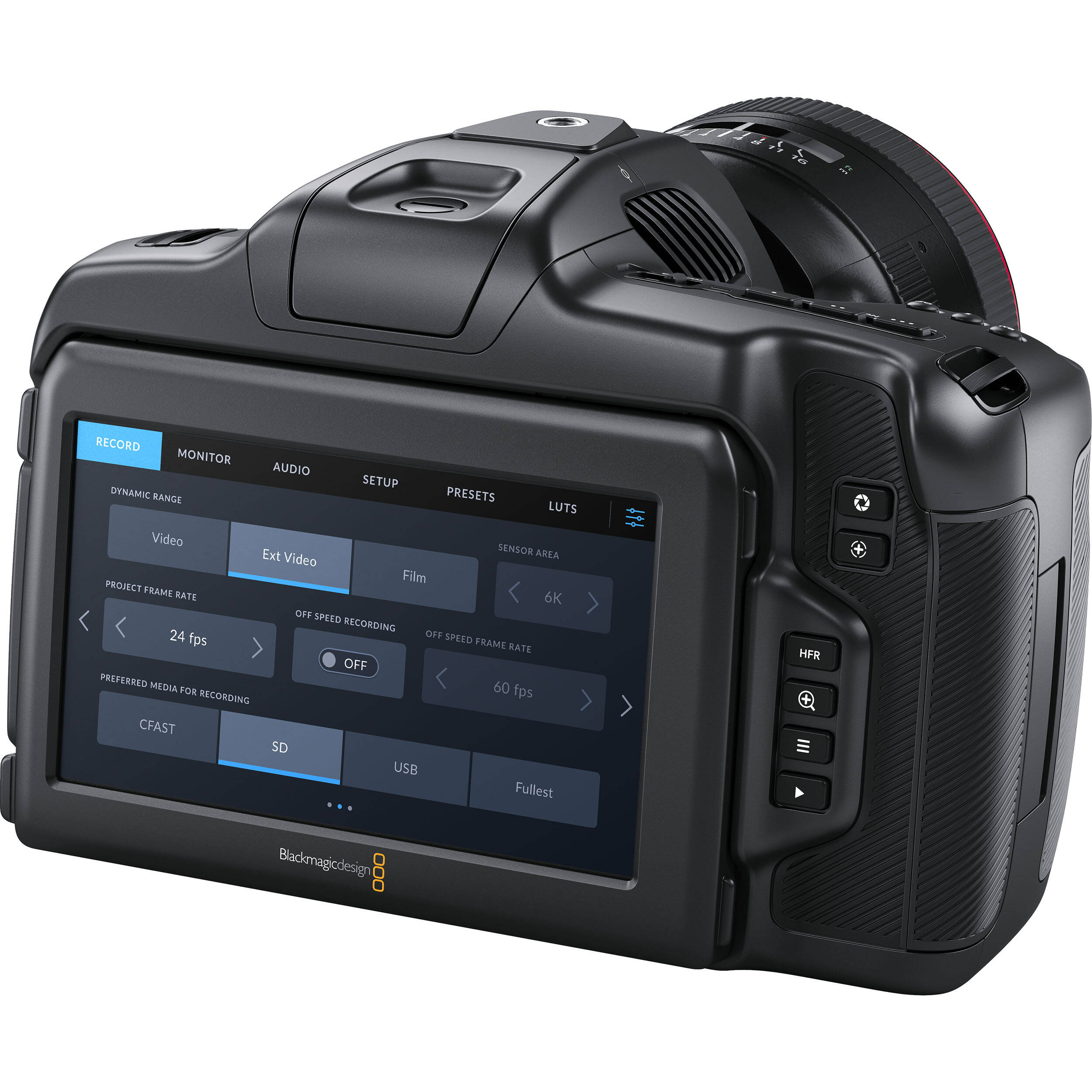
For the Blackmagic 6K G2, you'll need to purchase UHS-II SD cards and CFast cards with sufficient storage for a full day's shoot. Plan on having at least two cards in each slot to have a backup ready prior to starting the shoot. Additionally, after the shoot an external SSD is crucial for transferring and editing your footage.
Frequently Asked Questions
What is the minimum production video equipment I need for a real shoot?
At minimum you'll need a camera, one good lens, a shotgun microphone, a tripod with a fluid head, and at least one LED light. These components will allow you to film interviews, B-roll, and basic narrative content. Anything additional will increase the quality and efficiency of your shoot, but those five pieces are the foundation.
How much should I budget for a first production kit?
To create a solid independent production kit that centers on a camera such as the Blackmagic Pocket Cinema Camera 6K G2, you'll need to plan on investing a substantial amount into more than just the camera body itself. As a general rule of thumb, allocate about 40% of your budget to the camera and lenses, 20% to audio, 20% to lighting, and 20% to support and accessories. Allocating resources equally among categories will prevent you from underinvesting in any area.
Should I buy everything at once or build my kit over time?
Grow your kit over time. First, obtain the essential elements (a camera, one lens, basic audio, and a tripod). Then, based on what your work actually requires, add equipment to your kit. There is no benefit to purchasing a gimbal until you determine whether your work requires moving shots. Let your production work guide your equipment purchases.
Is it worth renting equipment instead of buying?
Renting equipment makes financial sense if you only rarely require it (specialty lenses, premium lighting, cranes, drones). Owning your core equipment that you utilize on every shoot is a more financially viable option. Many filmmakers own a minimal number of equipment items and rent specialized items as needed for individual projects.
What production video equipment brands are most reliable?
Blackmagic Design, Sony, and Canon are reliable camera manufacturers with strong ecosystems. Rode, Sennheiser, and Deity are reliable manufacturers of audio equipment. Aputure, Nanlite, and Godox are reliable manufacturers of lighting equipment. Manfrotto, Sachtler, and DJI (for gimbals) are reliable manufacturers of support equipment. B&H reviewers across all of these brands consistently report positive experiences with their reliability and customer service.
Do I need a camera cage for my cinema camera?
For smaller cinema cameras like the Blackmagic 6K G2, a cage is highly recommended. It provides mounting points for accessories, protects the camera body from physical damage, and creates a more comfortable grip.
B&H reviewers specifically mentioned the Blackmagic 6K G2's lack of a hot shoe as a major reason to purchase a cage early. For larger camera bodies with built-in accessory mounts, a cage may be less necessary but still beneficial for increased rigging versatility.