
Best Mirrorless Camera for Filmmaking: What Actually Matters in 2026
The mirrorless video market is currently overwhelming. Every brand is adding specs - 8K, 120 fps, raw output, log profiles, stacked sensors... Most of it doesn't matter to real filmmakers. What does matter is whether or not the camera gets out of your way so you can focus on making the work.
For the majority of filmmakers in 2026 the Canon EOS R6 Mark II is the best case for disappearing into your workflow while shooting at 4K 60p internally using 10-bit, having class leading autofocus, proper 5-axis IBIS and not requiring an external recorder to deliver professional quality footage.
It's not cheap, but for a full frame body built specifically for multimedia creators, it covers the bases that actually matter when you're on a shoot.
While the R6 Mark II isn't the only option available, depending on your workflow (run & gun documentary, scripted narrative, wedding, corporate event) there are other bodies worth considering. This guide will cut through the noise of the spec sheets and focus on the features that actual filmmakers need.
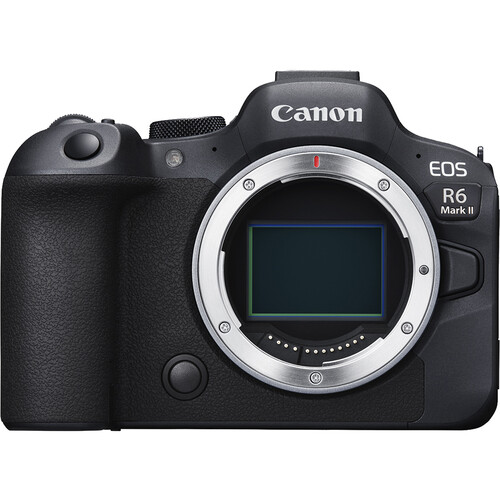
What Matters for Filmmakers
It's important to discuss the features that separate the serious video cameras from the ones that look good on paper but underwhelm when you're on set.
Codec and Bit Depth
You want at least 4:2:2 10-bit internal recording. 8-bit footage works fine for straight delivery, but once you need to pull a heavy correction or fix exposure in post, it falls apart fast. 10-bit gives you the latitude to make mistakes and do real color work without the footage falling apart.
Log gamma is the second piece. C-Log 3 on Canon cameras, S-Log 3 on Sony, V-Log on Panasonic. These are flat picture profiles that preserve highlight and shadow detail for grading. You won't watch log footage straight out of the camera, but your colorist will thank you for it later.
In-Body Image Stabilization
IBIS is one of those features you don't fully appreciate until you shoot without it. On a run & gun shoot, good IBIS means handheld footage that doesn't look like you're walking on a trampoline. The R6 Mark II has a 5-axis IBIS that B&H reviewers genuinely call out as a major selling point for documentary and event work. That said, IBIS isn't magic. It handles incidental movement well but can produce warping at the corners with some combinations of focal length and movement. Pairing it with a stabilized RF lens makes you better off.
Autofocus
Modern mirrorless cameras have completely separated themselves from older DSLRs in terms of autofocus. And honestly, Canon leads the pack right now. The R6 Mark II's Dual Pixel CMOS AF II covers the entire frame with 1053 phase detection points and subject tracking that is almost eerily reliable.
According to B&H reviewers, the eye tracking works consistently across different subjects and lighting conditions. One reviewer upgrading from a 6D Mark II specifically called out the autofocus as "a huge upgrade" that changed how he works.
For documentary and wedding filmmaking, reliable subject tracking means one less thing that's going to be distracting you. You're not going to get manual focus pulls when you're also managing sound, lighting, and the subject at the same time.
Dynamic Range
Full frame sensors have an advantage over crop sensors when it comes to dynamic range. The R6 Mark II handles mixed lighting reasonably well. You're not going to balance a bright window against a dim interior if the ratio is extreme, but for typical real world shooting situations, it performs solidly. If you're regularly shooting in very high contrast outdoor situations, the Sony a7S III sensor with its dual native ISO architecture gives you more room to maneuver, though you'll pay noticeably more for that body.
Canon EOS R6 Mark II: The Sweet Spot
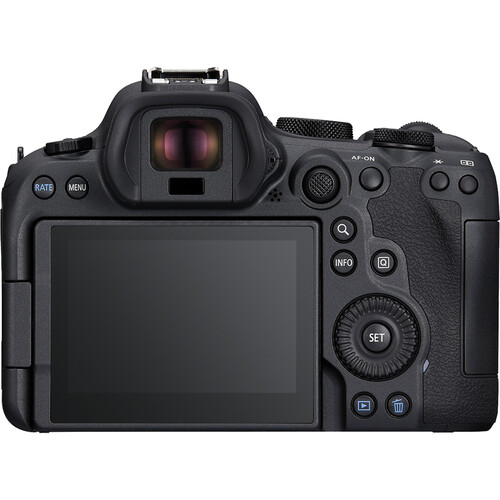
The Canon EOS R6 Mark II at B&H is a mid-range price point that most working filmmakers can actually justify. You get full frame 4K 60p at 10-bit 4:2:2, C-Log 3 for real color work, and Dual Pixel AF II, the best consumer autofocus Canon makes right now.
And it delivers all of this without requiring an external recorder for your main deliverable.
The 24.2MP sensor is a sensible choice for video shooters. Fewer megapixels means less data to push which translates to cleaner high-ISO performance and better thermal management during extended takes. You also get dual UHS-II SD card slots.
B&H reviewer Geoffrey called this specific practical advantage. Both slots take the same card type, so you're not juggling between different media formats in the field. That matters more than it sounds when you're swapping cards between takes.
If you need to go further, the Micro HDMI output enables external recording up to 6K ProRes RAW at 60p using compatible recorders. That is Atomos Ninja-level post production flexibility when the project calls for it. If you're going the route of an external recorder, check the best on-camera monitor options since many monitors double as recorders in this workflow. Canon's official product page has the full compatibility list for accessories.
Handling and Ergonomics
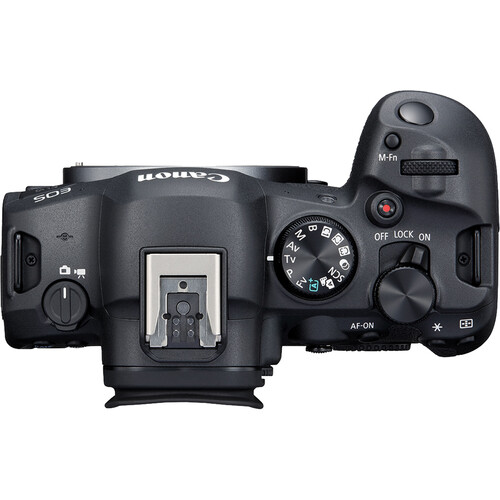
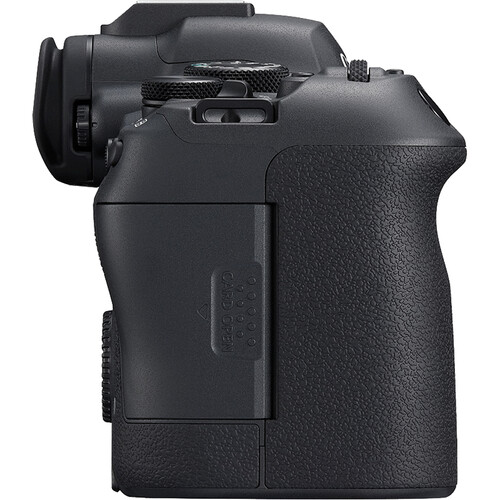
The R6 Mark II got a redesigned top plate compared to the original R6, with a mode dial that's accessible in the field without hunting for it. The articulated touch screen helps a lot for low angle shots and run & gun situations where you may not always be able to get your eye behind the viewfinder. The 3.69 million dot OLED electronic viewfinder is genuinely usable for critical focus checks.
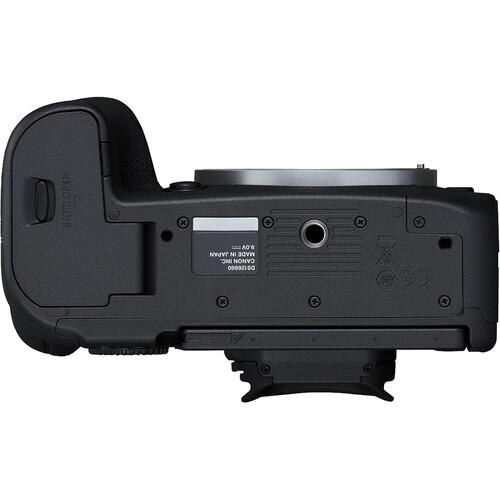
The weight is practical. Around 600 grams body only, light enough for all-day handheld work but still giving you enough mass to keep footage stable. The multi function shoe supports Canon's mics and transmitters without needing separate batteries, which simplifies the rig considerably.
The Cons
Not everything is perfect. One B&H reviewer mentioned occasional mechanical noise from the camera body after extensive use. The settings menu can feel overwhelming. Canon has a lot of options buried deep in submenus, and it takes real time to get your custom function buttons dialed in. And as another reviewer pointed out, if you're heavily invested in vintage glass or third party lenses, you'll need adapters, which add cost and occasionally introduce autofocus quirks.
The larger limitation for video shooters is sensor readout speed. The R6 Mark II uses a standard CMOS sensor, not a stacked one, so you will see rolling shutter artifacts if you pan quickly in some video modes. It's manageable in typical shooting, but worth knowing before you commit.
For shutter angle control (which cinema cameras handle natively) you'll need to step up to Canon's Cinema EOS C-series lineup.
How Different Filmmakers Actually Use It
Run & Gun and Documentary
This is where the R6 Mark II is most comfortable. Good IBIS, reliable AF, and all-day battery life on the LP-E6NH, a battery shared across multiple Canon bodies, which is practically relevant for multi-body shooters who already have extras. B&H wedding photographers report using it as their primary body for long event days without issues.
For documentary work, 4K 60p in C-Log 3 gives you flexibility to slow down footage to 24p for slow-motion cuts or match it to 24p project timelines. You also get 1080p up to 180 fps for more dramatic slow-motion when you need it. Pair the camera with a good gimbal if you're doing a lot of tracking shots. See the DSLR gimbal guide for options that balance well with mirrorless bodies in this weight class.
Narrative and Controlled Sets
On a controlled set, the R6 Mark II is a capable B-cam or even A-cam for projects without a dedicated cinema camera budget. The sensor performs well for interior drama, and C-Log 3 gives your colorist a lot of room to work. Where it shows limitations on a narrative set is shutter angle. The R6 Mark II only allows fractional shutter speeds, not shutter angle, as confirmed in the B&H Q&A section. Canon's Cinema EOS C-series cameras handle shutter angle natively. For narrative work, the best lens for video often matters more than the body itself, and the RF mount has a growing selection of cinema friendly primes and zooms.
Alternatives Worth Considering
Not every workflow fits the R6 Mark II. Here are the alternatives worth seriously evaluating, also available on Amazon for comparison shopping.
Sony a7 IV: Full frame, 4K 60p, 33MP. Sony's color science has improved significantly and S-Log 3 is excellent for grading. AF is competitive with Canon's, and the E-mount ecosystem is mature with plenty of native glass options. See the Sony a7 IV at B&H.
The main difference is Sony's AF behavior, which some shooters find more aggressive in subject tracking. Both systems are reliable, it comes down to ecosystem preference.
Panasonic Lumix S5 II: Panasonic added phase detection AF with the S5 II and it made a meaningful difference. V-Log is an excellent picture profile, and the body has a more cinema-oriented feel in the hand. Check Panasonic S5 II pricing at B&H. It's in a similar price point to the R6 Mark II and appeals to shooters coming from a Micro Four Thirds background who are stepping up to full frame.
Blackmagic Pocket Cinema Camera: Not technically a traditional mirrorless, but the Blackmagic Pocket line is relevant for narrative filmmakers who prioritize codec quality above all else. The color science is exceptional, and BRAW is genuinely a pleasure to grade. Read the Blackmagic Pocket Cinema Camera review for a complete breakdown. The tradeoffs are significant. Autofocus barely works, battery life requires external power for long shoots. But if your crew handles focus and power isn't an issue, the image quality ceiling is higher.
Canon EOS R5 Mark II: If you need more resolution and a stacked sensor for reduced rolling shutter, the R5 Mark II is the next step up in the Canon lineup. It's more expensive.
One B&H reviewer who bought the R6 Mark II said he wished he'd gone with the R5 Mark II instead, specifically for higher resolution wildlife work, although he acknowledged the R6 Mark II "does everything it's supposed to."
Frequently Asked Questions
Do I need 4K 120fps for filmmaking?
Most likely no because 4K 60p will give you plenty of slow motion capability for all but a few of most projects. 4K 120p would require a much larger hard drive and more computer resources than needed for most users. The R6 Mark II has 1080p up to 180 fps as well, so for most narrative and documentary production, this would cover all of your slow motion needs. However, for more specialized applications (i.e., fast action or sports) where 4K 120p is necessary, there are other cameras (Sony a7 IV, Canon R5 Mark II) that could better meet those demands.
Is the Canon EOS R6 Mark II good for beginners?
Yes and No. Yes because it is a great camera, No, because it is overwhelming. One B&H reviewer said the settings menu was "overwhelming". There is a ton of options that can be customized, which is a big plus when you learn how to use the camera. The learning curve is however steep for someone new to mirrorless. You should plan on spending some serious time getting familiar with the camera before you go out and get paid to shoot with it. The ergonomics and button layout are designed for people who know the camera inside and out.
Do I need an external recorder with the R6 Mark II?
No, probably not for most projects. The camera has the ability to internally record 10 bit 4:2:2 in either H.264 or H.265. These formats are professional quality for delivery. An external recorder only makes sense if you need to deliver ProRes RAW files or need 6K resolution for a specific project with high end post requirements. If that is your workflow, compare external recorders at B&H. The Atomos Ninja line-up pairs perfectly with the R6 Mark II via Micro-HDMI.
What lenses work with the Canon EOS R6 Mark II?
The R6 Mark II uses the Canon RF mount. RF lenses will work natively and allow for full autofocus functionality. Canon EF lenses from the DSLR era will also work with the EF-EOS R adapter with very little compromise. Third party lenses may work as well, but the results will vary based on the brand of the third party lens and the type of adapter used. Check the best lens for video guide to see what lenses work well with the RF mount.
How does the R6 Mark II handle low light?
You can push the extended ISO range up to 204,800, but realistically, you'll be pushing it above 12,800. B&H Q&A answers mention that chrominance noise will become visible in very low-light conditions. This is typical behavior for front-illuminated sensors. In general terms, it will do fine with normal interior shooting and mixed lighting scenarios. In extreme low-light cinematography where you are regularly shooting in near darkness, the Sony a7S III is still the standard bearer, but again, that's a very specialized use case, and most filmmakers won't need that level of low light performance.
Is IBIS enough or do I still need a gimbal?
Both have their place. IBIS can handle accidental camera movement, making handheld footage truly usable for interviews, observational documentaries and the like. A gimbal can handle intentional movement like follow shots, walk and talk, and smooth reveals. Using both of these together will provide you with the greatest amount of flexibility. Look at the DSLR gimbal guide mentioned above to find gimbals that are compatible with full frame mirrorless bodies.