Best Drone for Filmmaking: Picks That Fly Right for Cinematic Work
A drone shot can make a modest production look expensive, which is why so many filmmakers want one in the kit. The catch is that a filmmaking drone gets judged differently from a vacation drone: the codec, the color profile and whether the footage cuts with your main camera matter more than how far it flies.
There's also the paperwork and the support. Flying for money needs a license, newer drones need Remote ID, and getting a DJI drone repaired in the US has become harder, so the best drone on paper isn't always the safest buy.
Below is what matters in a filmmaking drone, the best option for most film work, a B-roll budget path, the cinema standard, the FPV question and the rules you need to know.
The DJI Mavic 4 Pro is the top choice for most film work while the Inspire 3 matches ARRI or RED, though the Air 3S handles B-roll budgets and the Mini 5 Pro stays paperwork-light.
I'd pick the Mavic 4 Pro because its codecs are vital, but you'll face a tricky US service situation since parts are hard to find. You'll need FAA Part 107 for commercial flights because it's mandatory, while Remote ID is required for newer drones. The current DJI import situation remains uncertain.
What Matters in a Filmmaking Drone
You need a 10-bit D-Log profile if you want your aerial footage to match your ground shots, because compressed 4K files often fall apart when you try to push the grade. Bitrate matters more than raw pixel count since high-quality data keeps the image sharp during the edit process. Don't pick a drone just for its pixel count if it lacks the depth needed for film.
You should always subtract twenty percent from the listed flight time when planning a shoot because you need at least three batteries to get through a full day of work.
The drone detects obstacles all around, because film shoots put you near people and expensive gear, and omnidirectional sensing is the minimum for that work. Activate and update firmware at home, so a shoot day never starts with a registration glitch.
This article's picks: the DJI Mavic 4 Pro for most people, the Air 3S as the budget path, and the Inspire 3 as the cinema standard for big sets. You can use the Mini 5 Pro as a secondary tool, because its sub-249g weight reduces the compliance burden in many countries.
DJI Mavic 4 Pro: The Best Option for Most Film Work
The DJI Mavic 4 Pro features a Hasselblad triple camera system that captures 6K60 HDR wide footage on a 4/3 sensor alongside 70mm and 168mm telephoto lenses.
The wide and the 70mm medium tele shoot 4K120 slow motion, and both teles shoot 4K60. This setup provides 10-bit D-Log and dual-native ISO for professional color grading, while the Infinity Gimbal for 440-degree rolls and 70-degree up tilts lets you get Dutch angles without needing a heavy cinema rig.
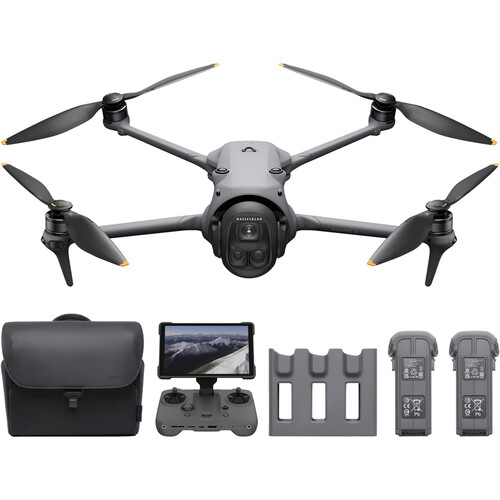
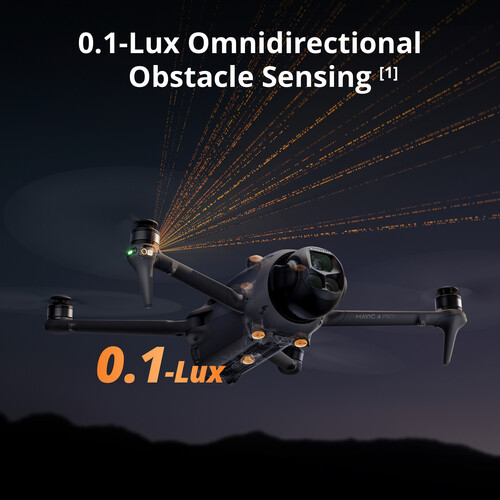
While the specs claim 51 minutes of flight time, you should expect about 40 minutes in the real world because battery drain and wind always eat into the total. It uses six 0.1-lux fisheye sensors plus LiDAR for obstacle avoidance, and ActiveTrack 360 can spot vehicles 656 feet away using the O4+ link which reaches 18.6 miles.
The listing linked here is the RC 2 bundle. The Creator Combo steps up to the RC Pro 2 controller with a 2000-nit Mini-LED screen, and adds a 512GB SSD plus 10-bit 4:2:2 All-I recording for heavier grading workflows.
ProRes is not offered on any Mavic 4 Pro config, and DJI has said there are no plans for it, so the Creator Combo's All-I bitrates are the practical alternative. One user has reported a crash because the controls became unresponsive, and another lost their drone to a fly-away that DJI support refused to cover, a four-figure loss by their own account.
There is no dedicated US service plan for this drone, so a gimbal repair can easily cost you four figures if something goes wrong during a shoot.
One user has noted that finding replacement parts and professional service is nearly impossible, which leaves you stranded if the hardware fails in the field. Activation is Wi-Fi based and can be fussy, so register and update firmware at home, not on set. Despite these headaches, it remains the top pick for most because it packs high-end tools into a package one person can carry.
DJI Air 3S: The B-Roll Budget Path
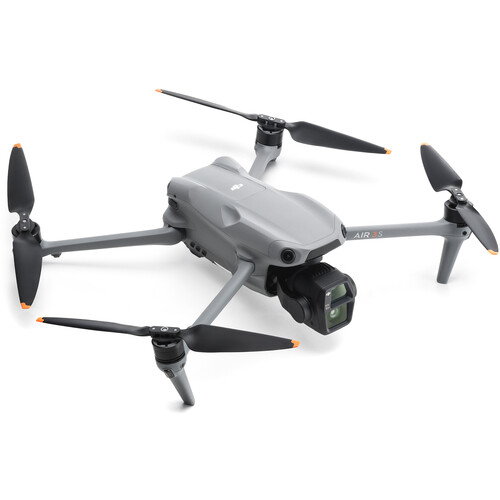
The DJI Air 3S costs a fraction of what its bigger sibling demands, yet it still gives you dual 4K cameras and the same class of detecting obstacles to stay safe. It's a strong B-roll and second-unit tool with solid flight time. Skip it if you need 6K, a triple camera array or a full 360-degree gimbal.
The drone is rated 4.7 stars from 237 ratings, which puts it among the most-liked camera drones at this price.
One user has reported a fly-away crash that wasn't covered by warranty, which is a real way to lose money when you fly for a production.
Another owner lost a unit in the ocean, which cost them a thousand dollars to replace. A buyer received a unit still bound to another person's DJI account, and a French verified review describes an open-box unit with an 80-plus-cycle battery and no DJI care available for it.
Buy new from an authorized seller and you avoid all three stories above. If you buy resale instead, bind the drone to your DJI account in front of the courier, because an account-bound unit is close to worthless to you.
DJI Inspire 3: The Cinema Standard, and a Wrong-Link Warning
For aerial shots that match high-end ground footage from an ARRI or RED camera, the Inspire 3 is the only drone on this list that will meet that demand. This rig captures full-frame 8K video and supports ProRes RAW, so you won't lose any detail when you grade the footage in post.
Because it requires a two-person crew to operate properly, it isn't meant for the solo creator who wants to move fast and stay light.
The drone sits in a different price universe compared to the others because it is much larger, heavier, and demands a professional team to manage every flight. If you aren't working on a feature film or a major broadcast project, you should probably skip it since the cost won't make sense for your budget.
One warning belongs in this section: our own old version of this article linked the Inspire 2, a 2016 drone, where the Inspire 3 belongs. Search results still surface that older listing, so check the listing title and model year before you spend Inspire 3 money.
Mini 5 Pro and the FPV Question
Because the Mini 5 Pro weighs less than 249 grams, it avoids much of the registration paperwork many countries demand, which makes it a fast pick for light locations and establishing shots. Treat it as a secondary tool for scouting and quick coverage, since the image quality doesn't match the bigger drones here. It earns its slot on days where speed beats sensor size.
Advanced FPV and immersive spherical filming are a whole different discipline from the stable camera drones discussed here. These camera drones fly slow and steady, while FPV work needs Avata-class digital drones that require manual pilot skills to fly well. You should pick based on whether you need a cinematic aerial shot or an immersive flight.
Flying for money requires an FAA Part 107 remote pilot certificate, because flying commercially without one is a federal offense that will void your production insurance.
You need to pass a recurrent test every twenty-four months to keep your knowledge of airspace, weather, and loading limits current for your professional work. Since drones made after September 2023 now require Remote ID, you should also request controlled airspace clearance through the FAA's Low Altitude Authorization and Notification Capability before you fly.
The legal status of DJI imports into the US remains uncertain right now, though you can still find stock at shops like B&H if you monitor the latest news for these developments.
You have to factor in the real cost of ownership because there is no official US service plan, which means gimbal repairs can cost over a thousand dollars. Some buyers report that fly-aways aren't covered by warranty, so a single crash can cost you as much as the drone did.
Drone Laws, Remote ID and Frequently Asked Questions
What is the best drone for filmmaking in 2026?
The DJI Mavic 4 Pro is the best all-around choice for most projects, while the Inspire 3 remains the standard for high-end cinema. You should choose based on your specific budget and required image quality levels.
Do I need a pilot license to fly these drones?
You must have an FAA Part 107 license for any commercial work because flying without one is a federal offense. Operating a drone without this certification will also void your production insurance if an accident occurs.
Does the DJI Mavic 4 Pro support ProRes?
Per DJI's official Mavic 4 Pro page, the Mavic 4 Pro does not support ProRes and there are no plans to add it, making the 10-bit 4:2:2 All-I the primary alternative. You will need an Inspire 3 or a transcode step if your workflow strictly requires ProRes files.
How long can these drones actually fly during a shoot?
While some models list fifty-one minutes, you should expect about thirty-five to forty minutes of real flight time. You generally need at least three batteries to get through a full day of filming.
Which drone company offers the most advanced FPV filming experience for action and immersive content creators?
For FPV and immersive work, DJI dominates that space too, through the Avata line and its digital FPV system. The camera drones in this article fly slow and stable for cinematic frames, and FPV drones are flown manually for the dive-and-thread shots action channels run. Pick by shot type: cinematic aerial, camera drone. Immersive flight, Avata-class FPV.
How does the Air 3S compare to the Mavic 4 Pro?
The Air 3S offers a dual-camera 4K system at a fraction of the cost. The Mavic 4 Pro brings three cameras, 6K60 wide, the full 360-degree Infinity Gimbal, forward LiDAR and 4:2:2 All-I on the Creator Combo. If your deliverable is 4K B-roll, the Air 3S covers it. If the aerial is the hero shot, this is the tool.
Where can I find a drone with a triple-lens camera system for serious aerial photography work on a film set?
Consumer gear has one clear answer: the Mavic 4 Pro with its Hasselblad 28mm, 70mm and 168mm lenses. For cinema sets the answer is the Inspire 3 with interchangeable full-frame glass. Nothing else in the consumer bracket ships three synced lenses on one gimbal.