Best Waterproof Camera Bags for Outdoor and Adventure Shoots in 2026
If you've ever seen a co-worker pull a drenched mirrorless from a soaked rolltop bag, look inside the lens, and shake their head, you understand why a true waterproof camera bag matters. Water-resistant nylon backpacks are good for walking down the sidewalk in drizzly weather. They're not good for when your kayak rolls while you're navigating a river bend, or when a sneaker wave hits your kit during a beach shoot. The OverBoard Pro-Sports Waterproof SLR Camera Bag is what we'd consider the real-world entry-level solution. It's not pretty, it's not cheap, but it floats, it seals, and it doesn't pretend to be something else.
This article examines six bags that provide varying degrees of wetness protection. All six were created using different materials and techniques. Some are entirely dry-bags constructed with welded seams and a rolled top. Some are weather resistant with minimal padding for casual everyday outdoor use. Some are rigid cases with foam, designed for transporting equipment rather than carrying it. Choose the correct type of bag based on how much your working area gets wet, not how wet you may anticipate it to get on a worst-case day.
What "Waterproof" Actually Means on a Camera Bag
The term "waterproof" gets used carelessly. An item with a DWR coating and a rain cover is simply water resistant, not truly waterproof. A true waterproof bag uses welded seams (stitching allows water to pass through), or a rolled top design with multiple layers of folding, or a hard-shelled case with both a gasket and a pressure-equalizing valve.
IP66 means it withstands heavy spray. IPX7 means it can withstand brief immersion. IPX8 means it can withstand longer periods of submersion underwater. If a manufacturer doesn't provide an IP rating for their product, assume the product is merely splash-proof.
Beyond the cost associated with being waterproof in terms of functionality, you also need to think about what waterproof costs you in terms of usability. Rolled top designs make it difficult to quickly switch lenses. Hard shell designs are very heavy and can't be carried far.
Comfortable padded backpacks with a rain cover are great for wearing all day in the rain, but as soon as the rain cover blows off in the wind, all of the protective features disappear. While no camera bag is perfect, many professional filmmakers ultimately purchase two. One for waterproof use in extreme weather conditions, and another that provides maximum interior organization for mild conditions.
Why Most Camera Backpacks Won't Cut It
Major-brand photo backpacks like Lowepro and Peak Design were designed with organization first and weather resistance second. Both manufacturers provide water-resistance via a rain cover tucked away under the bag's exterior zipper flaps along with water-resistant zippers. That level of water-resistance is sufficient to protect against light rain while walking down the street. However, it will not help protect your gear if you're shooting in heavy rain, or worse, if you find yourself shooting from a kayak in rapids, or climbing down into a slot canyon during a flash storm. Those are the situations where you need a bag that was designed to be waterproof from the start, not a bag that had additional waterproofing applied after the fact.
OverBoard Pro-Sports Waterproof SLR Camera Bag (Top Pick)
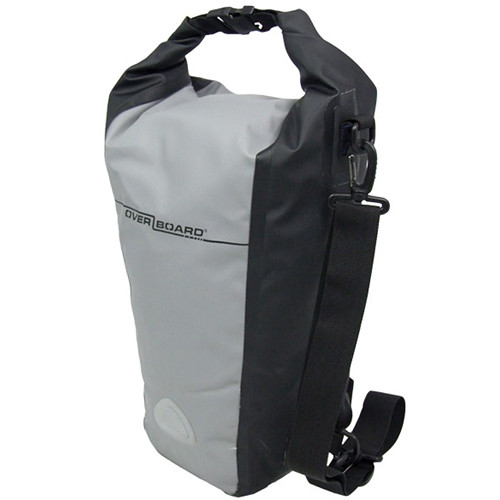
We keep going back to this bag. The Pro-Sports SLR Bag holds a pro-sized DSLR or mirrorless body with an attached lens, plus room for another lens or accessories. It's made from 600D PVC tarpaulin and features high-frequency welded seams and a rolled top design with three fold closures and clips. If you happen to drop this bag in the water, it will float, which sounds silly until you're standing at the edge of a lake staring at an expensive lens you'll never see again.
Customers continue to praise this bag by saying it does everything it claims. Many users have taken it kayaking, hiking in rainy weather, and shooting on the coast without losing any moisture due to the sealed seams. Customers did comment that the internal padding is significantly thinner than the average photo backpack, which is the primary criticism. Users stated that while the protection from water damage is excellent, the overall shock-absorbing qualities were less-than-average. If you tend to toss your bag around and hit it against rocks on a regular basis, you'll want to place your camera and lenses within a separate neoprene sleeve before placing them in this bag.
Many customer comments echo the same point about the strap digging uncomfortably into your shoulders on long hikes. Customers noted that the strap concentrates weight vertically into a narrower area than typical backpacks. Several users solved this by purchasing a third-party padded strap. The OverBoard-supplied clip-on strap performs adequately but isn't impressive. For shorter trips in areas prone to excess moisture, this is probably the right choice.
Who This Bag Is Best Suited For
If your job involves exposure to large amounts of water more often than once or twice per year and you carry a single body with one or two lenses, this is probably your best bet. Wedding shooters who occasionally work on beaches or boats, travel filmmakers shooting in monsoon-type environments, and any filmmaker doing run-and-gun in unpredictable weather will appreciate having this bag. It isn't the right choice for any photographer wishing to carry an entire studio setup, nor is it suitable for extended back-country trips requiring an excessive amount of gear.
OverBoard Classic Waterproof Backpack 30L
For individuals needing to carry more gear than the standard SLR bag can hold, the Classic Backpack enters the picture as a 30L roll-top model rated IP66. It floats, it includes padded shoulder straps with a chest clip, and it has an external side mesh pocket for a water bottle. Unfortunately, there's no built-in camera cushioning or dividers to protect your gear internally. You'll need to add your own internal camera cube or padded inserts to prevent gear from clattering around inside.
According to customer reviews, individuals purchasing this bag generally pair it with their own internal camera cubes or wrap each piece of gear individually in dry cells. Customers praised the comfort while wearing the pack over long distances as well as how well it carries empty volume. A common complaint is the difficulty of accessing cameras quickly due to the roll-top design forcing you to roll, unroll, untie, and dig through various layers of soft goods to reach your camera body. For an entire day of shooting at one location, this process may be tolerable. However, if you're attempting to rapidly capture magic-hour and need immediate access to your telephoto, it will be maddening.
Several users mentioned that the back panel does not breathe well in extremely warm or humid conditions. Welded seams eliminate ventilation capabilities, so there's no method of adding airflow without creating potential leak paths. If you're hiking in extreme heat, expect sweat dripping down your back. The bag is also available on Amazon if you prefer comparing prices.
OverBoard Waterproof SLR Camera Bag (Budget Top Seller)
The original OverBoard SLR bag is currently ranked as the top-selling waterproof camera bag at B&H with 44+ customer reviews, many reviewers praising its value for money. It's slightly smaller than the Pro-Sports version and accommodates a body with kit lens or a moderate prime, and it costs significantly less. The construction material is identical to the Pro-Sports version. Welded seams, roll-top dry bag design.
Customers continually praise this bag as providing bang for the buck. Users have reported using it for whitewater rafting excursions, sailing expeditions, and tropical hikes without any leakage issues whatsoever. Customers also liked that there are internal mesh pockets for storing memory cards and batteries, as well as a wet/dry divider that proves handy if you need to stow a soggy swimsuit or towel inside the bag at the same time.
Predictably, users identified a couple of shortcomings, primarily including low padding thickness (don't drop it on rocks). The bag accommodates one body and lens combination only. If you bring a second lens along, you're forced to swap lenses in wet conditions, which can be cumbersome. Users also mentioned that rolled tops are more difficult to open one-handed than flap-style bags. Considering its affordability, it offers tremendous value for entry into actual waterproof camera storage.
A Final Note Regarding Bag Capacities
If you're deciding between the Pro-Sports and the standard SLR bag, measure your equipment first. The standard bag easily fits a Sony Alpha 6700 with an attached 16-50mm. Larger bodies such as a Canon EOS R5 with an attached 24-70mm f/2.8 will fit, albeit with limited space remaining for an additional lens. The Pro-Sports version has additional height for accommodating pro-grade bodies.
OverBoard Waterproof Kayak Deck Bag 20L
For paddlers, this bag from OverBoard takes a different shape. It's a wider, lower bag that lashes to the bow or stern of a kayak using bungee cords, and it's in high-visibility yellow so you can find it in dark water if it comes loose. The 20-liter bag will comfortably fit a body, a couple of lenses, and a small drone or microphone kit.
Reviewers praise the bungee system and the fact that the bag floats when fully loaded. Others use it as a general dry duffel for boat trips, even when they're not using a kayak specifically. The shape is awkward enough that you probably don't want to buy it as a hiking bag, it doesn't ride comfortably on a back. A frequent note in the reviews is that the closure system requires both hands, so if you need to access gear you have to be parked on land or with the kayak stable. There's no good way to snatch a camera off the top of this bag while afloat.
Several users have added a little clip-on dry pouch on top for a phone or GoPro that they do want to access while paddling. Filmmakers shooting action camera footage on the water tend to carry their primary camera in a bag like this and run a small action cam for the in-motion shots.
OverBoard Waterproof Dry Tube Bag 5L (Compact Option)
Sometimes you don't need a camera bag, you need a dry sack big enough for one body and one lens. The cheapest serious option here is the OverBoard 5-liter Dry Tube. It's a roll-top tube with welded seams, a fold-seal system with snap couplers, and a removable shoulder strap.
Reviewers use it in various ways. Some throw a wrapped camera body inside for trips on the boat. Some use it as a backup dry layer inside a normal camera backpack so the gear is doubly protected. Users praise how compact and light it is when empty, meaning it's fine to keep folded away in a corner of a larger bag for emergencies.
The obvious limitation is zero impact protection. There's no padding, no dividers, no structure at all. You're trusting the dry bag to keep water out, and trusting your own wrap to stop the camera from banging against the side. Several reviewers specifically mention putting the camera in its original neoprene wrap, or in a small ICU, before sealing the dry bag. For sub-thirty-dollar protection from water, that's a fair trade.
SKB iSeries Waterproof Hard Case (For Cinema Kits)
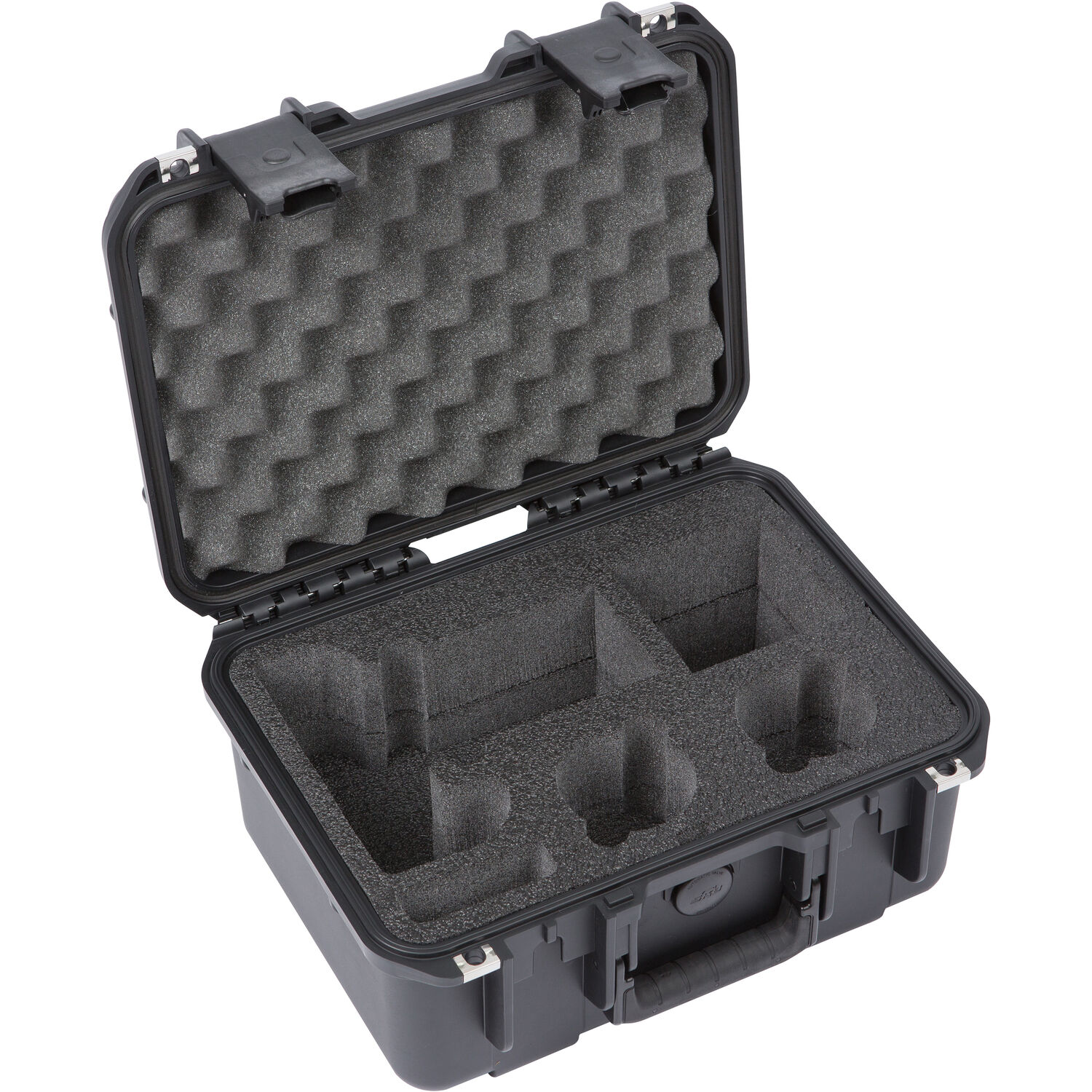
Different category, same problem. When you're traveling with a Blackmagic Pocket Cinema Camera or another small cinema body and you want it to survive checked baggage or a wet cargo hold, the SKB iSeries Hard Case is the answer. It's a highly durable hard case with foam contours cut for the Pocket Cinema 4K and 6K plus two lenses, and it includes a gasket seal and a pressure equalization valve. Note that this is a transport case, not a carry bag.
The reviewers who own it say they mostly use it for airline travel, location work, and storage. Users report that the case stands up to international routings without trouble, and that the foam is dense enough to hold gear snugly even if you bang the case hard. Several reviewers note the case is thin enough that you can fit a Pocket Cinema 4K and a small prime together but not a larger lens like a Sigma 18-35 attached to the body.
It's a heavy plastic box that you don't carry as a bag, except by the holding handles. You're not going to be hiking with this unless the entire shoot is on your back. The latches are stiff out of the box and need breaking in, as several users mention. For transporting on a plane, though, it's hard to beat. Check on Amazon for other configurations of foam for different cameras.
How to Pick the Right Bag for Your Work
Run through your actual shooting calendar. How often does your gear really, honestly get exposed to real water? Not "it might rain" but "I'll be on a boat" or "I'm shooting a coastal storm." If the answer is rarely, you'll be fine with a regular padded camera backpack with a rain cover. If the answer is regularly, you want a real welded-seam dry bag, and you should buy two sizes, a small one for a single body and a larger one for a full kit.
The other factor is access speed. If you're shooting landscape work in changeable weather where you need the camera out and away constantly, a roll-top dry bag will frustrate you. In that case, get a regular weather-sealed backpack and accept that you'll need to be careful around water. Save the dry bag for trips where the camera lives in the bag and only comes out at planned moments.
For most working filmmakers, the answer is owning a Pro-Sports SLR bag for water-heavy shoots and a regular padded camera backpack for everything else. Splitting your bags by use case is way more practical than trying to find one bag that does both.
Frequently Asked Questions
Are waterproof camera bags actually fully submersible?
Most aren't. Roll-top dry bags like the OverBoard line are rated for splash, spray, and brief accidental submersion, but they're not designed for diving or extended underwater use. The IP66 rating on the Classic Backpack means it survives heavy spray, not depth. For real underwater shooting you need a dedicated housing, not a bag.
Will a regular camera backpack with a rain cover work?
For light rain and short exposure, sure. For real wet, no. Rain covers blow off, leak through stitching, and don't seal at the zippers. If you're going to be working around water more than once in a while, get an actual welded-seam waterproof bag. No shortcuts here, and this is a lesson you only learn the hard way once.
How do I keep my camera from banging around inside a dry bag?
Wrap it in a neoprene cover, or insert a small camera cube. Most waterproof bags don't have built-in padding, which is a consequence of the welded structure. Plenty of reviewers mention adding their own padded inserts. You can also use packing cubes or ICU inserts from companies like F-Stop and Mountainsmith that will bring some organization to the interior of your dry bag.
Are these bags any good on snow shoots?
Most likely, since cold water is still water. The welded seams hold up well in subfreezing conditions. Just make sure that the plastic on the roll-top buckle is rated for cold, some cheap dry bags can get brittle in deep cold. The OverBoard line uses tarpaulin and standard webbing, which should be fine for any winter shooting. We'd avoid leaving them in a vehicle overnight at extreme temperatures.
What about storing a drone in the rain?
A 5L dry tube will hold most folding drones like a DJI Mini, as well as a couple of batteries and a controller. Larger drones will need the 20L kayak bag or the 30L backpack. Don't fly in the rain, but the dry bag will give you enough of a barrier to walk back to the car safely if weather rolls in unexpectedly. Compare a few drone bags on Amazon for purpose-built options too.
Do I need a hard case if I already have a dry bag?
Different jobs. A dry bag protects from water and floats. A hard case protects against impact and pressure but isn't always waterproof unless it's gasket-sealed like the SKB. If you're flying often and checking expensive gear, the hard case is the wiser move. If you carry your camera into wet environments under your own power, dry bags will win on weight and comfort.