
Blackmagic Pocket Cinema Camera 6K G2: What Changed and Does It Matter
The Blackmagic Pocket Cinema Camera line has historically provided more than a fair amount of bang for the buck. The original Pocket Cinema Camera 4K brought a legitimate cinema camera to independent filmmakers at a very affordable price, and the 6K and 6K Pro added a larger sensor and more features to the equation. Therefore, when Blackmagic introduced the Blackmagic Pocket Cinema Camera 6K G2 (the "G2"), many people were somewhat perplexed by the addition of "G2" to the model name. The "G2" would suggest some type of upgrade over the previous model, but the G2 is actually a stripped down version of the 6K Pro. And while that may seem like a drawback, it could be beneficial to the right filmmaker.
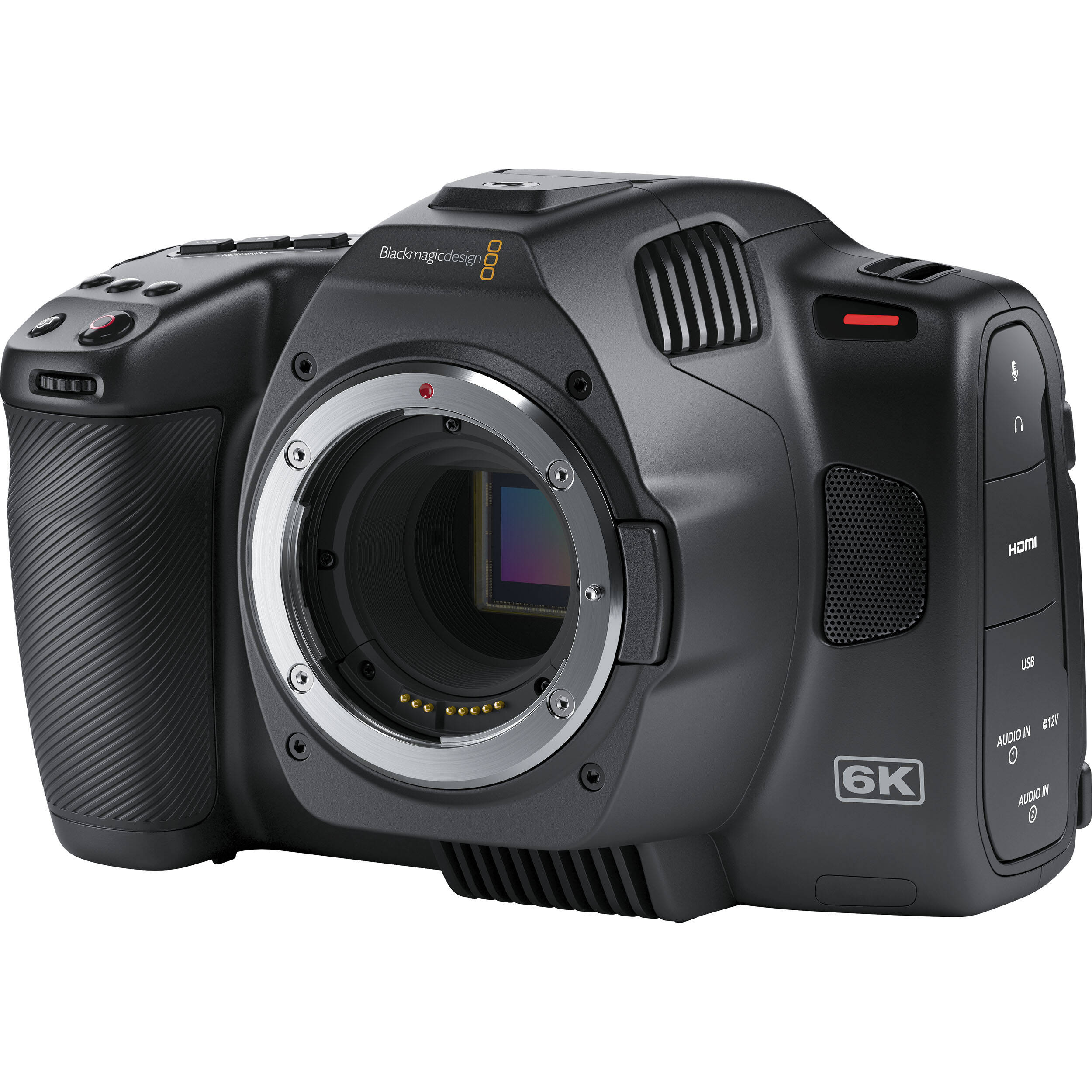
The 6K G2 retains the same Super 35 sensor as the 6K Pro, the same Gen 5 color science and the same 5-inch tilting touchscreen display. However, it loses the internal neutral density (ND) filters and dials back the screen brightness. This results in a camera that is priced lower, yet still provides the same image quality as the 6K Pro. While this tradeoff could make a lot of sense for studio work, well-controlled lighting setups or anyone who currently owns their own external ND filters, it will not be suitable for all filmmakers and we will explain why.
What the 6K G2 Really Is (and Isn't)
There seems to be a common misconception regarding the Blackmagic Pocket Cinema Camera 6K G2. There is nothing that indicates the G2 is the second generation of the Blackmagic Pocket Cinema Camera 6K. In reality, the G2 is simply the budget-friendly brother of the 6K Pro. As one B&H customer so clearly pointed out in the Q&A section, the G2 "removed the ND filters, reduced the screen brightness and lowered the price". That is the entire story of the G2 in one sentence.
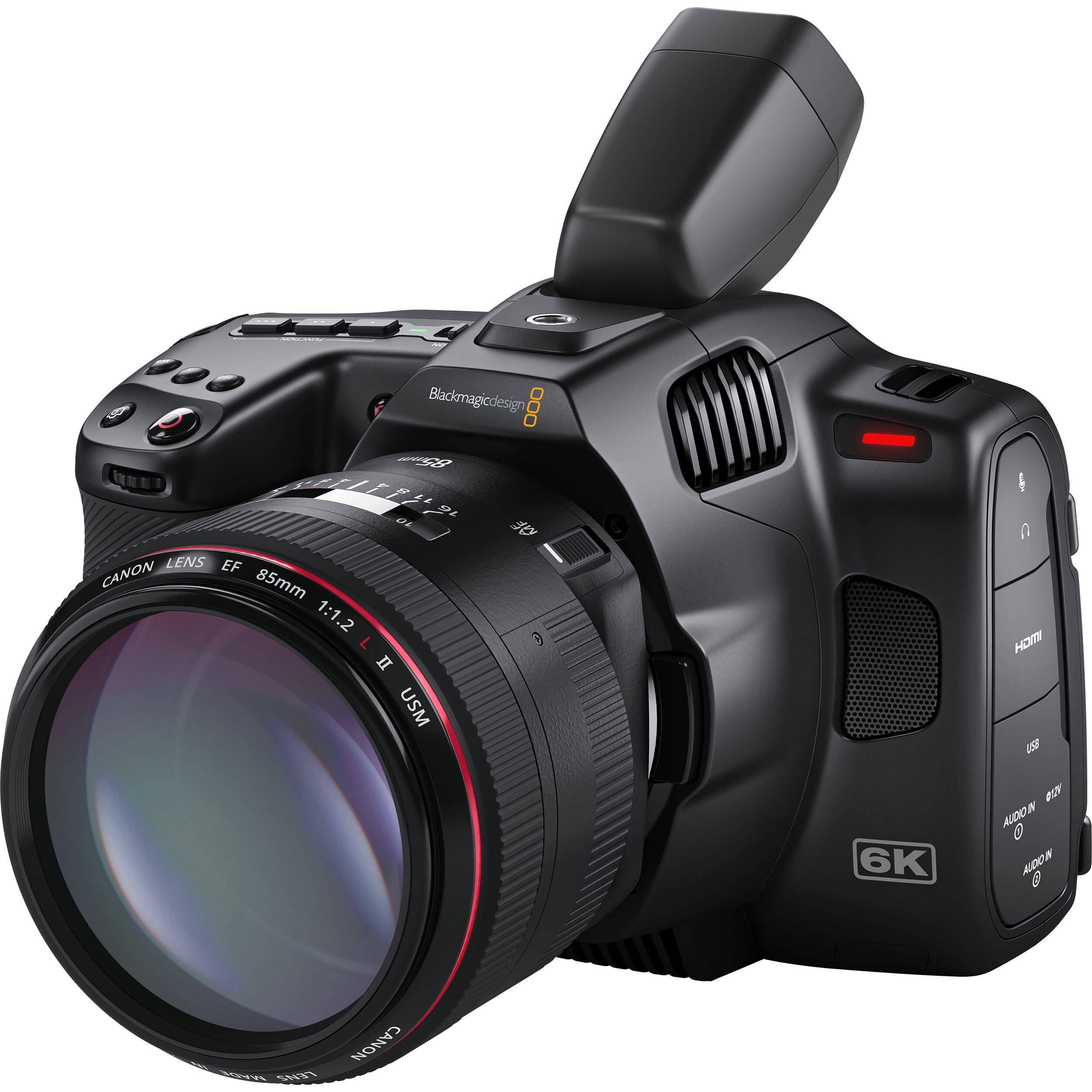
The key specifications remain the same as those of the 6K Pro. You receive the same 6144x3456 Super 35 CMOS sensor that provides 13 stops of dynamic range and dual native ISO of 400 and 3200. The Canon EF mount remains as well, providing the ability to use your current EF glass (Canon has a wide variety of great EF lenses available specifically for video) without the need for any adapters. You also have the option to record in both Blackmagic RAW and ProRes at various resolutions including full 6K at up to 50fps and down to 1080p at 120fps for slow-motion. The camera comes with a DaVinci Resolve Studio license, which is a rather generous offer given the cost of that software on its own. If you are unfamiliar with Resolve, there are many great DaVinci Resolve tutorials available online to assist in getting you started quickly.
Design and Handling
The camera itself is a combination of carbon fiber and polycarbonate. B&H reviewers have noted that they have used the G2 side-by-side with other cinema bodies and that it does not feel as durable as something such as the Canon C100. At the same time, there have been no reported issues with the reliability of the camera. The camera weighs 3.71 pounds when only the body is included, which is small enough to allow for the use of a gimbal for handheld work, however, due to the weight, you will want to invest in a proper gimbal system if you plan on doing a lot of run and gun style filmmaking.
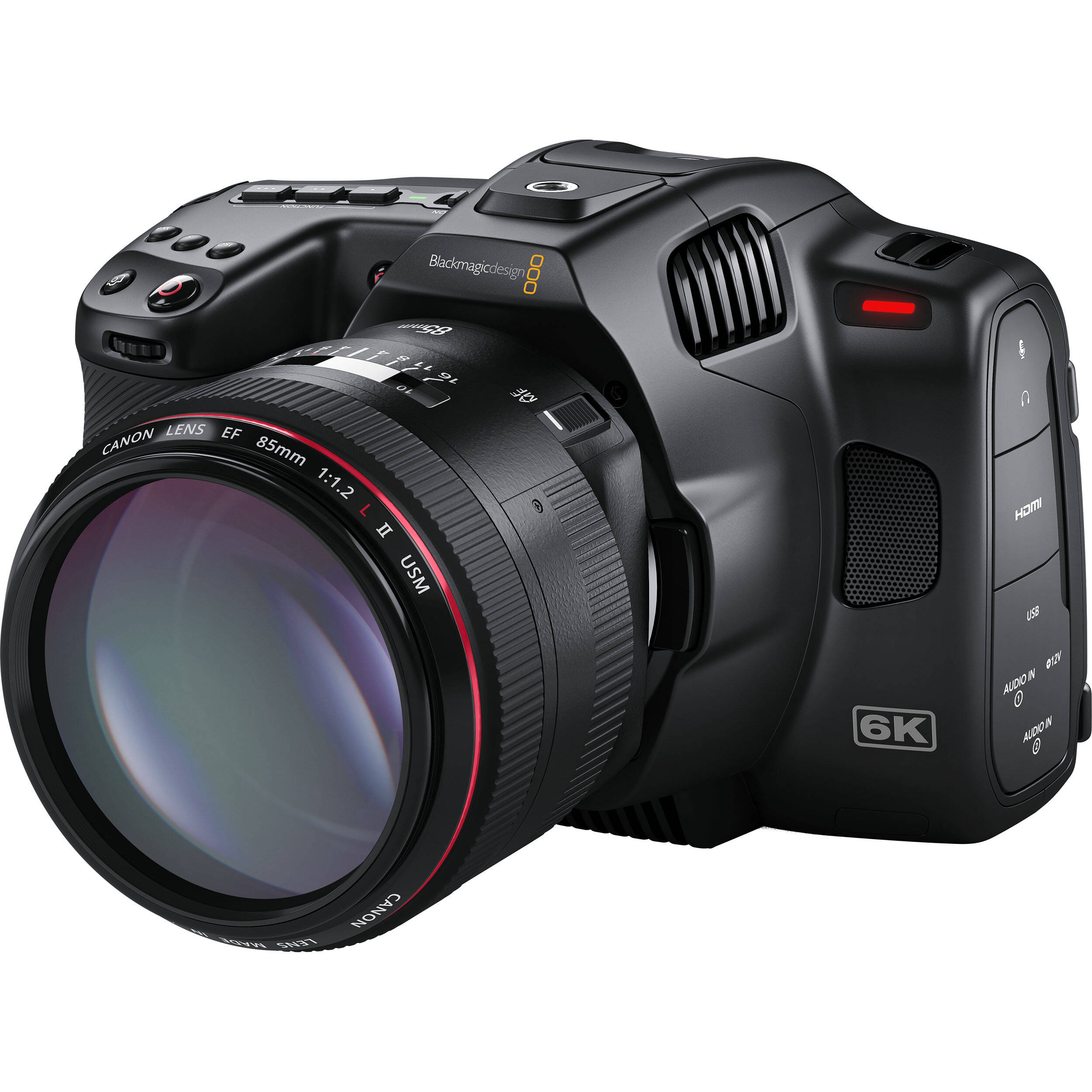
Something that is often overlooked by new Pocket Cinema Camera buyers is the fact that the camera has no hot shoe. Instead, it includes 1/4"-20 threads, which require either an adapter or a full cage setup to attach a microphone or a monitor. A B&H reviewer stated that he had to tape a microphone to the body of the camera because there was no way to properly secure it. If you intend to build out this camera (which most people do), you should include a cage in your initial investment.
Image Quality and Sensor Performance
This is where the Blackmagic Pocket Cinema Camera 6K G2 truly lives up to its reputation. The combination of the Super 35 sensor and Gen 5 color science provide an image quality that matches the 6K Pro, the original 6K, and even the Ursa Mini Pro 12K. This level of consistency across the Blackmagic family of cameras is a huge advantage for production companies using multiple cameras.
The dual native ISO (400/3200) allows for greater flexibility in mixed-lighting environments. The image quality received consistent positive reviews from B&H reviewers. One verified buyer called the image quality "phenomenal" for the price, and another described the image quality as having a "good image and good value for money." The overall opinion from users is that the camera produces images far exceeding expectations based on the price.
However, there is a caveat. Multiple reviewers pointed out that the noise in the image increases significantly at higher ISOs. One user reported that shooting at any ISO above 1000 is acceptable, but at ISO 3200 (ironically one of the native ISOs) and even as low as 1250, you see "a lot of noticeable noise." While Resolve's built-in noise-reduction capabilities can certainly help, it is going to take additional time during the post-production process.
Recording Options
The options for recording in the Blackmagic Pocket Cinema Camera 6K G2 are impressive. You can record:
- 6K (6144 x 3456) at up to 50fps in BRAW
- 6K 2.4:1 (6144 x 2560) at up to 60fps
- 5.7K 17:9 (5744 x 3024) at up to 60fps
- 4K DCI (4096 x 2160) at up to 60fps in ProRes
- 1080p at up to 120fps for slow motion
You can record to either SD cards (UHS-II) or CFast 2.0 cards. The BRAW codec is extremely efficient, resulting in relatively smaller file sizes compared to other RAW codecs. Additionally, the edit-friendliness of BRAW means you won't necessarily need a powerful editing computer. However, keep in mind, 6K files add up quickly, therefore, investing in a good external SSD for your editing workflow is virtually essential.
The Missing ND Filters: Is It Really Important?
That is the question and the response to that question is based solely on how and where you shoot. The 6K Pro has built-in 2, 4, and 6-stop ND filters. The G2 has none. If you are shooting outside in a bright sunlit environment and wish to continue to maintain a wide aperture for a shallow DOF, you will require external NDs. Your choices for external NDs are screw-on variable NDs, a matte box setup or clip-on filters.
For the studio shooter, event videographer shooting inside, or filmmaker who currently owns a matte box, the absence of the NDs on the G2 is a complete non-issue. You are simply saving money on the body and investing the savings into glass or accessories. But if you do a great deal of outdoor documentary-style filming or a great deal of run-and-gun style filmmaking, having those built-in NDs on the 6K Pro is a genuine convenience. You won't have to play around with filters every time the lighting changes.
A B&H reviewer who had shot with both cameras said he would probably go for the 6K Pro at full retail price "to have the option of internal ND, and because screen visibility is a little poor in daylight." However, he purchased the G2 at a reduced price and states it is "an unbeatable value" for an EF mount cinema camera.
Battery Life and Power
The 6K G2 utilizes Sony NP-F570 L-series batteries. These are relatively inexpensive and readily available, which is the good news. The bad news is that battery life is limited. Several B&H reviewers comment on this as a significant drawback, with one calling it a major flaw. You will need to carry at least three to four batteries for a full day of shooting, or possibly more if you are recording at higher resolutions and frame rates.
The camera ships with a 30W power supply that can charge the battery while you are shooting, which is helpful for stationary setups. Blackmagic also offers an optional battery grip that supports additional NP-F570 batteries for extended runtime. For longer events or for prolonged periods of continuous recording (the camera can easily continue to function for 1-2+ hours as long as you have sufficient power and storage space), you will likely need to keep it plugged in or utilize the grip.
The Weipu power input accepts 12-20V DC, so you may also run the camera off V-mount or Gold mount batteries via a D-tap cable, which is often how a great deal of production equipment ends up being set up anyway.
Autofocus, Monitoring, and Who Should Buy the 6K G2
The 6K G2 has a Canon EF mount with electronic communication, therefore, autofocus-capable EF lenses will autofocus. In theory. In reality, B&H reviewers have varying views of the AF performance. One user described the autofocus as "awful", stating it "does not appear to autofocus unless you press the autofocus button and even then, it is extremely slow to respond and requires pushing the button numerous times."
This isn't all that surprising. Cinema cameras generally aren't known for fast autofocus and the majority of serious shooters pull focus manually anyway. If you are transitioning from a mirrorless camera with eye-tracking AF, you'll need to readjust your expectations. The 6K G2 is primarily intended for manual focus workflows. A good selection of cinema primes or a similar product such as the Canon 18-80mm cinema zoom is the typical way most individuals shoot with this camera.
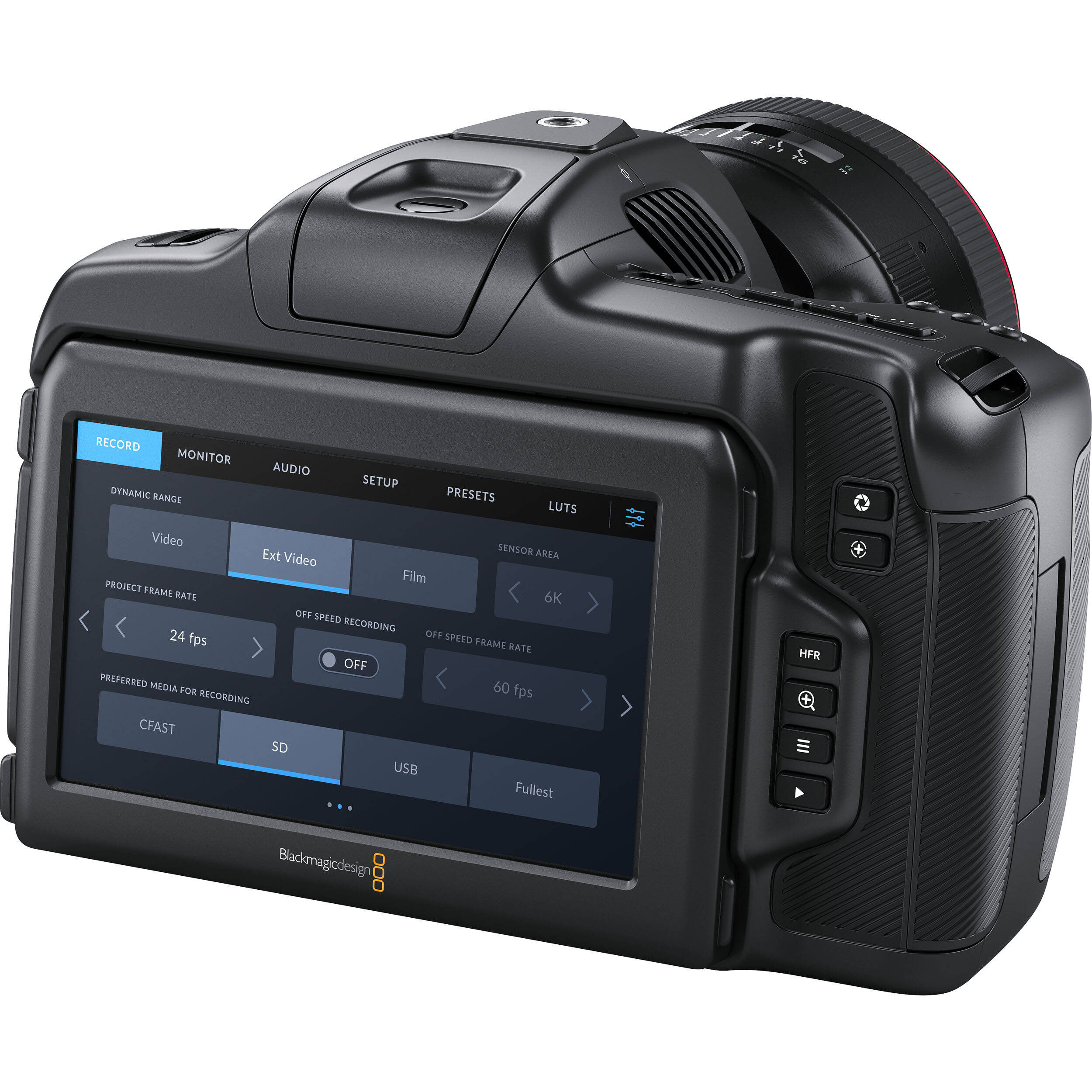
When pulling focus and utilizing an on-camera monitor, the 5-inch tilting touchscreen works, however, it is dimmer than the 6K Pro's screen. In bright, sunny environments, you could potentially have difficulty seeing it clearly. Using an external on-camera monitor eliminates this issue and provides you with a larger area to monitor critical focus.
Who It's For (and Who It Isn't)
The 6K G2 is best suited for:
- Studio and indoor shooters who do not require built-in NDs
- Budget-conscious filmmakers who want 6K cinema-quality without the 6K Pro price
- Atem Mini users that want a matching camera for multi-camera live streaming (the G2 contains native built-in color corrector support for Atem switchers)
- Filmmakers with existing Canon EF glass that they want to take advantage of
- Anyone looking to upgrade from the Pocket Cinema Camera 4K and wants a greater resolution
The 6K G2 is not the most suitable option for:
- Outdoor run-and-gun shooters that require ND filters almost constantly
- Low-light specialists who require low-noise high ISO performance
- Shooters that require reliable autofocus for fast-paced work
- Anyone without patience for rigging (cage, monitor, external mic, batteries)
Alternatives Worth Considering
If the missing NDs are a deal-breaker, the Blackmagic 6K Pro gives you the same sensor with built-in filtration for slightly more money. Alternatively, the Sony FX3 presents a unique approach with full-frame imaging, excellent autofocus capabilities and superior low-light performance, albeit at a substantially higher price-point and without the RAW workflow that Blackmagic shooters enjoy.
You may also check the price of the 6K G2 on Amazon and possibly purchase it in bundles with other items.
Frequently Asked Questions
Does the Blackmagic Pocket Cinema Camera 6K G2 contain DaVinci Resolve?
Yes. All Pocket Cinema Camera 6K G2 units include an activation code for DaVinci Resolve Studio. Normally, the DaVinci Resolve Studio license alone costs hundreds of dollars. Therefore, with the G2 you receive the full Studio version, not the free version. You will have access to functions such as noise reduction, HDR grading tools and multi-GPU support. Check out a color grading tutorial to get the most from it.
Can I make use of Sony E-mount lenses on the 6K G2?
No. The 6K G2 has a Canon EF mount and only supports native Canon EF/EF-S lenses. No official adapters for Sony E-mount lenses exist. If you have a collection of Sony lenses, this is not the camera for you. If you want Blackmagic color science with a different mount, look at the Blackmagic Cinema Camera 6K which comes in L-mount.
How long does the battery last on the 6K G2?
The battery life of the 6K G2 is its weakest feature. Based on a single NP-F570 battery, you can anticipate approximately 45-60 minutes of continuous recording, depending on resolution and frame rate. Many users have pointed to this as a limitation. Stock up on additional NP-F570 batteries (which are affordable), consider the optional battery grip, or plan to operate on AC power for longer shoots.
What is the primary difference between the 6K G2 and the 6K Pro?
The 6K Pro includes built-in 2/4/6-stop ND filters and a brighter screen. The 6K G2 removes both of these features and costs less. All of the remaining features (sensor, color science, recording formats, ports, tilting screen, EVF compatibility) are the same. Visit B&H for current pricing to view the 6K G2.
Is the fan noise a concern for audio recording?
The 6K G2 has a fan that operates actively to cool the camera. A few users have stated that it is audible. For narrative work or interviews, you will need to position your external microphones away from the camera body. Professional-grade microphones can connect to the dual mini-XLR inputs with phantom power, making this more of a workflow consideration rather than a fundamental flaw.
Will the 6K G2 record in Cinema DNG?
No. The 6K G2 records video in Blackmagic RAW (BRAW) and Apple ProRes formats. Photos captured by the camera using still photography mode are saved as DNG files. Video recordings are recorded as BRAW or ProRes. BRAW offers many of the advantages of Cinema DNG, including smaller file sizes and improved editing efficiency. You can also compare prices on Amazon if you prefer to shop around.