
The Best Lens for Wedding Video: 24-70 f/2.8 and the Kit Around It
A wedding gives you one chance at almost everything. The vows, the first kiss and the first dance happen once, often in dim rooms, while you move between the aisle, the back of the hall and the dance floor with no time to think about gear.
That's why wedding shooters care less about the perfect lens and more about the lens that never makes them miss. Focus has to be reliable, the aperture has to handle low light, and every lens change is a moment when something important can happen without you.
Below is why the 24-70mm f/2.8 sits at the center of the bag, the five lenses that earn a place around it, a one-lens option, and how to build a two-body kit.
The 24-70mm f/2.8 zoom is the spine of a wedding-video kit, and the rest of the bag exists to support it. Here is the glass worth carrying, with the verified owner reports behind each pick.
Why 24-70mm f/2.8 Owns Wedding Video
The Canon RF 24-70mm f/2.8 covers almost every moment, from the first vows to the last dance - and the RF 24-70 L IS adds stabilization that most 24-70 zooms leave off entirely. Check B&H's RF 24-70 pricing against the renewed market before committing. You'll find that having this focal range saves you from swapping glass, while the action moves fast during the day.
Staying on one lens means the ceremony coverage never stops for a swap - the same logic our a7III lens guide applies to Sony shooters. The exact moment you change glass is the moment the kiss happens, and this range is the core tool for staying mobile through it.
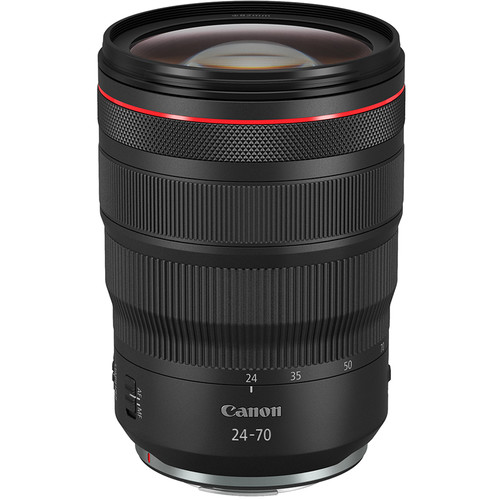
Dim churches are the standard challenge, not the exception - stone interiors, no flash allowed, and the f/2.8 aperture is what keeps the ISO out of noise territory.
Autofocus carries the ceremony: the RF lens locks onto eyes fast enough that a first-time-speaker pause does not turn into a hunting mess. There are no re-shoots at a wedding, so the autofocus speed is not a luxury - it is the difference between the take and no take.
One owner calls the stabilization 'the highest quality I have ever seen out of any lens,' and the same review praises the weight balance despite admitting the glass is 'a bit heavy.' The caveat worth knowing: a renewed-unit buyer hit a malfunction error that shut the lens down on two bodies - buy new or from a seller with easy returns.
The Five That Earn Their Bag Space
The Canon RF 24-70 f/2.8 L IS rates 4.5 across 34 buyers, and the standout verified review reads like a spec sheet: 'AF is easily a 10/10, IS is the highest quality I have ever seen out of any lens, easy 10/10.' The same owner calls the lens 'a bit heavy' but worth it across a long wedding day.
The renewed-unit malfunction complaint is the one warning - for a one-take event, buy new.
The Tamron 28-75 G2 is the value king: 4.6 across 654 buyers - the deepest sample in this guide - with an owner describing it as 'my go-to lens for most situations' after a year of use, citing sharp images and fast, reliable autofocus. Step up to the Sony GM II and you pay what one owner calls 'the GM tax,' justified by edge-to-edge sharpness and color rendition that survives projection on a big screen.
Tamron's 70-180 G2 covers the reach half at 4.7 across 133 buyers - one owner calls it 'sharp, lighter than many other equivalent lenses' with the constant f/2.8 giving more light than most telephoto zooms at the price. For ceremony work from the back of the room, that mix of light weight and a bright aperture is what you're paying for.
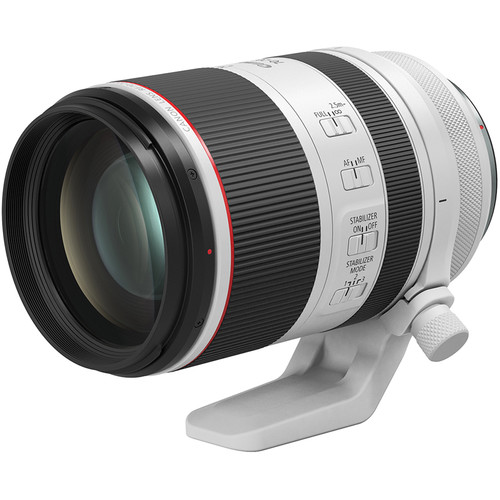
For the long shots, the Canon RF 70-200 f/2.8 L rates 4.6 across 52 buyers, and one owner has called it very expensive but a good lens. The switch panel is the working photographer's detail: focus-range limiter, AF/MF, stabilizer on/off and three stabilizer modes for panning. One renewed buyer reported mint condition at a lower price, which softens the math if you accept the used risk on a one-take day.
The One-Lens Answer: Tamron 35-150mm f/2-2.8
To stay on one camera body for the whole wedding, the Tamron 35-150mm f/2-2.8 is the best pick, because it covers everything from wide shots to tight close-ups without a swap. It opens at f/2 on the wide end and holds f/2.8 at 150mm - faster than any standard zoom at that reach.
The range carries the ceremony and the reception without a lens swap, which removes the riskiest minute of the day - the one where the bag is open. Nothing gets missed while the zoom ring turns, which is the entire argument for one-lens coverage.
The lens weighs more than the primes it replaces, but the fast aperture across the whole range earns the weight when you are threading through a crowded reception. It costs more than a basic zoom, but it replaces two or three lenses in the bag - and the f/2-to-f/2.8 aperture means the exposure stays workable when the ceremony moves from daylight into a dim hall.
Building the Two-Body Kit
A two-body setup for a wedding needs a wide lens for close-ups and a long telephoto for far shots, so you don't miss moments. Two mounted bodies mean the transition between rooms costs nothing but a step. A common pairing puts the RF 24-70 on one body and the RF 70-200 on the other - each camera carries its full focal range, and neither comes off during the ceremony.
A gimbal delivers the smoothest walks, but the RF lens's built-in IS keeps handheld reception footage usable when there is no time to balance a rig between events. If the lens handles the stabilization, handheld clips stop being the risky ones.
In-body and lens IS save the balancing time a gimbal demands, which matters when the schedule slips - pair the glass with one of the cameras in our filmmaker guide and the kit is complete.
Fast f/2.8 apertures in daylight push your shutter speed wrong, so a variable ND stays in the bag - our ND filter guide covers the picks. Plan the kit before the event: a body-and-lens decision made the night before is a decision you cannot fix during the vows.
Frequently Asked Questions
Why do I need an f/2.8 lens for weddings?
Having fast apertures is essential when you're filming inside dim ceremony venues like historic churches where natural light is often very limited. It helps you keep your ISO low without introducing distracting digital noise into your final wedding video footage.
Should I use image stabilization or a gimbal?
Both internal image stabilization and external gimbal setups are verified approaches for getting smooth footage depending on your specific gear and needs. A gimbal offers more control while stabilization is great for quick handheld movements during the actual ceremony.
Is it better to use RF lenses or EF lenses with an adapter?
An adapter makes older EF glass usable, but native RF lenses autofocus faster and control exposure more precisely - and adapters add one more mechanical link that can fail on a day with no second take.
Can I shoot a whole wedding with just one lens?
The Tamron 35-150 f/2-2.8 is the best one-lens solution if you want to avoid switching gear during the long wedding ceremony. This flexibility saves you from missing important moments during fast transitions between different scenes.
How many lenses should I carry in my camera bag?
The standard professional setup is two bodies with two lenses mounted, which covers every focal range without a mid-ceremony swap. That default also covers body failure - a wedding has no pause button when a camera locks up.