
Best Canon Lenses for Video: EF and RF Picks That Actually Deliver
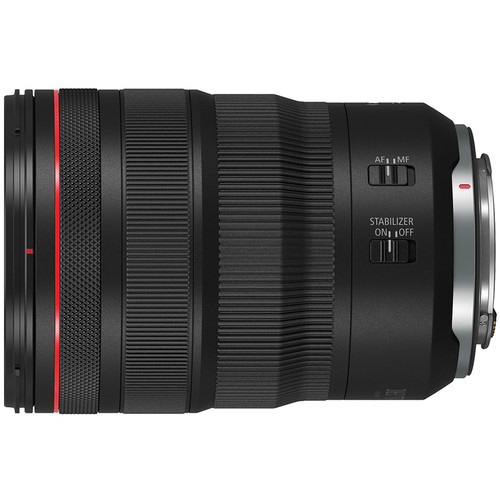
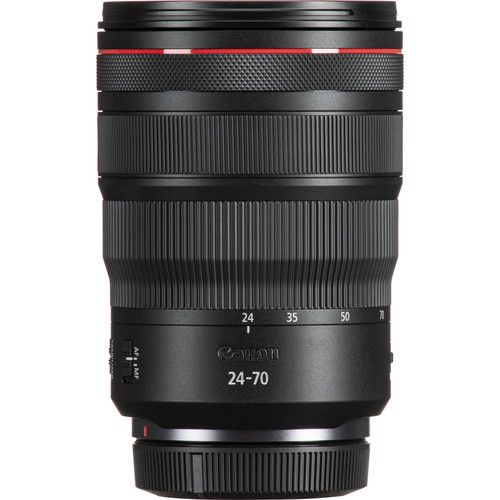
Canon offers its customers more video lens options than ever before, and although this is a positive development, there is also an added layer of complexity that comes with having multiple lenses available. Between the old EF mount and the new RF mount, you are now looking at over a dozen lenses that could potentially be used for video. However, "potential" is a far cry from "works well." The Canon RF 24-70mm f/2.8 L IS USM is the most popular choice among many Canon video shooters and for good reason, it provides the widest focal length without any compromises, but it's by no means the only video lens option, and the type of content you're producing may dictate whether it should be your first purchase or not.
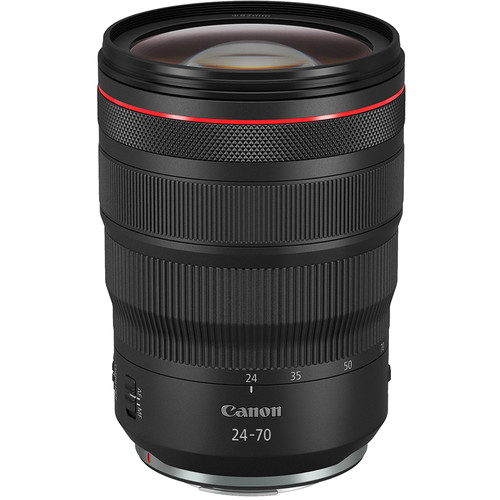
Below we've broken down the best Canon lenses for video in both the EF and RF mounts. In addition to covering what is important for video glass and why certain lenses perform better than others when you press the record button, we'll also provide information about which lenses are worthwhile investments at each price level.
EF vs RF Mount: What Does That Mean for Video?
RF Advantages
If you're shooting on a Canon R-series mirrorless body such as the R5, R6 Mark III or R7, using native RF lenses will provide you with a significant advantage when it comes to video. Due to the larger diameter of the RF mount, Canon was able to design optics with shorter back focus distances and, more importantly, they were able to include video-specific features within their newer RF glass. Such features include the near-silent operation of the Nano USM autofocus motors, reduced focus breathing on several models, and faster communication between the lens and body for continued AF tracking during recording.
However, many Canon shooters still have a number of high-quality EF lenses and the Canon EF-RF adapter functions well for most video applications. The adapter maintains full electronic communication with the camera, so you get normal functioning of autofocus, IS, and aperture control. A B&H reviewer who moved from a 5D Mark IV to an R5 Mark II noted that the EF adapter was "fine," however, moving to the native RF glass provided "a breathtaking" improvement in sharpness and detail.
When Using EF Still Makes Sense
While EF lenses are still a viable option if you're working with a mixed kit of Canon DSLRs and mirrorless, or if you've already spent a great deal of money on EF glass and aren't prepared to sell your entire collection, the Canon EF 24-70mm f/2.8L II is a still-capable video lens. Used prices have decreased significantly since the launch of the RF version of the lens. However, you are sacrificing some autofocus performance compared to native RF glass.
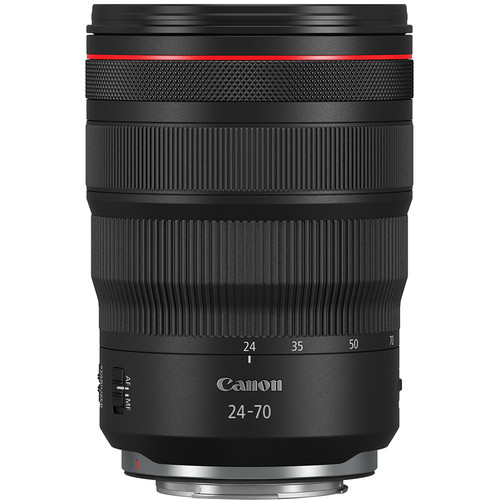
The Canon RF 24-70mm f/2.8 L IS USM: Why It Is Our Top Choice
Why This Lens Tops the List
The RF 24-70mm f/2.8 L IS USM is Canon's go-to zoom lens for a reason, the constant f/2.8 aperture provides sufficient light-gathering ability for interior shoots and sufficient control over the DOF to isolate your subject from the background. Three aspherical elements and three ultra-low dispersion elements help keep the image sharp across the entire zoom range. The Air Sphere Coating does a reasonable job handling flare and ghosting when you're shooting towards a light source.
For video specifically, the Nano USM autofocus system is the key selling feature of this lens. It's fast and nearly silent, so you won't be picking up motor noise on your audio track, which was a frequent problem with Canon's older STM and USM designs. The five-stop optical image stabilizer, combined with in-body stabilization on cameras like the R5 and R6 Mark III, provides combined stabilization that makes handheld shooting a practical option. B&H reviewers consistently mention the IS performance, with one user reporting that they could shoot handheld down to 1/5 of a second and still maintain sharpness.
What Users Have Said About It
As of writing, this lens has a total of 302 reviews with a 4.9-star rating on B&H. Users have overwhelmingly praised the quality of the images and versatility of the lens. One reviewer who went from a Tamron 24-70mm to the L-series glass stated that it was a "revelation" in terms of low-light shooting, and that the night scenes remained sharp at shutter speeds that would have been unattainable on his previous lens. A longtime Canon shooter wrote that he thought the images from the L-series glass were "just remarkable" once he had swapped from the EF 24-70mm f/4.
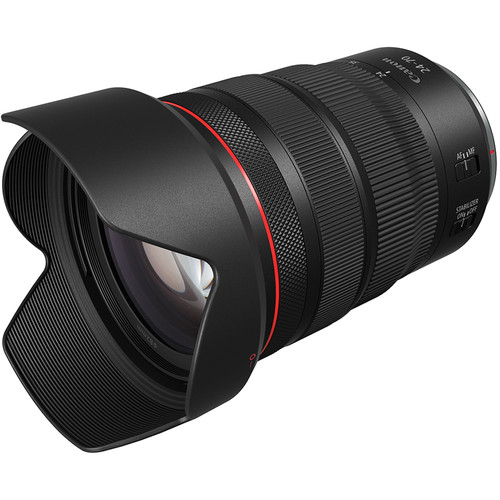
The most frequent complaint in the reviews is the weight of the lens. The RF 24-70mm f/2.8 L IS USM weighs significantly more than the f/4 version, and when you add a full frame body with a battery grip to the mix, the rig feels heavy. A B&H reviewer noted that carrying the lens felt similar to carrying a 1DX with a 200mm prime attached. That doesn't mean that it's a deal-breaker for the average setup, but if you're doing run-and-gun handheld work all day, you'll definitely feel the difference. Some reviewers have also noted that there is a bit of vignetting wide-open at the extreme ends of the zoom range, but most shooters either correct for this in post-production or don't notice it when filming.
Users have consistently mentioned how much they like the configurable Control Ring for video. You can set the ring to aperture, ISO, or exposure compensation, allowing for smooth adjustments without reaching for the camera body during a take. Several reviewers have noted that the rings are stiff upon arrival, but loosen up to a nice feel after some time using the lens.
Key Features Important for Video
Autofocus for Video: Nano USM
Not every autofocus system works well for video. You want smooth, quiet, and continuous tracking with little to no hunting, and that's precisely what the Nano USM provides. Canon's Dual Pixel CMOS AF in conjunction with this lens performs subject tracking during recording. It's not nearly as aggressive as Sony's tracking with their native lenses, but for the majority of video work including interviews, B-roll, and event coverage, it will accomplish the task without any distracting focus pumping.
Focus Breathing
Focus breathing occurs when the FOV changes as you adjust the focus distance. It's a minor issue in photographs, but it can be very noticeable in video, especially during rack focuses. The RF 24-70mm has significantly less focus breathing than older EF designs, but it is not entirely gone. Canon's newer VCM lenses (i.e., the RF 24mm f/1.4 L VCM and RF 50mm f/1.4 L VCM) do a better job of minimizing focus breathing, but those are primes and cost significantly more than the RF 24-70mm.
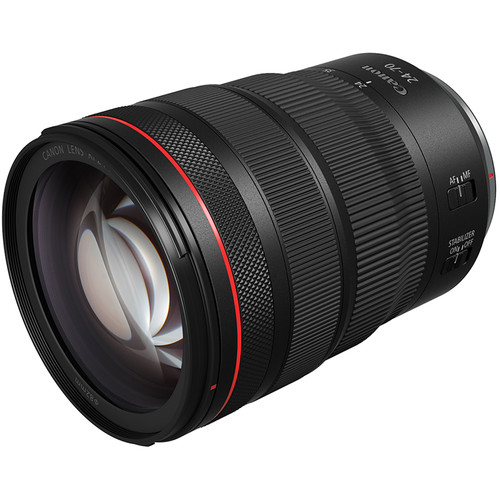
Image Stabilization: The IS + IBIS Combo
For mirrorless camera filmmaking, the combination of lens-based IS and in-camera IBIS is another important consideration when choosing lenses. The RF 24-70mm's five-stop IS works in conjunction with the coordinated IBIS in the R5 and R6 bodies to provide stabilization that truly approaches the smoothness of gimbals for slow movement. You won't replace a gimbal with this lens for walking shots, but for stationary handheld and gentle panning, it is incredibly impressive. B&H reviewers who paired the lens with the R6 Mark III describe the combination as a "hand holding image capturing beast."
Alternative Canon Lenses to Consider
The RF 24-70mm f/2.8 is the go-to lens, however, depending on the type of shots you take, you'll need a variety of lenses. Here are a few alternatives to consider for your Canon video shooter's bag.
Canon RF 15-35mm f/2.8 L IS USM
Wide-angle portion of Canon's RF "holy trinity." This lens is worth a look if you plan to shoot real estate, architecture, documentary interiors or any form of establishing shot work. Like the 24-70mm f/2.8, it has Nano USM autofocus, five stops of image stabilization, and build quality similar to the 24-70mm. However, the 15mm end offers a dramatically wide perspective without going full fisheye, and the constant f/2.8 aperture keeps your exposure consistent through the zoom range. Check it out at B&H.
Canon RF 70-200mm f/2.8 L IS USM
The other essential in the holy trinity. For event coverage, talking head interviews with background separation, or any situation where you can't get physically close to your subject, the RF 70-200mm f/2.8 delivers. Canon made this one significantly shorter and lighter than the EF version using an internal zoom design, which also means the length doesn't change while zooming, a key detail for gimbal work.
Budget-Friendly Alternatives
Not everyone needs L-series glass. The Canon RF 50mm f/1.8 STM is probably the best value in the RF lineup for video. It is light, sharp enough, and the f/1.8 aperture gives you shallow depth of field and low-light capability for very little money. The STM motor is quiet enough for video recording although it is slower to focus than Nano USM.
For APS-C shooters on the R7 or R10, the Sigma 18-50mm f/2.8 DC DN is a steal. Constant f/2.8 in a compact package, with 253 reviews on B&H and strong marks for video performance. It is not built like L-series glass, but at this price it is hard to beat. You should also compare prices on Amazon to find the best deal.
If you are interested in how prime lenses compare for video work, that is a whole different conversation, but generally primes give better low-light performance and more character in the image at the cost of flexibility. The Sigma 18-35mm f/1.8 Art remains a favorite in that category, and we have detailed it in our best lens for video roundup.
What to Look for in a Canon Video Lens
Not every good photo lens is a good video lens. When you're shopping for Canon glass specifically for video work, here's what to prioritize.
Autofocus motor type. Nano USM is the gold standard. STM is acceptable. Ring-type USM from older EF lenses can be noisy and jerky for video, so avoid those if continuous AF matters to you.
Image stabilization. Lens-based IS combined with body IBIS gives you the best handheld results. Not all RF lenses have IS, so check before buying.
Aperture ring or Control Ring. The ability to smoothly adjust aperture from the lens itself, without clicking, is crucial for video. Most RF lenses have a configurable Control Ring. Canon's newer VCM primes add a de-clickable aperture ring specifically for video shooters.
Focus breathing. Less is better. Canon's VCM primes (RF 24mm f/1.4 L VCM, RF 50mm f/1.4 L VCM) were designed with minimal breathing for video work, but they are significantly more expensive.
Having the right lens is only part of the equation. Pairing it with a good on-camera monitor helps you nail focus and exposure while shooting, especially on longer focal lengths where the small rear LCD isn't enough.
Frequently Asked Questions
What is the best Canon lens for video overall?
The Canon RF 24-70mm f/2.8 L IS USM is the most versatile pick for video work. The 24-70mm range covers interviews, B-roll, and event coverage without swapping lenses, and the Nano USM autofocus is nearly silent during recording. Check current pricing at B&H Photo.
Can I use EF lenses for video on Canon RF cameras?
Yes. The Canon EF-RF adapter maintains full electronic communication including autofocus, IS, and aperture control. Performance is slightly reduced compared to native RF glass, but most EF L-series lenses work well through the adapter. It's a solid bridge strategy while you transition to RF glass.
Is the Canon RF 24-70mm f/2.8 too heavy for handheld video?
It's heavier than the f/4 version and you'll notice the weight during long handheld sessions. B&H reviewers consistently mention the heft as the main trade-off. That said, the excellent IS system compensates by letting you shoot stable footage at lower shutter speeds. For extended run-and-gun shooting, consider pairing it with a gimbal or monopod.
What's the best budget Canon lens for video?
The Canon RF 50mm f/1.8 STM. It is light, affordable, and the f/1.8 aperture handles low light well. The STM motor is quiet enough for video recording. For APS-C shooters, the Sigma 18-50mm f/2.8 DC DN offers zoom versatility with a fast constant aperture.
Do Canon RF lenses have focus breathing?
Most RF lenses have some focus breathing, but it varies by model. The RF 24-70mm f/2.8 has minimal breathing compared to older EF designs. Canon's newer VCM primes (RF 24mm f/1.4 L VCM, RF 50mm f/1.4 L VCM) were specifically designed to nearly eliminate breathing for video work, but they are significantly more expensive.
Should I buy the RF 24-70mm f/2.8 or the RF 24-105mm f/4?
For video, the f/2.8 is the better choice despite the narrower zoom range. The extra stop of light makes a real difference in low-light shooting and background separation. The 24-105mm f/4 has more reach, which is useful for run-and-gun documentary work, but you lose a full stop of light and the shallow depth of field look that f/2.8 delivers. If budget is a concern, the 24-105mm is a capable lens, just know what you're giving up.