Best Waterproof Camera Bags for Filmmakers and Outdoor Shooters

A waterproof camera bag isn't just one category. It's three different types of bags that provide solutions to three different types of problems. The sealed Pelican 1510 hard case protects your equipment from damage during a flooded basement trip or when crossing rivers in Mongolia. A roll-top water bag such as the OverBoard Waterproof SLR would be the right choice if you are going to kayak or sail, because this type of bag gets wet but still protects your equipment. If you want to go hiking and protect your gear in light rain, then a weather-resistant backpack such as the Peak Design Everyday Backpack is what you should choose.

Purchasing the wrong type of pack is generally the biggest mistake. A person may buy a hard-case pack thinking it will be suitable as a daypack, or purchase a water-resistant pack thinking that it would make it waterproof if they were going to put it in the water. This article will break down the three types of packs you can buy, which ones are worth spending money on, and which type of pack best fits your shooting conditions. The bottom line: hard cases for moving gear around while traveling, dry bags for water sports, and backpacks for general outdoor shooting.

Hard Cases: Pelican and Knockoffs

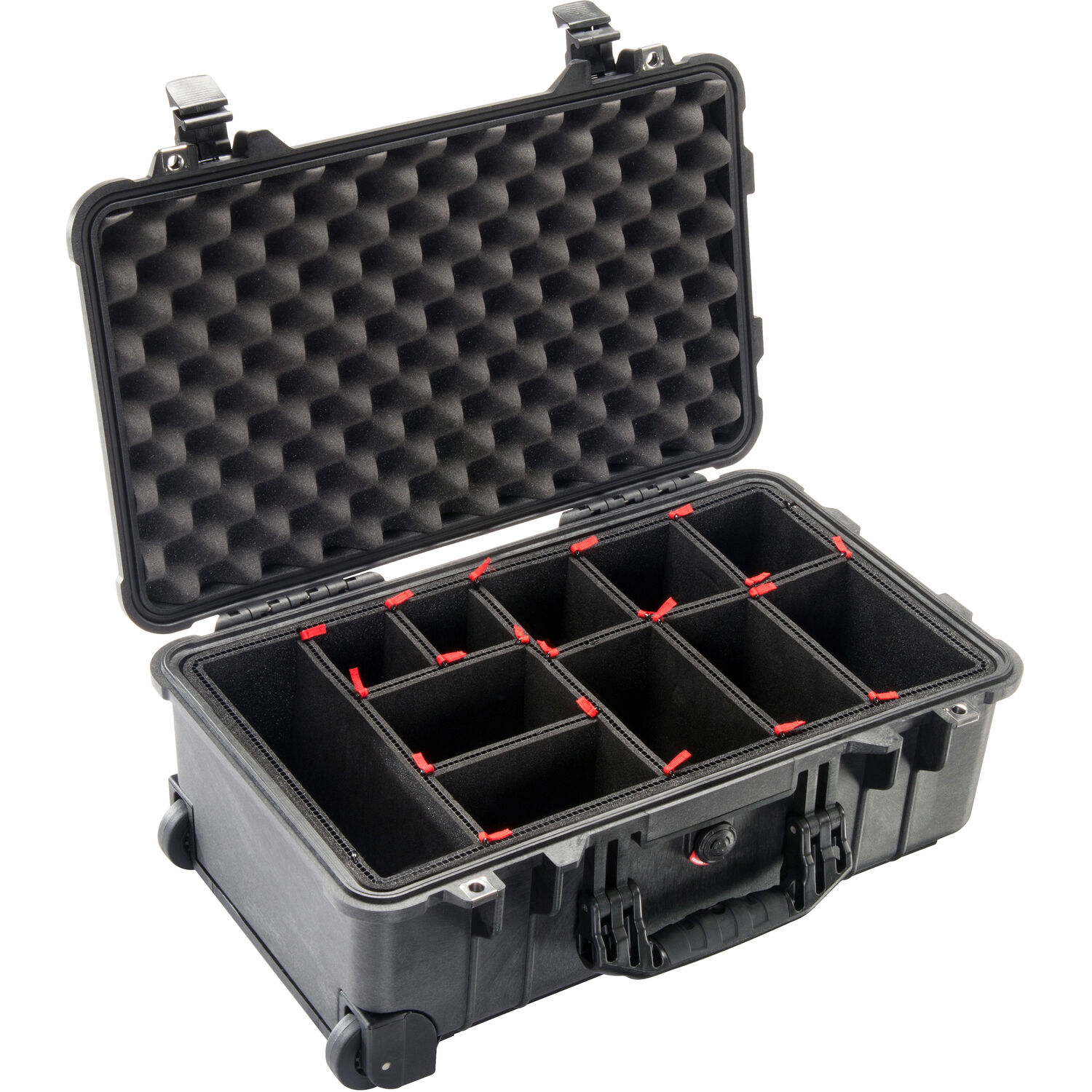
The most protective way to transport your high-end photography equipment by airplane is with hard cases. The Pelican 1510 is the smallest carry-on size hard case available from Pelican that will fit into an overhead bin of an aircraft. They can withstand airline baggage handlers, hotel shuttle buses, and even being tossed around the bed of a pickup truck. It has been rated as an IP67 device, which means it is completely dust-tight and can be submerged under water up to one meter for up to thirty minutes.

Pelican 1510 carry-on hard case with Trekpak dividers open showing camera compartments

It is the Trekpak divider system that turns the Pelican into an actual camera bag. Without it, you'd be looking at a big chunk of foam. Trekpak provides red-tabbed adjustable dividers to be placed in whatever configuration fits your gear. Users on various photography forums continually discuss how much better the Trekpak version is than just the basic pluck-foam, and that they last for many years without failure.

Pelican 1510 case exterior view showing reinforced latches, wheels, and a long handle

The major drawback of the 1510 is weight. When empty it is approximately 13 pounds. When loaded with your mirrorless body, three lenses and a few accessories, you can expect it to be 20-25 pounds. For airport travel it does roll easily on its wheels. However, if you are planning to hike anywhere with the 1510, forget about it. Its size will make it difficult to store at home and in your vehicle as well. Reviewers have been consistent in stating that the 1510 is too much for casual photography but just what is needed for protecting professional cinematography equipment, flying drone batteries compliant with TSA regulations, or other valuable items requiring protection.

Roll-Top Dry Bags: OverBoard and Sea to Summit

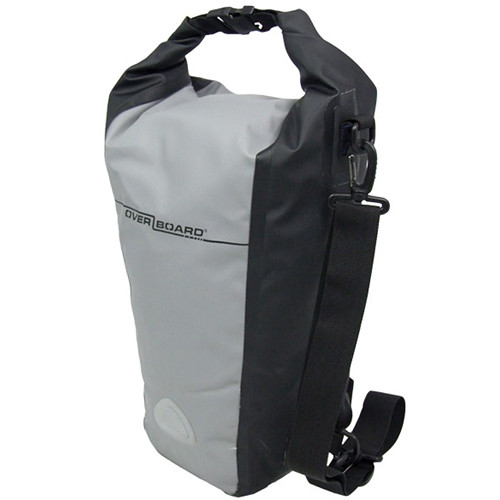
Roll-top dry bags are perfect for water sports like kayaking, sailing, fishing, and any other time you plan to have your bag in the water rather than exposed to rain. They are made using a heat-sealed seam and roll-top closure which involves folding it over three or four times then clipping it shut to create an airtight seal. The OverBoard Waterproof SLR Camera Bag is designed specifically for one camera body plus either one lens or two.

OverBoard waterproof SLR camera bag with roll-top closure and shoulder strap

The OverBoard's floatation allows it to remain afloat, regardless of weight. That is important if you go overboard with your kayak or stand-up board during an active paddle session. The internal padding around the camera pocket provides some protection as well, so you're not simply putting your camera in a cheap plastic bag.

However, users have indicated that the weakest point of the OverBoard system will be the access flap in extremely heavy spray conditions. In those conditions, you cannot leave the flap open and shoot at the same time. However, users indicate that the access flap is bulletproof for all other situations such as moving from one location to another. The HF welded seams of the OverBoard system were developed using the exact same technology used in whitewater paddling dry bags. As such, the claims made by OverBoard regarding its ability to provide waterproofing are not marketing hype, they are based upon actual tested performance.

Side view of OverBoard waterproof SLR camera bag with protective padding inside the bag

Hard cases will provide better protection against drops than soft roll-top style dry bags. Hard cases are designed to protect cameras from drops and impact while they also keep them dry in wet conditions. Therefore, if your working environment is primarily water with little chance for impacts, a roll-top dry bag would likely work well. However, if your primary working environment includes both high levels of water as well as potential for significant impacts, you should use a hard plastic case that can be protected by a dry bag, or a sealed Pelican equivalent.

Weather-Resistant Backpacks: Peak Design, Lowepro, Wandrd

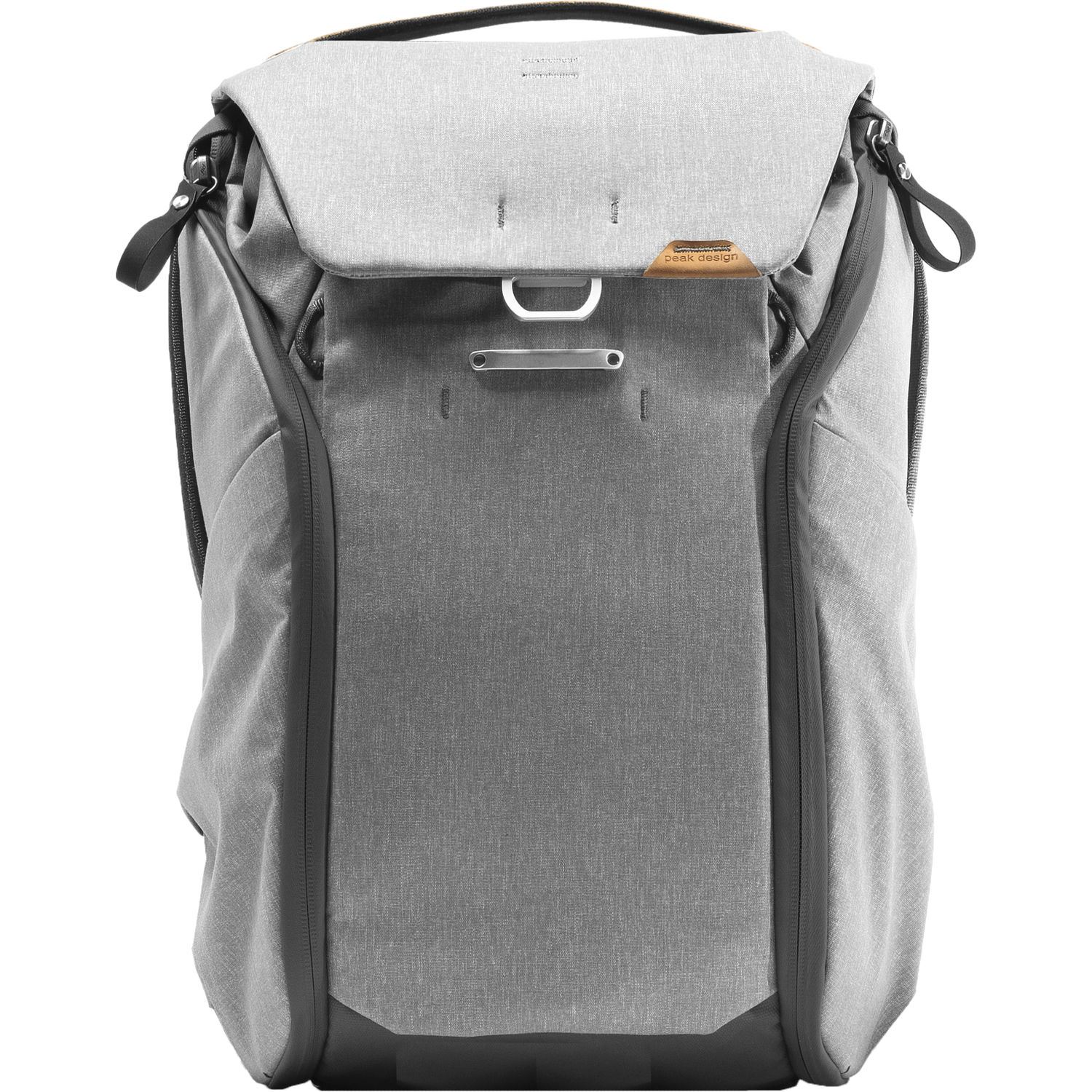
The third option is also the one most filmmakers really want, a backpack that can handle rainy and damp conditions as well as be used as a working camera bag during those remaining 95% of your shoots. The Peak Design Everyday Backpack 20L is very much the go-to option in this category. With its 400-denier nylon canvas water-resistant exterior, the MagLatch top closure that opens easily allowing fast access to your gear, and the FlexFold dividers that will fit into whatever gear configuration you are using on set.

Peak Design Everyday Backpack 20L front view in ash color

Weather-resistant means the camera bag can withstand ordinary rain for a short time, but if submerged under water, your camera and all of its contents will be wet. Most photographers find this acceptable as long as they are just taking casual shots while walking in a light sprinkle, hiking in light snow, or when caught in a brief downpour. If complete protection from water is needed to shoot during an extended period of heavy rainfall, the use of a rain cover over the top of the camera or carrying a roll-top dry bag inside with the camera should provide adequate protection.

Peak Design Everyday Backpack front opening showing FlexFold dividers and dual side access

Lowepro's DryZone line takes it further. Specifically, the Lowepro DryZone 200 is the world's first fully waterproof soft-sided camera pack that will float when filled with gear. Like a dry bag, it has welded seams for its outer layer but incorporates camera protection and comfortable backpack design features. Aesthetically speaking, this one is louder in color, being bright yellow, and costs more than the Peak Design version. However, if you truly require a completely waterproof backpack as opposed to simply water-resistant, this would be your best option.

Both the Wandrd PRVKE and the F-Stop Loka are a couple of other bags to consider when you are filming in unpredictable weather. These two bags both come with rain covers, an internal camera cube, and are rated to be water-resistant due to their zippers. Although both are water-resistant they each have different focus areas. The PRVKE is made for the traveling photographer that needs a bag that will hold all your essentials while on the road. The Loka has been designed specifically for those who are doing outdoor shooting like landscape photography that needs room for larger equipment.

Capacity and Insert Systems

The amount of gear that will fit into your camera bag will determine what type of bag is best for you. A single mirrorless body along with two to three lenses would work well in an OverBoard or a smaller daypack such as the Peak Design 20L. A full kit consisting of one body, four to five lenses, a drone, and various accessories may require either a Pelican 1510 or one of the many larger 30L-plus backpacks. It's always better to plan for the actual items you have now rather than those you think you will have at some point in time.

The insert design is just as important as the bag design itself. In terms of hard case inserts, there isn't a better option than Pelican's Trekpak. In terms of soft case inserts, I think Peak Design has the most flexible options with their origami-style FlexFold divider. Because of its flexibility it fits into your individual lens shapes far better than fixed rigid foam block inserts. Lowepro and Think Tank have solid uses for Velcro-divided styles, however, at first glance these products seem slightly lower quality.

For using a tripod or other long item, look for the external lashing points and the two side compression straps. If you are planning to shoot outdoors then consider the right tripod for outdoor use. Most outdoor bags will assume that you plan to pack your tripod on the outside of the bag as opposed to packing it in. Be certain that the tripod you purchase will fit into the external attachment points prior to purchasing.

Padding and Impact Protection

Waterproofing can be thought of as one type of feature, padding would be the other. The padding in a waterproof dry bag keeps the water out from your camera, but does little to nothing to prevent it from being dropped. On the other hand a hard shell case provides almost no flex but will provide maximum protection against impacts. A backpack such as the Peak Design is somewhere in the middle on this spectrum. It contains padded compartments that are designed for handling typical bumps you might experience when carrying your gear, or if you drop your pack into a trunk in a car, but they do little to help protect your gear against a direct fall.

When using your camera bag to transport your equipment in rugged settings like rocks, boats, or brush and need to be able to withstand heavy use of setting down on abrasive surfaces, choose an exterior material that will protect against scratches, abrasions, cuts and damage and consider additional protection for the base panel as well. In this case the Peak Design has a structured base. The Lowepro DryZone has a reinforced bottom and corner area. The Pelican is certainly the most durable. Most cheap waterproof bags are made by companies you have never heard of. They tend to skip over the base panel since that's usually the first thing that gets damaged.

Specific Picks by Use Case

When using your camera equipment in conjunction with traveling by air, the best case to use would be the Pelican 1510. It has Trekpak dividers for easy organization, it is carry-on size, is rated IP67 which makes it waterproof, and is also TSA-friendly when you follow all of the guidelines for lithium batteries. The additional cost will be worth it if you opt to purchase the Trekpak model. Using this case is ideal for commercial shoots where lost time due to damaged gear cannot happen.

For kayaking, sailing, fishing, or any water sport, the OverBoard Waterproof SLR is suitable for smaller capacities. Larger capacities can be accommodated with a Watershed Chattooga. A roll-top will allow it to float once it's loaded. It will also be the only category that actually has a chance of surviving submersion in its soft form.

For day hikes, travel, and general outdoor photography in mixed weather, the Peak Design Everyday Backpack 20L is a weather-resistant backpack that's easy on your back while carrying a body, two or three lenses, and a 15-inch laptop. It has a rain cover available if you're expecting bad weather. This will be the most suitable bag for about 80% of all outdoor photographers.

For serious waterproof backpacking with your camera equipment use the Lowepro DryZone 200. This bag can float, and truly is waterproof, not just water-resistant, as well as having a real backpack design to fit you comfortably. The weight and cost of this bag are higher than that of the Peak Design however. In cases where true waterproofness is a must, then the Lowepro would be the better choice.

For example, in extreme weather environments or when you are concerned about transport vibrations to your drone setup, this will always result in the hardcase winning out.

Maintenance and Storage

Waterproof bags will be water-tight only as long as the seal remains intact. Inspect the gasket of a Pelican-style hard case annually for cracks. If you find any, it would be best to replace the gasket. Dry bags that have rolled tops tend to leak at the point where they meet the roll-top due to the seam being compromised by welding or other manufacturing processes. The first place to start when checking for leaks in these types of dry bags is at the welds for delamination. Additionally, do not over-tighten your backpack with a rain cover as this can stress the material. It's also important to check all attachment points prior to the beginning of each season for tears.

Storage is important too. When storing a closed Pelican case do not put damp gear inside because the seal will trap moisture and you can develop mildew. Unroll your dry bags when they are stored in a cool dry location to help increase the lifespan of the welded seams. Hang or stand your backpacks instead of piling them in a closet which squishes your camera padding.

For storing cameras or lenses for extended periods in a waterproof bag or case, add some silica gel packs and swap out the silica packs every three to six months. Even if a bag is completely sealed, there will be some degree of internal moisture in the bag because all the equipment inside has been exposed to air at one time. Silica gel packs handle this type of moisture without your needing to do anything.

Frequently Asked Questions

What's the difference between waterproof and water-resistant?

Waterproof bags can be immersed or submerged into water. Consider purchasing a bag that has either an IP67 or IP68 rating, or one with fully submersible statements on it as long as those statements include welding of the seams. A bag being waterproof is different than one that is merely weather-resistant since the latter only protects against the rain and splash type of water exposure. It won't protect you if your bag is fully submerged into water. Always read the specifications of your product, not what its marketing says about it.

Can I take a Pelican 1510 as a carry-on?

Yes, the Pelican 1510 is designed to be in-line with typical airline carry-on measurements of 22 by 14 by 9 inches for a lot of U.S. domestic airlines as long as you pack it wisely, and are prepared for your bag to be opened by security. Some international airlines have stricter size limits than others, so make sure you check prior to booking.

Will a roll-top dry bag really float with a camera inside?

Good ones will. The OverBoard and other properly sealed roll-top bags have enough trapped air when closed that they can normally carry your average DSLR kit. Cheap dry bags may not. Test the seal in a sink with a non-electronic test weight first before trusting them with your valuable equipment.

How do I protect a camera in rain without a dedicated waterproof bag?

A large trash bag and some duct tape are a good temporary solution. However, it is recommended to purchase a specialized rain cover specifically designed for use with cameras, along with a water-resistant backpack with a built-in rain cover. This should be sufficient for short periods of time when raining. If you plan on being out in the rain for an extended period of time or if the rain will be heavy, it would be best to invest in either a waterproof case for your camera or a splash housing.

What size waterproof bag do I need?

For a single mirrorless body with 2 to 3 lens kits, 15 to 20 liters of capacity will be sufficient. When considering a camera body, 4 to 5 lenses, drone and other accessories, consider packs in the 25 to 35 liter range, or the Pelican 1510 for those who want a durable hard shell case. If you are looking to carry an entire film production set then you will likely require either one large Pelican (1610 or 1620) or several smaller ones.

Does waterproof gear protect against humidity?

Not alone. A sealed waterproof bag will retain a certain level of internal moisture once it has been closed. Use silica gel packets within the bag for long-term storage in high-humidity areas and periodically check these packets for effectiveness. If you are actively using your camera with a sealed waterproof bag in wet conditions, be sure to allow sufficient drying time for both the bag and gear between each use.