
GVM Motorized Camera Slider: The Cheap 27-Inch GT-60D
A motorized slider is the cheapest way to make a static interview or a product shot feel like it had a crew behind it. The camera drifts a few inches, the background moves, and suddenly the frame looks deliberate.
The cheap ones come with trade-offs that don't show up in the listing photos: controllers, batteries, belts and motors that owners disagree about. We've used sliders for years and learned that a short track on solid support usually beats a long one on a wobbly tripod, and that lesson matters even more on a budget slider.
Below is what the low price gets you, the noise question, battery, controller and support, time-lapse settings that work, and when GVM's carbon fiber models make more sense.
The 27-inch GVM is the most affordable way to get a repeatable motorized move for interviews and streams, but you'll deal with a cheap controller and short battery life. The belt stretches over time while some buyers call the motor loud. For time-lapse you must buy a shutter cable and learn the settings.
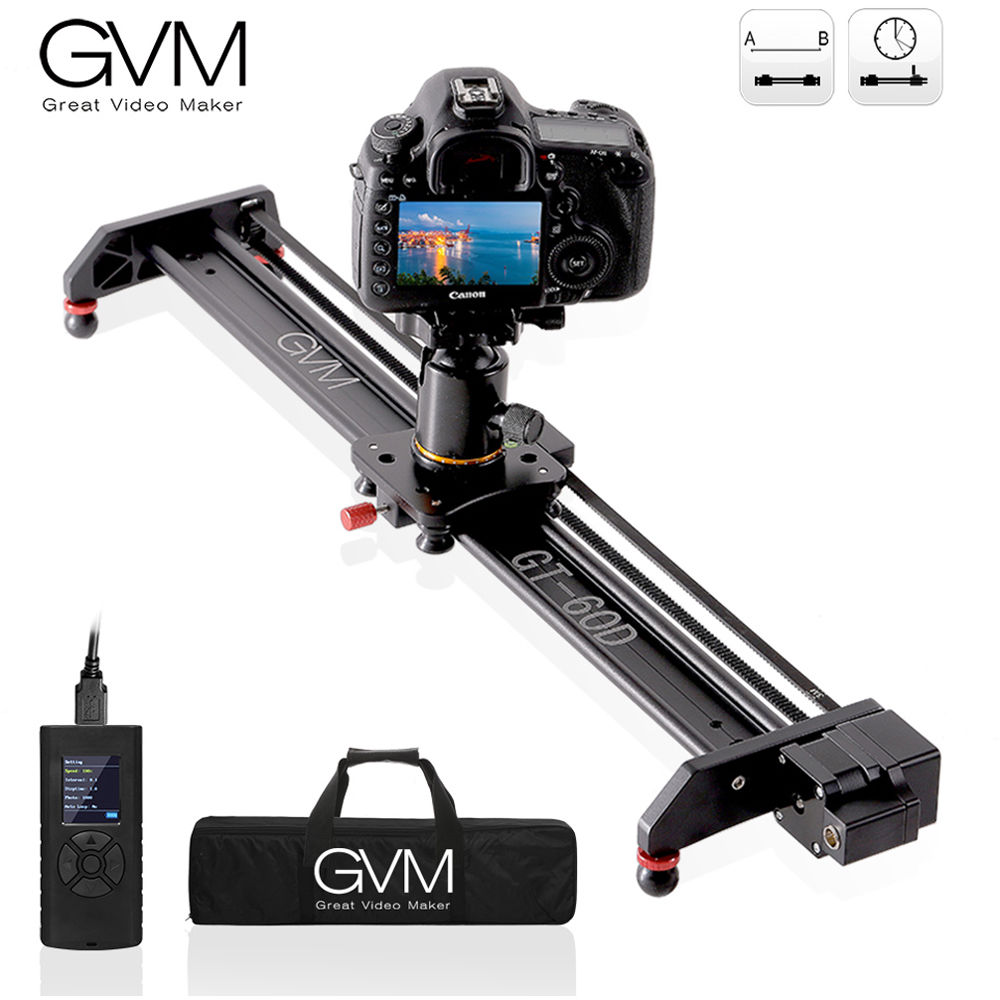
What the Low Price Gets You
This 27-inch aluminum track weighs about five pounds, and its short length matches our experience that we rarely use the full length of a long slider when we are moving around quickly in the field. It handles up to 2.5 kilos which is enough for most DSLR setups, but it might struggle if you put a heavy lens on the rig.
You can mount it horizontally, vertically, or at a 45-degree angle because the adjustable feet help keep it level on uneven ground.
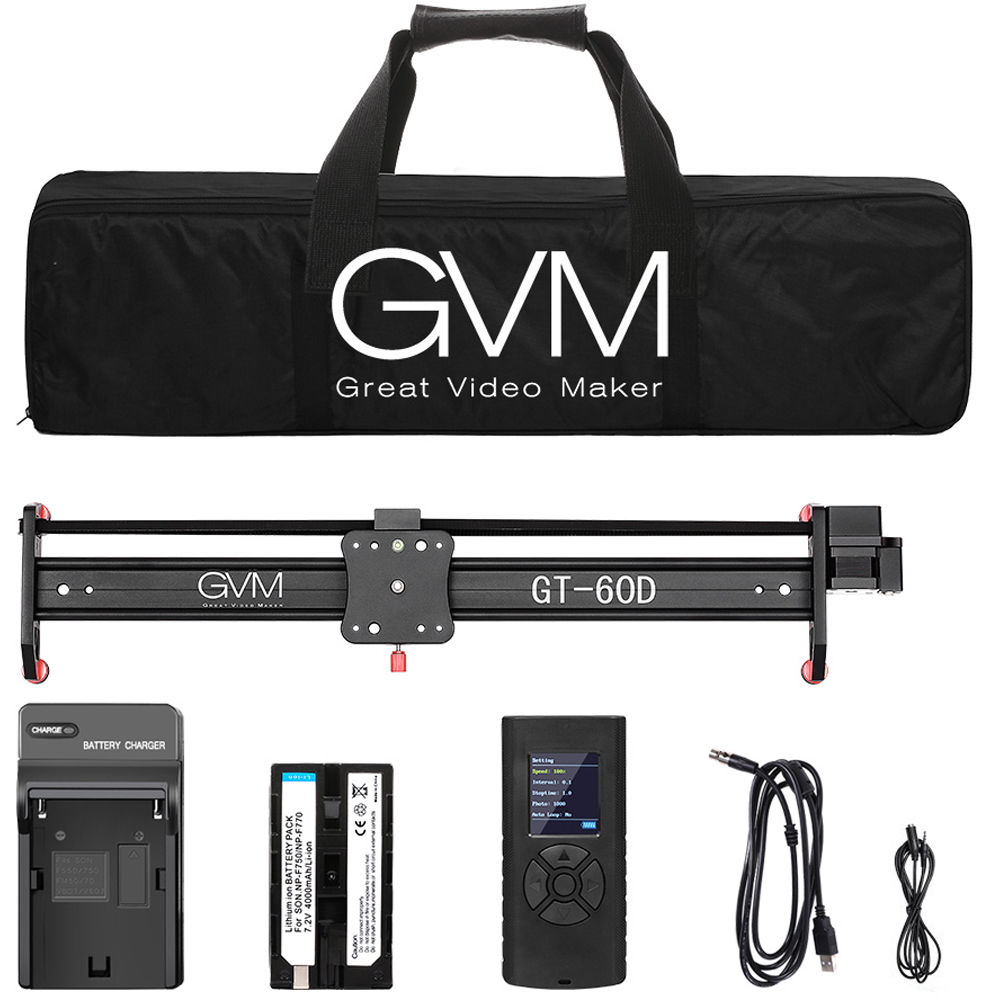
The kit includes a wired controller and a rechargeable battery with an adapter to run it from a power bank.
The shutter release cable is extra, and one owner says the box 'comes with half of it'. It uses 1/4 and 3/8 threads on the ends and the middle, so you can attach almost any gear you already own. You will need to reset the end points every time you turn the power on, which adds a small step to your workflow.
Because this budget-friendly tool offers video, time-lapse, and round-trip modes, it works well for people who need automated moves without spending a fortune on high-end gear. The short track is small enough to carry in the included bag, so it won't weigh you down during a long shoot. It is a simple tool that gets the job done if you don't mind a few quirks.
Loud or Quiet? Buyers Can't Agree
Reviewers seem split on whether the motor stays quiet enough for professional work, because one five-star buyer praises the silence while two three-star buyers call it noisy.
One of them, in a review nine people found helpful, says it's loud enough that you should only use the camera's audio for reference. Another owner notes the belt and motor make noise at every speed, which might ruin a scene in a quiet studio. You should probably record sound away from the slider if you want to keep your tracks clean of mechanical hum.
The speed settings also cause some trouble for users, since one person finds the slider too fast even at the slowest setting while another thinks it's way too slow at one hundred percent. This problem makes it hard to find the right rhythm, when you need a specific move for a shot. Test your speed and frame rate before a paid job.
Finding the right pace can take some time when the hardware doesn't match your vision perfectly.
Shakes depend heavily on what gear you use, because while a Sony A7S jitters at every speed on a heavy tripod, a Nikon Z7 II works fine without any trouble. You might see slight shakes when shooting at 24 frames per second or when there's a light wind outside. Tightening the belt every now and then can help keep the movement smooth during a long take.
Battery, Controller and Support
One buyer has found that a two-hour charge only lasted for seventy-five minutes during use, which forced them to buy a 12V adapter for the DC port instead. The battery dies fast, and the timer drifts against the camera shutter while making time-lapse work hard. This quick drain might frustrate you, if you plan to shoot for a long day without a plug.
The remote feels like cheap plastic, and one buyer received theirs with broken battery clips, while several others reported that the controllers failed after some use. Because these parts seem flimsy, you might worry about how long they last in the field. Keep the original box.
Support is mixed. GVM replaced one buyer's dead unit through an RMA within 48 hours, and sent others a new controller, cable and remote.
But one buyer says the seller refused to help when their motor died after about a year. Buy from a store where returns are easy.
Time-Lapse Settings That Work
Setting up a time-lapse sequence requires understanding how the slider handles the pause between shots, the wait before the shutter fires, and the distance it moves each time. If you want a shot every four seconds with a one-second exposure, you should set the stop time to four and the time-lapse to one because the manual doesn't explain these terms, but they are vital for getting the rhythm you want.
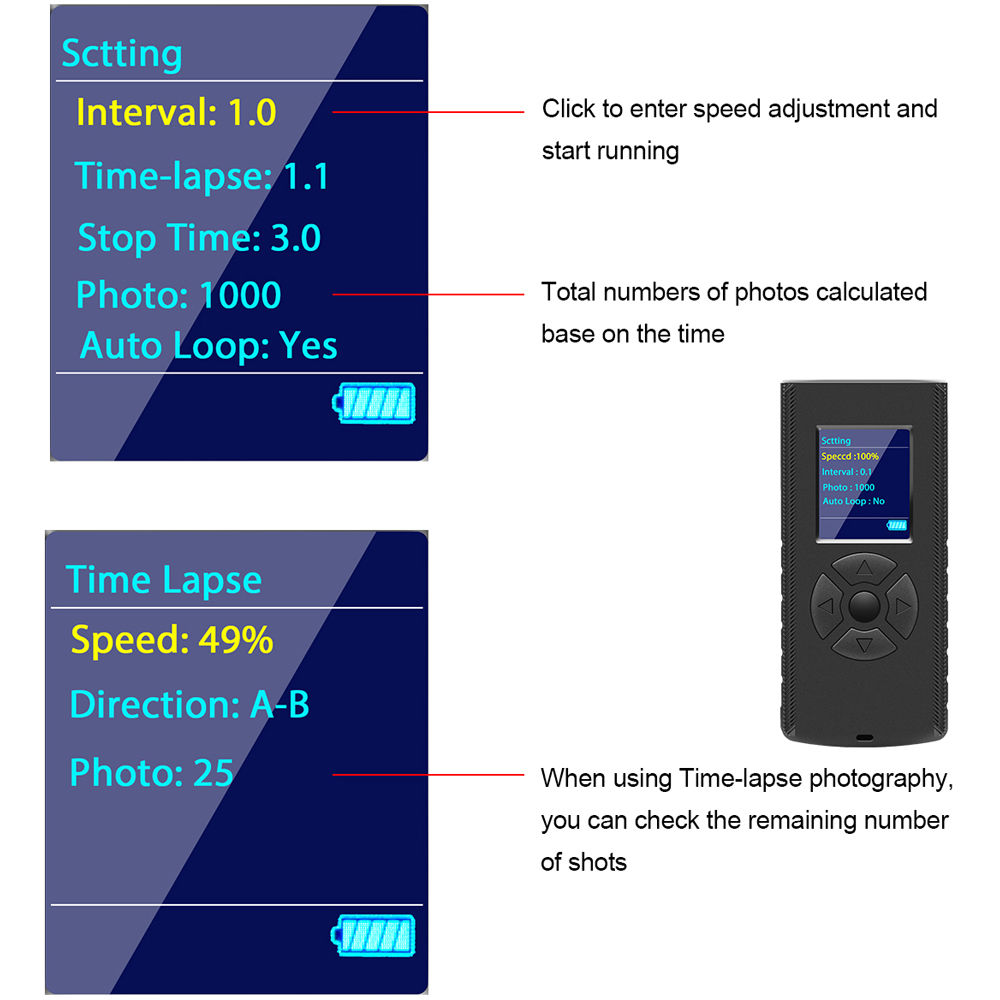
One owner, shooting with a Sony A7 III and a 16-35mm lens, reported an interval of 0.1, a time-lapse of 0.5, and a stop time of 1.0 while shooting at 1/640 second to get results.
At 30 percent speed, this setup gets about 690 shots, while 50 percent speed yields about 520 shots. Because the belt can stretch over time, you might need to tighten it often to keep the movement precise.
To keep the shot steady, you can use a half ball under the middle or support both ends of the track to prevent flex. We found that a quick release plate and light head cause some flex, so using a dedicated cheap tripod helps. If you shoot long slides, putting the track on the ground or using two stands is the best way to avoid jitter.
Aluminum or GVM's Carbon Fiber Models
The aluminum 27-inch slider works best for simple streams or interviews where you use a light mirrorless camera, but it lacks the strength needed for heavy rigs or complex pan moves. Since it is rated for 2.5 kg, about 5.5 pounds, you should look at the carbon fiber options if you plan to use a larger rig.
The 32-inch carbon fiber model handles up to eleven pounds and offers thirty inches of travel, while also including parallax and 120-degree pan modes. If you need even more space, the 48-inch version or the 47-inch wireless model are available for mid-range money.
You should skip GVM entirely if you need sync sound directly from the slider camera or if you plan to run long unattended time-lapses. Because the motor and belt can be noisy, you might find that the audio ruins a shot in a quiet studio. This tool is for budget-conscious shooters who want a slow second-camera move without the high price tag.
Frequently Asked Questions
Can I use this for time-lapse?
You can capture time-lapse sequences with this slider if you buy a separate shutter release cable to trigger the camera shots. This setup allows the motor to move the rig between each individual frame.
How long does the battery actually last?
One buyer has reported that the battery provided 75 minutes of use after a full two-hour charging cycle. You should use the DC input with an adapter if you plan on long filming sessions.
How much camera weight can the track support?
This aluminum model is rated for a maximum load of 2.5 kg according to Amazon's spec table. GVM's carbon fiber versions are rated up to 11 lb at B&H.
Is the motor noise audible during filming?
Users are split on the noise, with some finding it quiet while others claim it might ruin studio audio. It is best to record your sound away from the slider to avoid any interference.
Do I need a tripod to use this?
You can run the slider directly on the ground or mount it on a tripod for different angles. Supporting both ends of the track helps to reduce flex during your movements.