
Blackmagic Pocket Cinema Cameras: Which One Should You Actually Buy
The Blackmagic Pocket Cinema Camera lineup has been one of the best-kept secrets in indie filmmaking for years, and that's not really a secret anymore. The BMPCC 4K pretty much changed the game when it launched, giving filmmakers Blackmagic RAW and ProRes recording in a body that costs less than most used Canon C-series cameras.
And now there are three models to choose from, which is great but also kind of confusing if you're trying to figure out which one actually makes sense for your work.
So let's break it down. The BMPCC 4K, the 6K G2, and the 6K Pro all share the same basic DNA, but they're aimed at pretty different shooters. The differences matter more than you'd think from just reading spec sheets, and B&H reviewers have a lot to say about each one after putting them through real production work.
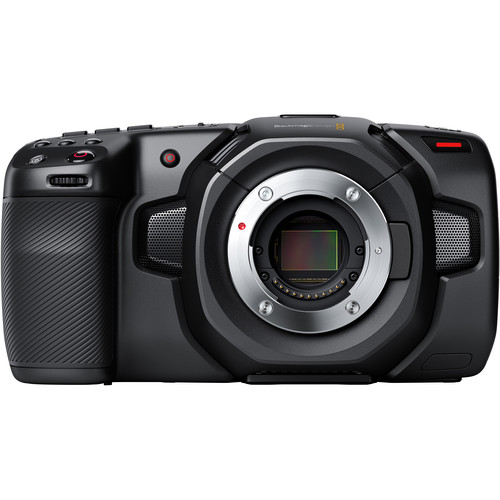
The Pocket 4K: Best Entry Point Into Cinema Cameras
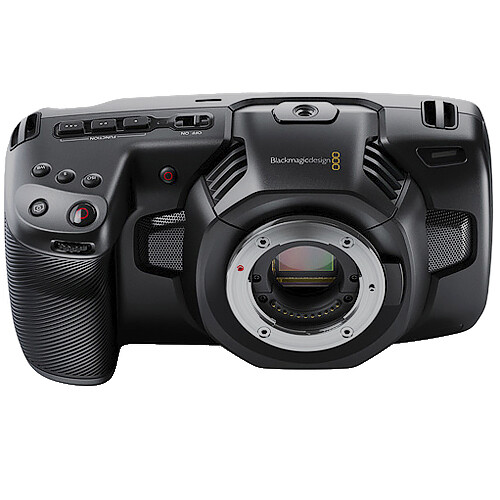
The Pocket Cinema Camera 4K remains the most affordable way to get into Blackmagic's ecosystem, and honestly it punches way above its weight class. You're getting a 4/3" sensor that shoots DCI 4K at up to 60fps, 13 stops of dynamic range, dual native ISO at 400 and 3200, and the ability to record in both Blackmagic RAW and ProRes. That's a lot of camera for the money.
The MFT mount is both a strength and a limitation. On one hand, you get access to a huge range of compact lenses, and you can adapt almost anything with the right adapter. Pairing this body with something like the Sigma 18-35mm f/1.8 Art through a Metabones Speed Booster is basically a rite of passage for BMPCC 4K owners at this point.
On the other hand, MFT lenses give you a 2x crop factor, which can make wide angle shots tricky without that Speed Booster.
What Users Actually Think
B&H reviewers consistently praise the color science and image quality. With 324 reviews averaging 4.7 stars, this is one of the better-received cinema cameras on the site. Users report that the colors are amazing straight out of camera, and several reviewers point out that getting a free DaVinci Resolve Studio license (normally a few hundred bucks) sweetens an already good deal.
One reviewer described it simply as "dead simple to use plus 4K plus Resolve plus low price equals good deal," and that's hard to argue with.
Users also love how lightweight and riggable the body is. Multiple reviewers mention that it's easy to build up to whatever configuration a job demands. Film students in particular seem drawn to this camera, with several B&H reviewers noting it was their first cinema camera and a significant upgrade from DSLR shooting.
The Downsides You Should Know About
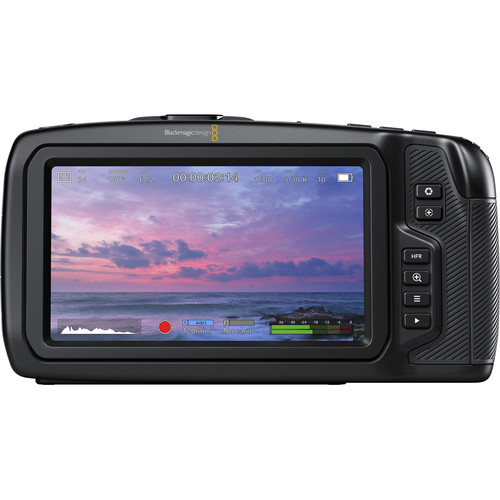
Battery life is the single biggest complaint across the board. The BMPCC 4K uses Canon LP-E6 batteries, and they drain fast, especially when recording in RAW. You'll want at least three or four spares for a day of shooting, which adds cost.
There's also no weather sealing, no continuous autofocus worth mentioning, and the USB-C port charges the internal battery but won't power the camera while shooting. Budget for an external battery solution if you're doing anything longer than short takes.
The Pocket 6K G2: Bigger Sensor, Bigger Trade-offs
The Pocket Cinema Camera 6K G2 steps up to a Super 35 sensor and swaps the MFT mount for Canon EF. That's a big deal if you already own Canon EF glass or want the larger sensor look. The 6K resolution gives you extra room for reframing in post, and the Super 35 sensor size means shallower depth of field and better low-light performance than the 4K model's smaller sensor.
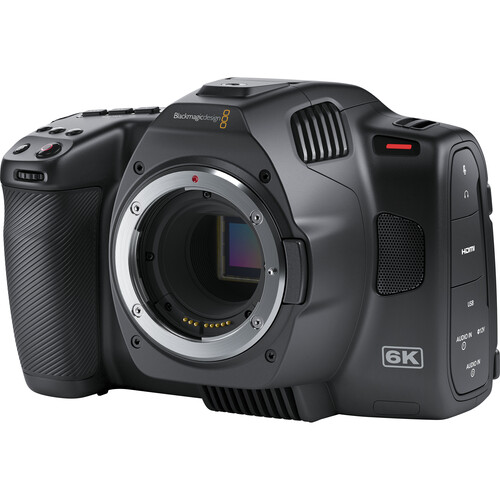
But here's the thing you need to understand about the G2. Despite having a "2" in its name, it's actually a step down from the 6K Pro in some key ways. Blackmagic removed the built-in ND filters, lowered the screen brightness, and dropped the price. The G2 was designed more for indoor and multicam broadcast setups where you pair it with something like the ATEM Mini switcher. It's still a great cinema camera, but it's not the flagship 6K model.
Real-World Performance Issues
B&H reviewers with the 6K G2 mention some frustrations you won't find on the spec sheet. Noise becomes noticeable above ISO 1000, and even at the 3200 native ISO, several users report more grain than they expected. One reviewer noted that while DaVinci Resolve can clean it up, it would be nice to not have so much noise in the first place.
The autofocus situation is rough too. Users report it's slow to respond and often needs multiple button presses to lock on. Plan on pulling focus manually with this camera.
The screen visibility in daylight is weak, which is a real problem for outdoor run-and-gun work. And the fan is audible, so you'll want external mics rather than relying on the built-in audio. The IR cut filter has also been a sore point, with at least one reviewer reporting corrosion issues and expensive replacements.
Despite all that, reviewers who understand what they're getting still give the camera high marks for image quality at its price point. One user who previously owned a Canon C100 Mark II said the BMPCC 6K G2 image quality was phenomenal for the cost, even if it didn't feel as robust.
The Pocket 6K Pro: The One Most Filmmakers Should Buy
The Pocket Cinema Camera 6K Pro costs more than the G2, but the differences make it the better choice for most working filmmakers. The headline feature is built-in ND filters (2, 4, and 6 stops), and B&H reviewers cannot stop talking about how much of a difference this makes.
One reviewer called it "life changing," which sounds dramatic until you've spent time fumbling with screw-on variable NDs on a run-and-gun shoot.
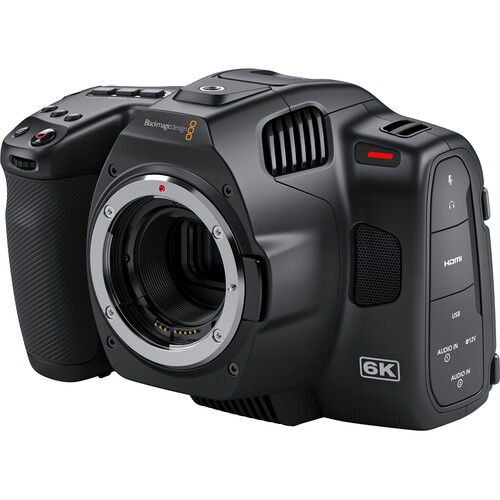
The 6K Pro also gets a brighter 1500 cd/m² tilting HDR LCD, which makes it actually usable outdoors. It uses NP-F570 batteries instead of LP-E6, and has dual mini XLR inputs for proper audio.
You still get the same Super 35 sensor, Canon EF mount, and 6K recording, but the Pro adds the kind of professional touches that separate a capable camera from a practical production tool.
Why Reviewers Love It
With 100 reviews and a 4.6 average, the 6K Pro earns serious praise from working filmmakers. Multiple reviewers compare it favorably to cameras costing two to three times as much, specifically name-dropping the Red Komodo 6K and Sony FX6 as competitors.
Users report excellent results on documentaries, music videos, and short films. One long-term user called it a "work horse" that never failed or had issues over two years of regular use.
The ability to shoot custom 3D LUTs is another feature reviewers appreciate. You can create your color grades in Resolve and export them to the camera for a live preview while shooting, which is genuinely useful for maintaining a consistent look across projects.
And like all BMPCC cameras, it includes a DaVinci Resolve Studio license.
Not Perfect Though
A few 6K Pro owners have reported screen failures after extended use, which is concerning on an already expensive body. One reviewer mentioned needing a screen repair that ran several hundred dollars.
The camera is also noticeably bulkier than the 4K model, and it's a bit heavier than you'd want for gimbal work without a proper rig. And the autofocus, while technically functional, still isn't reliable enough for anything beyond basic tap-to-focus. Plan on manual focus or an external follow focus system.
How to Choose Between the Three Models
Budget and Lens Ecosystem
If you're starting from scratch or coming from a mirrorless system, the BMPCC 4K with MFT mount keeps your initial investment low. You can pick up the body and a couple of affordable MFT lenses for less than just the 6K Pro body alone. But if you already have Canon EF glass sitting in a drawer, the 6K models save you from buying an entirely new lens collection. Check current Canon EF lens options at B&H to see what's available.
Indoor vs Outdoor Shooting
The G2 makes the most sense for controlled environments, studio setups, and multicam broadcast workflows. The lack of built-in NDs and the dim screen really hurt it outdoors. The 6K Pro is the clear choice for anyone doing outdoor work, documentary, or anything where lighting conditions change fast. The 4K model falls somewhere in between, it works fine outdoors with external NDs but doesn't have the screen brightness of the Pro.
What Matters Most for Your Work
Think about what you actually shoot, not what you'd like to shoot. If you're doing talking head content, podcasts, or controlled indoor setups, even the 4K model is overkill. If you're shooting docs or music videos in unpredictable conditions, the 6K Pro's NDs and bright screen are worth every extra dollar. And if you need a multicam setup on a budget, three BMPCC 4K bodies cost less than two 6K Pros and work great with the ATEM Mini.
You can also find all three models on Amazon if you want to compare pricing and availability, though B&H tends to have better bundle deals for cinema cameras.
Essential Accessories for Any Pocket Cinema Camera
No matter which model you choose, you'll need to budget for accessories. These cameras are designed to be rigged out, and shooting with just the bare body is possible but not ideal.
A cage is basically mandatory. SmallRig makes popular options for all three models, and they give you mounting points for monitors, handles, and audio gear. You'll want a good on-camera monitor too, especially with the 4K and G2 models where the built-in screen has its limitations.
Extra batteries are non-negotiable since battery life across the entire BMPCC lineup is mediocre at best. And a fast CFast 2.0 or SD UHS-II card is essential if you're recording in BRAW.
For the EF-mount models, an external follow focus makes manual focusing way more manageable. And if you're doing any kind of audio work, external mics and a recorder like the Zoom F3 will give you much better results than relying on the camera's built-in audio, even on the 6K Pro with its XLR inputs. You can find Pocket Cinema Camera accessories and cages on Amazon to get your rig started.
The DaVinci Resolve Advantage
One thing that often gets overlooked in camera comparisons is the software side, and this is where Blackmagic has a real edge. Every Pocket Cinema Camera ships with a DaVinci Resolve Studio activation code. Resolve Studio normally costs a few hundred dollars, and it's a legitimate professional NLE and color grading suite that competes with Premiere and Final Cut.
The BRAW codec is specifically optimized for Resolve, so your roundtrip from camera to timeline to export is as smooth as it gets. The 13 stops of dynamic range across all three models means you can recover highlights and shadows that would be completely gone on most cameras in this price range, and that's still the strongest argument for buying into the Blackmagic ecosystem.
Frequently Asked Questions
Which Blackmagic Pocket Cinema Camera is best for beginners?
The BMPCC 4K is the most beginner-friendly option. It costs less, the interface is straightforward, and B&H reviewers frequently mention how easy it is to learn. Plus MFT lenses tend to be more affordable than Canon EF glass, so your total kit cost stays lower. The included DaVinci Resolve Studio license means you don't need to budget separately for editing software.
Can I use autofocus on BMPCC cameras?
Technically yes, but it's not good enough to rely on. Across all three models, B&H reviewers consistently report that autofocus is slow, unreliable, and requires manual intervention. These are cinema cameras designed for manual focus pulling. If you need reliable continuous autofocus, you're probably better served by a mirrorless hybrid like the Sony A7 IV or Canon R6 II.
How bad is the battery life really?
Pretty bad across the entire lineup. The BMPCC 4K uses Canon LP-E6 batteries and burns through them fast, especially in RAW. The 6K models use NP-F batteries which last a bit longer, but you'll still want three to four spares for a full day of shooting. Most working BMPCC users end up with an external battery plate or V-mount solution for anything beyond short shoots. Budget for power accessories when pricing out your kit.
Is the BMPCC 6K G2 better than the 6K Pro?
No. The G2 is actually a more affordable, stripped-down version of the Pro. It lacks built-in ND filters, has a dimmer screen, and costs less as a result. The G2 is a solid pick for indoor and studio work, but the 6K Pro is the better all-around camera for most filmmakers. If your budget allows it, get the Pro.
Do BMPCC cameras overheat?
The 4K model can run warm during extended recording sessions, but overheating shutdowns are rare. The 6K models have an internal fan that keeps temperatures manageable, though the fan noise means you'll want external microphones for clean audio. Users report that the fan is audible but not a dealbreaker unless you're recording audio directly into the camera in a quiet environment.
What lenses work with each BMPCC model?
The BMPCC 4K uses a Micro Four Thirds mount and works with all MFT lenses plus adapted lenses via Speed Boosters and adapters. The 6K G2 and 6K Pro both use Canon EF mount and are compatible with EF and EF-S lenses natively. Sony E-mount lenses are not compatible with any BMPCC model. Check out our guide to the best Canon EF lenses for video if you're going with a 6K model, or browse Canon EF cine lenses at B&H for more options.