
A Review of the Original Blackmagic Pocket Cinema Camera 4K: Still Worth It in 2026?
The original Pocket Cinema Camera 4K is old enough now that people ask whether it's still worth buying, usually after spotting a used one at a tempting price. Owners are still buying and praising it, which says a lot about how good the image was in the first place.
The trade-offs haven't changed, though. It has no stabilization, the autofocus struggles off a tripod, and the battery runs down fast, so it rewards people who shoot on sticks with manual lenses and frustrates anyone hoping for a run-and-gun camera.
Below is what made the OG different, the trade-offs to plan around, who should still buy one, and what changed in the 2024 hardware revision.
While it's older, the original Blackmagic Pocket Cinema Camera 4K remains a valid choice in 2026 - at 4.7 across 758 ratings, with owners still buying and praising it through 2025. The verified summary is blunt: 'video quality is brutal, it exceed my expectation,' but plan on a tripod with vintage glass rather than handheld work, because the autofocus and stabilization fall apart off-stick.
What Made the OG Different
This camera stands out because of the files: BRAW, four ProRes flavors (all 4:2:2, 10-bit, intraframe), or CinemaDNG RAW with three compression levels - the verified Italian-language review counts them off because the codec menu is the reason to buy. It records 4K at 60 FPS straight to an SD card - no external recorder, no SSD rig, no cable failures on set, no recorders to babysit, no media to mount.
Pair it with a V90 card and the media bill stays under a hundred dollars, which is why owners call the file costs manageable.
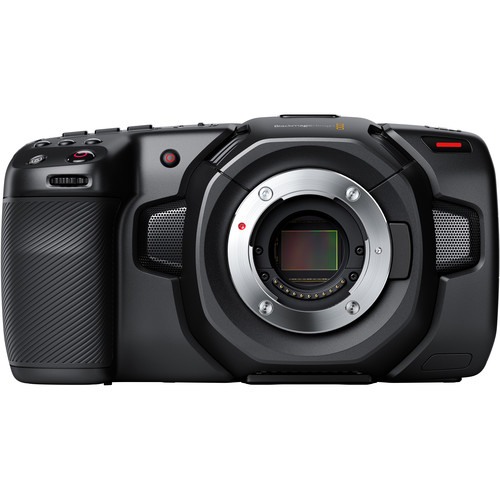
The codec menu is the reason the camera keeps a following a decade in. Two DaVinci Resolve Studio licenses come with it, which offsets real editing-software money - the kind of bundle no other manufacturer at this price includes.
Check B&H's current Blackmagic pricing against the used market before deciding, because the license alone is worth a few hundred dollars of the package. These formats are why people still want this tool instead of newer models - the file is the deliverable, and the body is just the container.
The camera uses a Micro Four Thirds sensor that fits vintage lenses well, while the user interface feels like a pro tool rather than some cheap toy gadget. The layout is clean and professional, which helps you find settings quickly when you're on a set. The front-on shot shows how much hardware sits inside the small body, and it is the reason the used market still pays attention.
The dynamic range and texture are the reason it keeps selling, a decade after launch - one 2020-era owner's verdict still stands: 'it's still an amazing choice... 4k is a bit overkill honestly and is not going to be obsolete any time soon.'
The Trade-Offs You Must Plan Around
Handheld, clean shots are almost impossible, because the body has no stabilization, and one owner's advice is blunt: buy the gimbal and tripod right away. The verified complaint is specific: autofocus and stabilization only 'have trouble... when its not on a stand.' Treat the tripod as part of the camera's price, not an accessory.
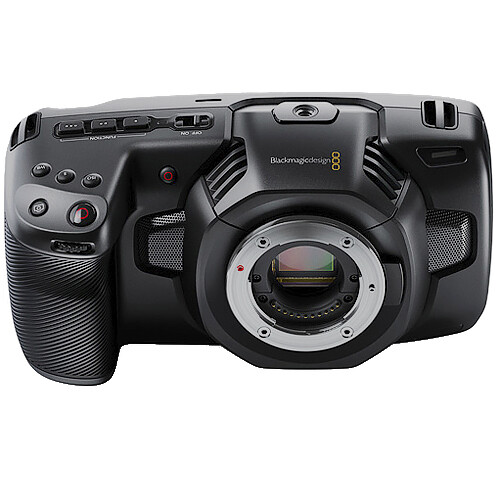
Handheld run-and-gun is the wrong job for this body, and no firmware update will change that.
The battery is the known weak point, and a buyer has said the battery life isn't great but there are plenty of ways around it.
NP-F plates and dummy-battery rigs turn it into a non-issue, but budget for them on day one - they are as much a part of the kit as the camera itself. And when hardware questions come up, Blackmagic support answers the phone in about five minutes, per one owner.
The Micro Four Thirds crop multiplies your focal length - a 50mm frames like a 100mm - so plan the glass around it.
Low light is where the small sensor shows its age: noise creeps in as rooms darken, which is why fast glass and real lighting are the tax this body charges - the sensor will not do you favors after dark. Budget them in from the start rather than discovering them mid-project.
Who Should Still Buy the OG in 2026
For anyone who loves vintage glass, this camera remains a top pick, and a buyer has found it best with vintage lenses, with great dynamic range and beautiful texture. Modern sensors chase clinical cleanliness - the OG's texture is the point, and it is the reason the body holds value while newer models depreciate. Blackmagic's own product page documents the full codec menu if you want the spec sheet.
The 2025 buyer's math still holds: 'around 800 EUR net... Possibly there is no other new camera out there at that money being able to shoot 4K 60 FPS in BRAW internally to an SD card' - plus two Resolve Studio licenses in the box, which is the part accountants notice first.
Film students get a professional-codec education - RAW and ProRes workflow discipline - at beginner prices, and the skills transfer directly to any cinema camera they touch later.
The same logic applies to the audio racks in a student kit: buy the thing that teaches the workflow, not the thing that babysits you - the OG is the former. And when the sensor needs light, the native-ISO revision on newer units matters.
The 2024 Hardware Revision: What Changed
The verified Italian-language review documents a hardware revision: newer units use a different sensor that 'lavora bene a 200 e a 1250, non più a 400' - it works at ISO 200 and 1250, no longer at 400, as the first-year-and-a-half production runs did. Check the manufacture date on a used unit - the revision is real, the native ISO behavior differs, and sellers rarely mention which generation they are holding.
The same reviewer has noticed that the newer screen drifts green or yellow while the file itself stays balanced. Trust the scopes or add an external monitor, because the footage isn't the problem and the screen's tint doesn't follow the files into the edit.
Frequently Asked Questions
Is the old Blackmagic 4K still worth buying in 2026?
This camera is still a great option if you find a used unit and plan to pair it with vintage glass - expect to work on a tripod or gimbal, because handheld is where it struggles.
How is the battery life on this camera?
While the internal battery isn't great for long shoots, there are many solutions available to help keep your gear powered throughout the production day. Using external power sources is a common practice for most owners here today.
Does the autofocus work well for video?
The autofocus system is quite weak, so plan on manual focus for anything that matters - leaning on AF handheld is where the frustration comes from. Our camera-stabilizer guide covers the support options that pair with this body.
What lens mount does the original pocket camera use?
The original 4K uses an EF mount, and a speedbooster widens the field of view and pulls in more light, which is the classic pairing on this body - it is also the cheapest way to get full-frame-looking shots.
Should I get the OG or the newer 6K models?
For a larger sensor, 6K capture or the newer revisions, the 6K family is the better path, and the OG earns its keep only at the right used price, as a mid-range budget pick rather than a default or a body to buy new in 2026.