
Best Budget Video Camera: Affordable Options That Actually Deliver
There's a strange phenomenon going on with video cameras right now. Affordable video cameras have become really good, not "good for the price" but actually good. Six years ago a budget video camera meant compromising on autofocus, dynamic range, codec quality, and low light performance. You had to choose two features and hope they worked together.
Now, the Sony ZV-E10 II does 4K 60P in 10 bit with Phase Detect Autofocus, S-Log 3 and costs under a grand body only. That used to be a spec sheet for cameras priced 3 to 4 times as much.
However, the ZV-E10 II is not the only affordable video camera available today, and it may not even be the best choice for what you are shooting. Camcorders are still a viable option for event coverage. A camera with in-body Image Stabilization (IBIS) and a Micro Four Thirds body will provide a better option for run-and-gun documentary style video production.
Pocket gimbals have become quite capable for travel and b-roll type production. Additionally, you could find a used cinema camera like the Blackmagic Pocket Cinema Camera 4K for significantly lower than it would have cost two years ago.
This guide will cover the best low-cost video cameras available by category and will provide a realistic assessment of what you give up at each price point and what you get in return.
Sony ZV-E10 II: The Best Low Cost Mirrorless Video Camera
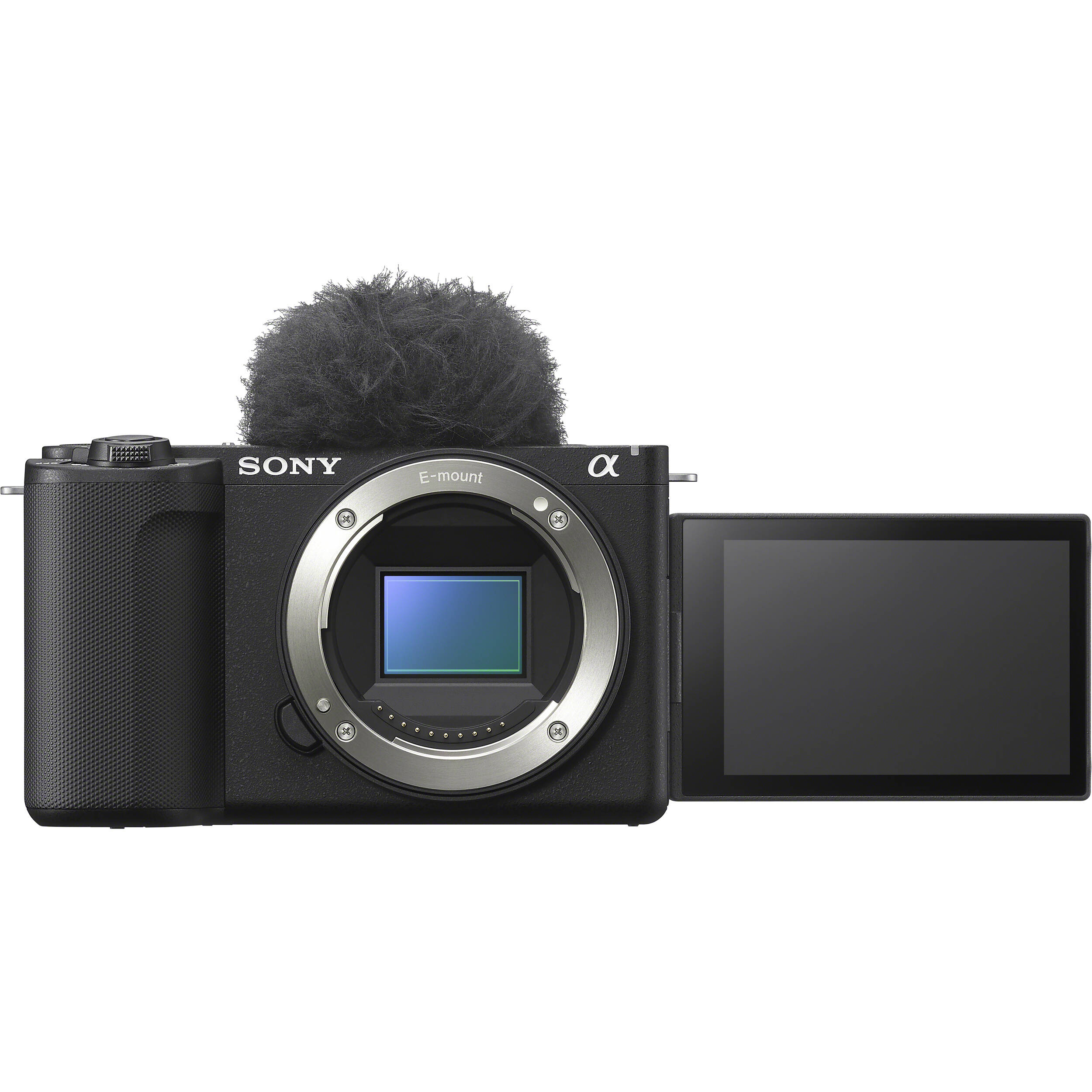
The Sony ZV-E10 II is the best choice for most people who are looking for the best low cost video camera that takes amazing pictures too. It utilizes the same 26MP APS-C sensor as the more expensive a6700 and FX30, which means you are utilizing the exact same image pipeline that Sony uses in their semi-professional line of cameras.
You will have 4K video capabilities at up to 60 frames per second (internally) in 4:2:2 10-bit. You will have access to S-Cinetone and S-Log 3 gamma curves. You will also have a 759-point Phase Detection Autofocus system that is truly one of the fastest and most accurate autofocus systems available at this price point.
It is a very lightweight camera, weighing just over 10 ounces. It utilizes the larger NP-FZ100 battery (the same as the a7 series) which will last approximately 610 shots per charge, a huge improvement from the original ZV-E10.
It includes a 3 inch articulating touchscreen with vertical shooting capability, a built-in directional 3-capsule microphone that is actually decent, and both a headphone jack and a mic input. HDMI output runs 4:2:2 10-bit if you want to go external.
What B&H Reviewers Have Said
The ZV-E10 II has a rating of 4.4 out of 5 stars on B&H Photo with 18 reviews. Reviewers universally complimented the autofocus performance and the overall image quality for the price. One reviewer stated, "this camera focuses and writes to the card extremely fast" and described it as "sturdy and lightweight." Many reviewers describe the camera as beginner friendly with plenty of manual controls to grow into.
One common complaint, and it is a valid concern, is overheating during extended 4K recording. Multiple B&H reviewers reported the camera shuts off after 10 to 15 minutes of non-stop 4K. One reviewer documented it getting progressively worse, dropping from 10 minutes to 5 minutes to 30 seconds between restarts.
They used a desk fan aimed at the rear of the camera to keep it running. If you plan to shoot extensive interviews or events in 4K, you need to account for this. The overheating is much less of an issue at 1080p.
What You Give Up
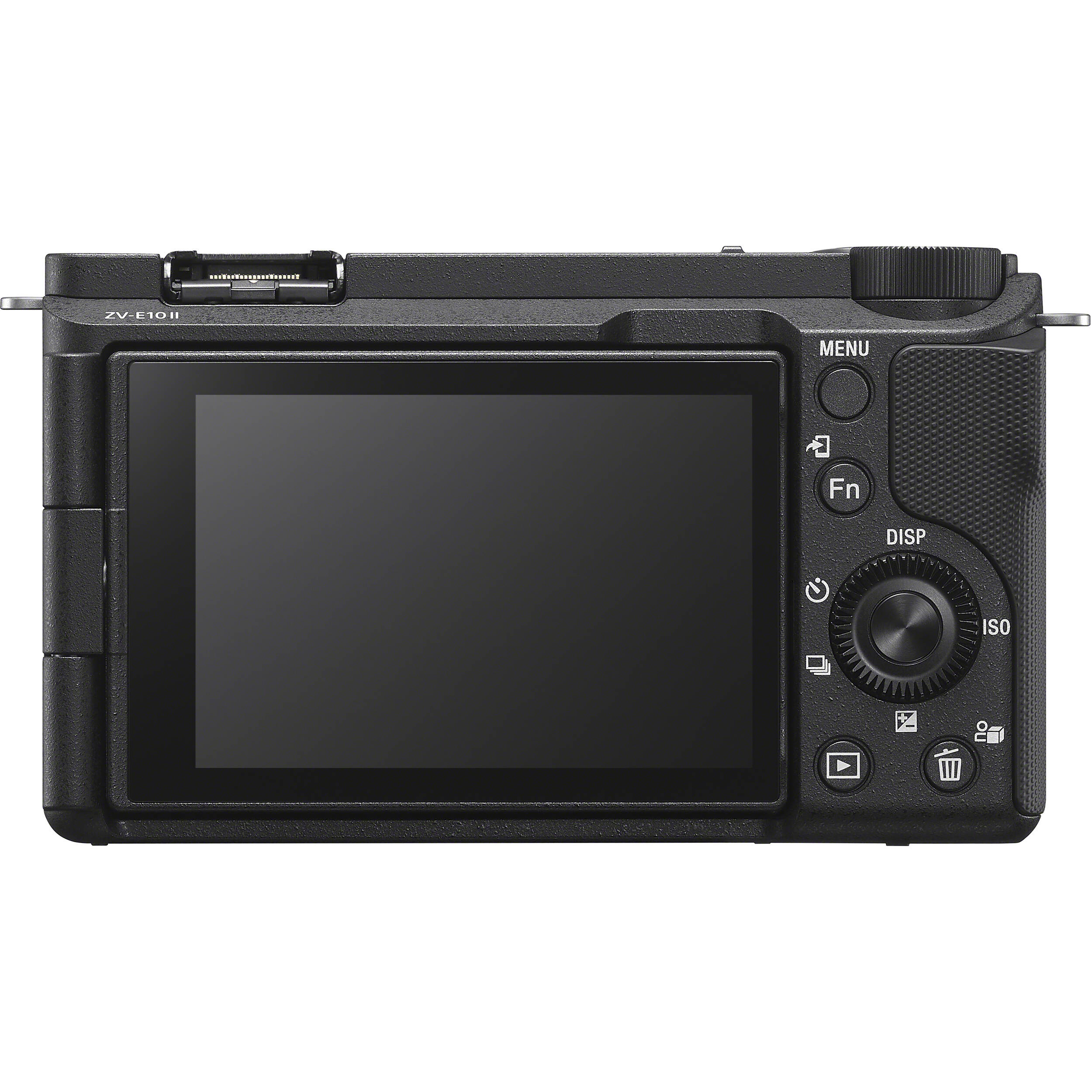
There is no in-camera image stabilization (IBIS). The ZV-E10 II only has digital stabilization, which crops into the frame and is not as effective as mechanical IBIS. For hand-held run-and-gun work, you will need a gimbal or optically stabilized lenses. There is only a single SD card slot (no redundant recording), no built-in ND filters, and the micro-HDMI connector feels flimsy. Rolling shutter is noticeable when panning quickly, typical of APS-C sensors without a stacked design.
With that being said, the Sony E mount lens selection is vast. Starting with the included 16-50mm kit lens, you can transition to something like the Sigma 18-35mm f/1.8 Art lens with an adapter and you will have a high-quality video package that will compete with cameras that cost twice as much.
Canon EOS R50: Best Budget Canon for Beginners
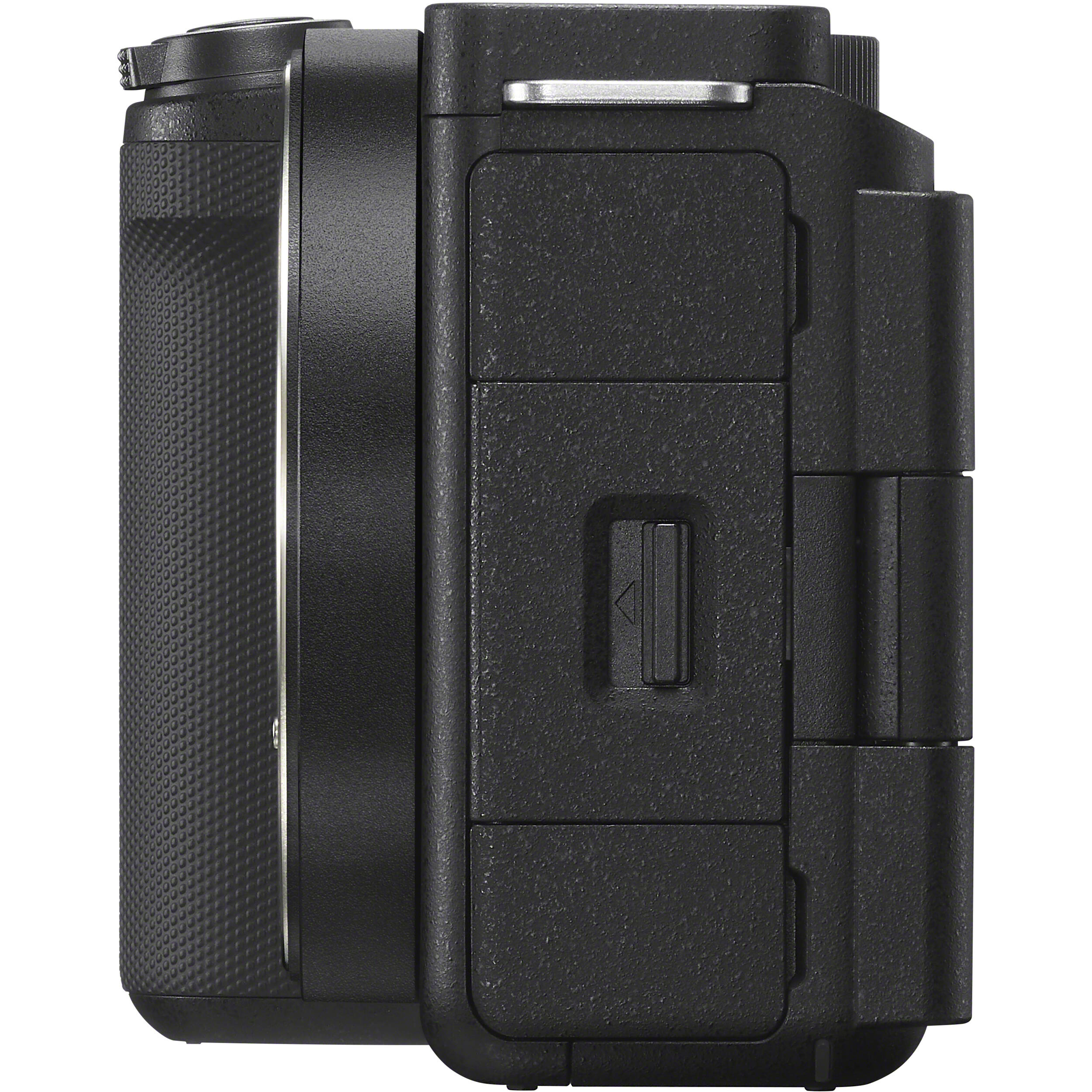
If you are currently working within the Canon ecosystem or prefer the Canon color palette, the Canon EOS R50 with the RF-S 18-45mm kit lens will fit below the body-only price of the ZV-E10 II and is a legitimate video camera. The 24.2MP APS-C sensor combined with the DIGIC X processor allows for 4K video at 30 fps (with a crop factor) and 1080p video at 120 fps for slow-motion capture.
The Dual Pixel CMOS AF II has 651 points allowing for quick and reliable focus, particularly for facial recognition and eye-tracking.
The R50 is Canon's entry-level mirrorless camera and it shows in some of the constraints. The 4K video recording on the R50 results in a significant crop that essentially converts it into a super-35 crop of a crop. There is no headphone jack for monitoring audio. C-Log is available but only in 4K 30p recording mode. The body of the R50 is compact enough that larger handed shooters may feel claustrophobic.
Where the R50 Shines
The R50 is difficult to beat for the money for YouTube, vlogging, and short-form content creation. Canon's autofocus is arguably the most organic looking of any brand for video and provides smooth and consistent tracking without hunting or snapping. The colors produced directly from the camera are stunning, providing warm skin tones that do not require heavy grading in post-production. With 129 reviews on B&H Photo, reviewers agree the R50 delivers more value for hybrid photography and video than expected. If you want something that looks great straight out of the camera, the R50 is your camera.
The RF-S lens selection is expanding but still lags behind the Sony E-mount lens selection. For video applications, consider the Canon RF-S 18-150mm as a versatile all-in-one option or explore adapting EF glass for additional creative options. The R50 is also available on Amazon for comparison pricing.
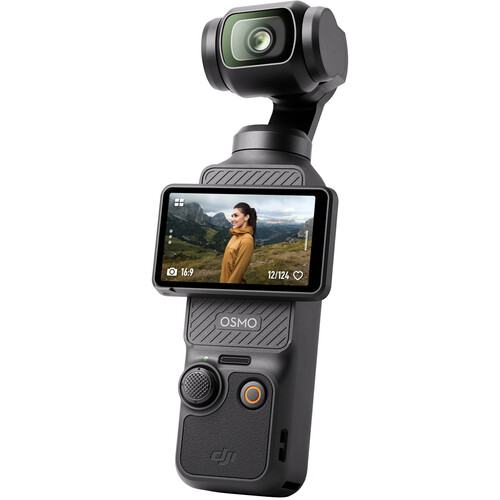
DJI Osmo Pocket 3: Best Ultra-Compact Video Camera
Sometimes the best low cost video camera is the one that you actually carry with you. DJI's Osmo Pocket 3 is a tiny 3-axis gimbal camera with a 1-inch CMOS sensor that shoots 4K at up to 120fps. It fits in your pocket. Literally. And the built-in mechanical stabilization means all your footage looks smooth, without any post-processing or software stabilization digging into the image.
For travel content, B-roll, and anywhere grabbing a full mirrorless setup and rig isn't practical, the Pocket 3 is remarkable. The rotatable 2-inch touchscreen doubles as a monitor and selfie screen, full-pixel fast focusing keeps subjects sharp, and at under 180g you can shoot all day with no fatigue.
The jump to the 1-inch sensor from the older Pocket models is huge, allowing usable footage in low light and just enough dynamic range for basic grading in post.
The Trade-offs
You can't swap lenses, so you're stuck with a fixed focal length with just one field of view. The base model lacks a mic input and headphone jack (the Creator Combo adds an accessory handle with all that), and while the image quality is impressive for the size, it's not going to compare to a Sony or Canon in terms of dynamic range, color depth, or low light capability. The Osmo isn't a proper mirrorless body that you'd bring on a serious shoot, but it could be an incredibly capable backup camera or actual do-everything travel camera.
You can find the Osmo Pocket 3 on Amazon and it often goes on sale.
Panasonic Lumix G95: Best Budget Camera with IBIS
If you want stabilization for handheld work, but want to avoid carting around a gimbal, take a look at the Panasonic Lumix G95. It's a Micro Four Thirds body with 5-axis in-body image stabilization that actually works. You get dual I.S. (body plus compatible lens stabilization) so you enjoy great handheld performance with zero crop penalty.
For doc shooters and anyone doing wedding or other event videography, IBIS can be the difference between terabytes of usable footage and terabytes of shaky footage you throw away.
The G95 gives you 4K at 30fps in 4:2:0 8-bit internally (10-bit 4:2:2 over HDMI), V-Log L for grading, and an electronic viewfinder useful in bright sunlight. The body is weather sealed, has a headphone jack AND a mic input. Grab the Panasonic 25mm f/1.7 or 12-60mm kit lens for not a lot of money and you have a very capable setup.
The MFT Compromise
The smaller Micro Four Thirds sensors have a bit more noise than the larger APS-C options like the ZV-E10 II and R50. You also get more depth of field at equivalent apertures which makes achieving some of that shallow cinematic bokeh a little harder without fast glass. Contrast detection autofocus isn't as fast or reliable as phase detection systems from Sony and Canon. For controlled shooting locations this is fine. For shooting fast moving things in unpredictable scenarios, it can be a pain.
That said, the Panasonic lens lineup is deep and cheap enough you can fill in a complete kit with 2-3 lenses for the price of a single high end E-mount lens. If you're really budget limited and need versatility, that matters.
Used Cinema Cameras: The Secret Budget Option
Here's something the spec sheet won't tell you. A used Blackmagic Pocket Cinema Camera 4K can be picked up for downright cheap, and it's a real camera. It records in 4K DCI in Blackmagic RAW and ProRes.
It's got a proper Micro Four Thirds mount, a 5 inch touchscreen, dual native ISO, and a color science that filmmakers absolutely love. The BMPCC 4K looks like cinema. Not like a consumer camera trying to look cinematic, it looks like film.
Bad news? The battery life is disastrous. You're going to want external power or at least a battery grip. The autofocus is useless in video mode so you're pulling focus by hand (or using a follow focus system).
No image stabilization at all. Not weather sealed. Ergonomics are rather terrible and you'll want to grab a camera cage to make it pleasant to hold.
If all you care about is getting great looking images and you're willing to learn how to use manual focus, this would be the best video image you can get anywhere near this price range. It's a camera that expects you to sweat a little bit in order to achieve great things, but gives you footage that looks expensive in return. Pair it with a good set of lights and you've got a real filmmaking tool. You'll also be able to find these on Amazon from various sellers.
Beyond the Camera Body
The camera body is the most visible part of your filmmaking kit, but honestly at this budget level the differences between cameras don't matter near as much as the rest of your kit. Bad audio will ruin a project faster than a soft image ever will, so budget for a decent shotgun microphone or a wireless lav system before swapping out your camera body. Cheap camera with great lights beats an expensive camera with bad lights any day.
And if you go with a mirrorless camera, you will want out of the kit lens as fast as you can. A fast prime like the Sony 35mm f/1.8 or Sigma 30mm f/1.4 makes a big difference in low light and gets you that shallow depth of field look.
Frequently Asked Questions
What is the best low cost video camera for YouTube?
The Sony ZV-E10 II is the best budget camera for YouTube in 2026. It shoots in 4K 60p and has great autofocus, a flip out screen for self-shooting, and the built-in directional microphone is better than most cameras at this price point. The Canon EOS R50 is a very strong alternative if you like Canon's color science and want something cheaper with a kit lens.
Can you make a professional video with a budget camera?
Yes. The cameras on this list shoot 4K in 10-bit with professional codec options. The Blackmagic Pocket Cinema Camera 4K shoots in RAW, which is what many professional productions use. What matters more than the camera body is lighting, audio, and using what you have well.
Do I need a mirrorless camera or is a camcorder better?
That depends on what you're shooting. Mirrorless cameras like the Sony ZV-E10 II have interchangeable lenses and perform better in low light. Camcorders are better for long events and continuous recording. Most filmmakers starting out will get more creative flexibility from a mirrorless camera.
Is the Sony ZV-E10 II good for filmmaking?
The ZV-E10 II is genuinely capable for indie filmmaking. S-Log 3 and S-Cinetone give you professional color grading options, 4K 60p is more than enough for most projects, and the Sony E-mount gives you access to cinema lenses. The main limitations are the lack of IBIS, single card slot, and the overheating issue during extended 4K takes. It's fine for short-form narrative and music videos, but for long-form interview or event work consider the overheating reports from users.
What's the cheapest camera that shoots good video?
The DJI Osmo Pocket 3 is the cheapest option here that shoots genuinely good video, with 4K 120fps from a 1-inch sensor and built-in gimbal stabilization. For a traditional camera, the Canon EOS R50 with kit lens gives you great 4K video and Canon's top-tier autofocus at a lower price than most mirrorless competitors. If you're willing to buy used, a Blackmagic Pocket Cinema Camera 4K produces cinema-quality images at modest prices on the used market.
Do I need an external monitor for a budget video camera?
You don't need one, but it helps. The flip-out screens on the ZV-E10 II and R50 are fine for basic framing and exposure, but at only 3 inches it can be tough to evaluate focus in bright light. For professional work or manual focus shooting, a dedicated on-camera monitor makes a real difference. For casual content and YouTube, the built-in screens are plenty.