
Best Low Cost Digital Cameras for Video: 8 Picks That Punch Above Their Price
Most people believe that cheaper is always lower quality when it comes to digital cameras. Although that may have been true a couple of years ago, things have changed. Today, there are several great low cost digital cameras available and some of them will shoot video that would have cost you five times as much to buy two years ago. One such camera is the Canon EOS R50, and it's not even the only solid option.
This guide covers eight cameras across different categories, from mirrorless interchangeable lens bodies to pocket-sized action cams. All of them shoot at least 4K video, all of them cost considerably less than the flagship models, and all of them are actually worth buying in 2026. The right one depends on what you're actually shooting, not just what the spec sheet says.
Best Mirrorless Budget Cameras for Video
Canon EOS R50: The Best All-Around Budget Pick
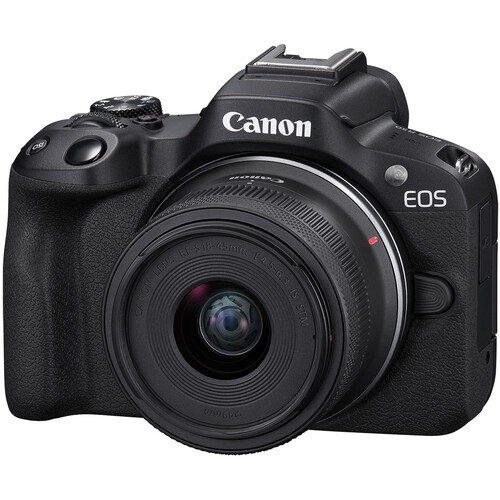
The Canon EOS R50 is a 24.2 MP APS-C mirrorless camera with Canon's RF mount, allowing users to utilize Canon's wide range of lenses. It can capture UHD 4K at 30 frames per second utilizing H.265 compression and has a 180° rotating touchscreen LCD. Canon's Dual Pixel AF technology allows the autofocus to follow the subject well for the price.
Reviewers at B&H consistently cite the R50's small size and weight as positives. One user purchased it as a lighter alternative to the R7 for travel, and it utilizes the same lens mount so users can swap lenses between the two cameras. Multiple reviewers praised the R50 for everyday and church/event work.
Not everything is perfect however. One reviewer called the R50 "slow" and stated that it lacked dedicated command dials, which is a legitimate complaint if you're transitioning from a higher-end camera. The digital-only image stabilization during video is a limitation due to the lack of in-body stabilization.
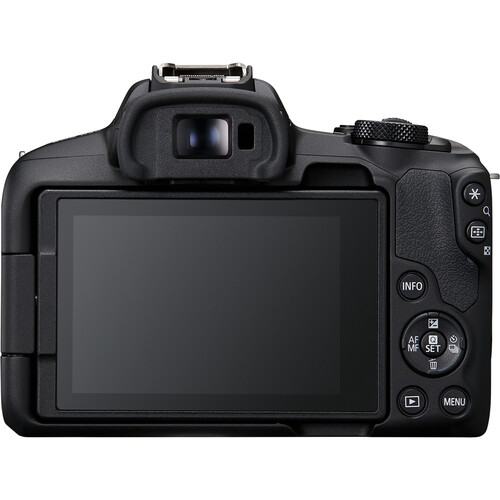
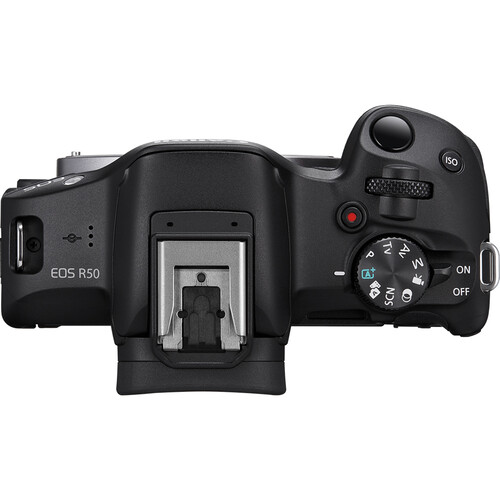
Video-wise, the R50 captures clean 4K with a 1.6X crop factor. It has a 3.5 mm mic input, micro-HDMI output, and USB-C. The single SD card slot is not ideal for paid work, but at this price point dual cards are typically not found. Overall, the R50 is a good starting point for individuals creating a Canon video lens collection, and it checks current pricing at B&H for well below expectations.
Sony ZV-E10 II: Made for Video First
Sony created the ZV-E10 II with video-first in mind. While the Canon R50 is a stills camera that captures video, the ZV-E10 II is a video camera that takes photos. It has a 26 MP APS-C sensor, 4K recording at 60 fps (cropped), and Sony's real time eye autofocus which tracks the subject moving within the frame. The built-in directional three-capsule microphone is surprisingly effective for capturing video without additional audio equipment.
The E-mount lens system gives users an incredible amount of options ranging from inexpensive vintage adapters to professional cinema glass. Compared to the Canon R50, the Sony has better video handling out of the box with features like a product showcase mode and background defocus button. You can also find this model on Amazon, should B&H be back ordered, which occurs fairly frequently.
Nikon Z30: The Vlogging Dark Horse
Nikon receives minimal recognition for the Z30. It is a 20.9 MP APS-C body that can record video in 4K at 30 fps, and 1080p at 120 fps for slow-motion video. The Z30 does not include an electronic viewfinder, a deliberate design decision made to keep the body extremely small and the cost low. For video shooters, they rarely look at the viewfinder and are instead focused on the screen.
Nikon's color science has always been very strong, and the Z30 produces beautiful skin tones straight from the camera with limited color grading needed. The 16-50 mm kit lens is sharp enough for the majority of users' needs, and the overall system is light enough to put on a small gimbal without needing to adjust balance.
Sony a6400: The Used Market Champion
The Sony a6400 was released in 2019 but remains one of the smartest buys in budget video cameras, particularly when purchased used. With 200+ reviews on B&H and still going strong, this camera has proven itself over years of real-world use.
It contains a 24.2 MP APS-C sensor, 4K recording at 30 fps, and Sony's excellent autofocus system that can track eyes in real time.
The largest benefit of the a6400 is maturity. People have been shooting with this camera for years, which provides stable firmware, an established lens ecosystem, and a wealth of tutorials and accessories. Users can purchase a used a6400 for significantly less than any of the newer cameras on this list.
Unfortunately, there is no in-body stabilization, so the user must rely upon a gimbal or steady hands. Rolling shutter in 4K is subpar for fast pans, and battery life is average. Regardless, with today's used prices, it is difficult to argue with the value. Beneficial for creators who are also evaluating Sony's lens offerings for video.
Fujifilm X-T50: Affordable Color Science
Fujifilm approaches color in a manner different than every other manufacturer, and users either appreciate it or don't care. The X-T50 offers access to Fujifilm's legendary Film Simulation modes at a relatively affordable price. The 40.2 MP X-Trans sensor provides stunning still images and clean 6.2K oversampled 4K video.
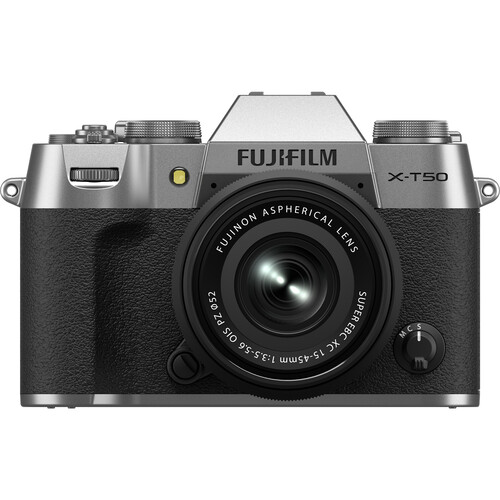
The X-T50 has a unique retro design with physical dials for shutter speed, ISO, and a Film Simulation dial on the top. The camera features 7 stops of IBIS, providing a substantial advantage for handheld video work.
The drawback is the autofocus, which is not nearly as strong as Sony or Canon's systems for tracking video subjects. The X-T50 sits near the upper end of what we'd call 'budget', but the image quality per dollar is exceptional. Prices fluctuate, so you may also wish to compare pricing at Amazon.
Best Action and Pocket Cameras for Video
Panasonic Lumix G85: The Budget Filmmaking Workhorse
The Panasonic Lumix G85 is the oldest camera on this list, but it may still be one of the best options for filmmaking when it comes to value. This Micro Four Thirds body has in-body stabilization, unlimited recording time, weather sealing, a headphone jack and mic input, and two SD card slots.
For what you pay today, both used and new, it is crazy what you receive.
Panasonic's 4K recordings use the entire width of the sensor without cropping and their approach to video has always been based on the needs of filmmakers. With decades of lenses available for the Micro Four Thirds mount and a 2x crop factor, you can easily buy older manual lenses and achieve unique looks for very little money.
On B&H, users consistently praise the stabilization and video quality, although they sometimes mention that the autofocus is slower than Sony or Canon's phase detect systems. Ideal for independent filmmakers working within a tight budget, interview settings, documentary work, and any situation where you're pulling focus manually.
GoPro HERO13 Black: The Action Camera Option
Not every video situation calls for an interchangeable lens camera. The GoPro HERO13 Black can record 5.3K video, fit into your pocket and go places you would never put a mirrorless body. Underwater, on a bike helmet, attached to a drone, in the rain.
It does not matter, it is going to keep going. The HyperSmooth stabilization reduces the need for a gimbal for most action shots.
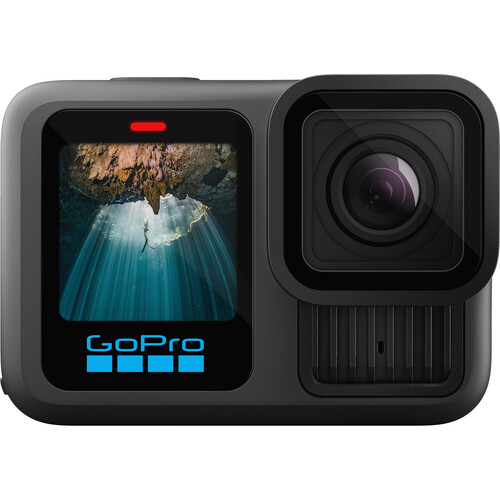
Users on B&H say the HERO13 is a big improvement over prior models with better low-light performance and increased dynamic range. The modular lens system allows you to switch between wide-angle, macro and anamorphic lens mods.
Users complain about battery life in cold temperatures and the clumsy menu system, but this has been a GoPro complaint for years. For B-roll, time-lapse and POV footage, the HERO13 is unmatched at its price point.
DJI Osmo Pocket 3: The Pocket Gimbal Camera
The DJI Osmo Pocket 3 is a completely different type of camera. It is a 1-inch sensor camera that attaches to a 3-axis gimbal and fits into your jacket pocket.
You get silky-smooth 4K video at up to 120fps without the need for post-stabilization, plus a 2-inch OLED touchscreen and face-tracking autofocus.
On B&H, this is one of the most talked-about cameras in this class. Users rave about the stabilization and portability, although some note the small sensor limits low-light performance compared to a true mirrorless body. The flip-up screen works well for vlogging and the ActiveTrack feature tracks subjects cleanly.
It captures in D-Log M for color grading flexibility and the audio is acceptable from the built-in microphones. See it at B&H Photo for the latest availability.
Quick Comparison
| Camera | Sensor | 4K Max | IBIS | AF System | Flip Screen | Mic Input | Best For |
|---|---|---|---|---|---|---|---|
| Canon EOS R50 | APS-C | 4K30 | No | Dual Pixel | Yes | 3.5mm | All-around budget pick |
| Sony ZV-E10 II | APS-C | 4K60 (crop) | No | Real-time Eye AF | Yes | 3.5mm | Video-first content |
| Nikon Z30 | APS-C | 4K30 | No | Phase Detect | Yes | 3.5mm | Vlogging, great color |
| Sony a6400 | APS-C | 4K30 | No | Real-time Eye AF | Tilt only | 3.5mm | Used market value |
| Fujifilm X-T50 | APS-C | 4K (6.2K oversample) | Yes (7-stop) | Phase Detect | Yes | 3.5mm | Color science, stills+video |
| Panasonic G85 | M4/3 | 4K30 (no crop) | Yes | DFD Contrast | Yes | 3.5mm + headphone | Budget filmmaking |
| GoPro HERO13 | Small | 5.3K | No | Fixed | No | USB-C adapter | Action, B-roll, POV |
| DJI Osmo Pocket 3 | 1-inch | 4K120 | Gimbal | Face tracking | Yes (2" OLED) | No | Pocket gimbal, vlogging |
How to Pick the Right Budget Camera
Your lens ecosystem will last much longer than your camera body. Consider investing in a lens mount type today, whether Canon RF, Sony E, or Nikon Z, because once you invest in a particular brand's lenses, they will continue to be compatible with all future bodies. Camera bodies get replaced after several years, while lenses remain as an asset.
Autofocus vs. manual focus. If you are creating content by yourself and are in front of the camera, you will require reliable autofocus. The Sony and Canon models are the leaders in autofocus capabilities. If you are working with a crew or prefer to pull focus manually, the Panasonic G85's advanced focus tools and peaking abilities may actually provide the superior experience.
Stabilization saves money. A camera with IBIS can potentially eliminate the need for a separate gimbal. The Fujifilm X-T50 and Panasonic G85 have IBIS. The Canon R50, Nikon Z30 and Sony a6400 do not. Consider including the cost of a gimbal stabilizer in your overall budget if you choose a body without built-in stabilization.
Frequently Asked Questions
What is the best low cost digital camera for YouTube videos?
The Sony ZV-E10 II is likely to be the best option for creating YouTube videos alone. It was created for single-person content creation, with a product show mode, decent built-in microphones, and a fully articulating LCD display. The Canon EOS R50 is a close runner-up, particularly useful if you expect to photograph and film simultaneously.
Can budget cameras really shoot good 4K video?
Yes, and it is closer to reality than ever. All of the cameras on this list record at least 4K at 30 frames per second, and some offer resolutions of 5.3K or 6.2K. The sensors on low-cost cameras capture similar image quality to the top cameras of just a few years ago. The biggest differences among lower-priced models relate to autofocus speed and color science, not raw resolution.
Should I buy a used camera to save money?
Yes, if you purchase intelligently. The Sony a6400 is an example of a camera that still performs incredibly well and can often be found used at a fraction of a new model's price. B&H offers a warranty on certified-used camera gear, and companies like MPB specialize in thoroughly inspected pre-owned equipment. Verify the shutter count on any mirrorless body and inspect for signs of excessive wear.
Do I need an external microphone with these cameras?
Generally speaking, yes, unless you are simply doing casual vlogging. The internal microphones on these cameras tend to pick up handling noise and are typically not directional. A simple shotgun mic like the Rode VideoMic Go II greatly improves audio quality. The Sony ZV-E10 II has the best built-in mics of the bunch, but even those benefit from an external option for serious work.
Which budget camera has the best low-light video performance?
Both the Sony a6400 and Sony ZV-E10 II are highly adept at producing clean images in low-light conditions, due to Sony's BSI-CMOS sensor technology. The Fujifilm X-T50 also performs acceptably with its noise-reduction capability when oversampling in 4K. The Micro Four Thirds sensor in the Panasonic G85 is the weakest in low light due to its smaller sensor size, but still usable in reasonably bright conditions. For truly dark shooting situations, check out the Sony ZV-E10 II at B&H as your best budget bet.
Is it worth buying an action camera instead of a mirrorless camera?
Action cameras and mirrorless cameras serve completely different purposes and cannot be directly substituted. The GoPro HERO13 is perfect for B-roll, POV shots, and situations where you cannot use a larger camera. But the small sensor, fixed wide-angle lens and minimal manual controls mean it will never replace a mirrorless body for interviews, narrative work, or anything requiring shallow depth of field.
The smart move is to get a mirrorless body as your primary camera and add an action camera later as a specialty tool.