
Best Cameras for Documentary Filmmaking
How do you choose among all of these film video cameras? Cinema cameras, hybrid mirrorless cameras, there are lots of choices. Each one comes with compromises. Over the last couple of years, the Sony FX6 has been a go-to choice for documentary filmmakers, and for many reasons. However, the FX6 may not be the best option for everyone, and depending on your budget and how you shoot, another camera could be a better fit.
This guide outlines the film video cameras that real documentary filmmakers use today, what each of their respective strengths and weaknesses are, and what limits each camera presents. No endless spec sheets for the sake of spec sheets. Just the important things you care about when you're on location, trying to get that shot.
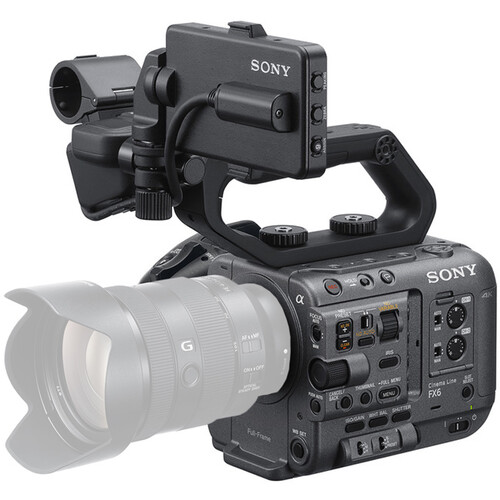
Why the Sony FX6 Is the Default Choice for Documentary Filmmakers
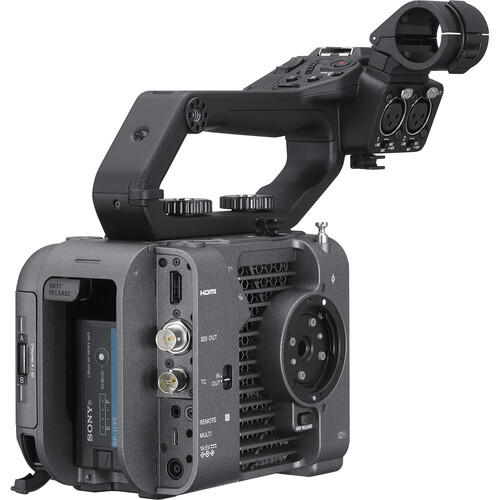
The Sony FX6 appears again and again on documentary crews. Why? First off, it's a cinema-quality full frame camera weighing less than 2 pounds (without the battery and accessories). Secondly, it can shoot 4K at up to 120fps. And thirdly, it includes an electronic variable ND filter that you can adjust on the fly.
That last feature is a much bigger deal than a lot of people think. When you're shooting run-and-gun and the lighting keeps shifting, being able to adjust the ND without having to stop and swap physical filters is a huge time-saver. B&H reviewers continually point out the electronic ND as one of the best features of the FX6 for documentary and interview work.
The sensor comes from the same family Sony used in the FX9, with Venice-inspired color science and S-Cinetone. You get over 15 stops of dynamic range which provides substantial latitude for color correction and grading. The dual base ISO of 800 and 12800 means low-light footage is not just usable but genuinely good quality. One B&H reviewer who films wildlife documentaries described the FX6 as the ultimate wildlife cinema camera, calling out the combination of low-light capability, compact form factor, and feature set at the price.
The autofocus system is also worth discussing. Face detection and real-time Eye AF are compatible with over 50 E-mount lenses, and the phase-detection system covers 627 points across the sensor. For a one-person documentary crew that can't always have a separate focus puller, this is an enormous advantage. According to users, the AF is dependable enough that you can trust it during interviews and even certain walk-and-talk situations.
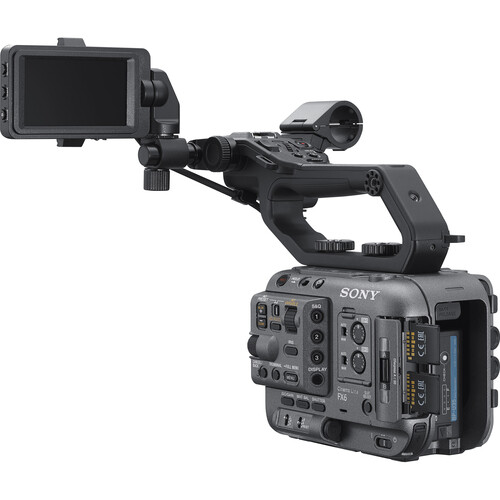
Where the FX6 comes up short is in Super 35 mode. Shooting 4K in a crop/S35 mode is not an option, so if you own a collection of vintage Super 35 lenses, you'll either shoot full-frame or switch to HD for the crop. Multiple B&H reviewers identified this as a genuine limitation, particularly those coming from the FS5 or FS7 who already owned PL or S35 lens sets. If that describes your scenario, the FX9 is a better bet, though it costs and weighs more.
A few users also mentioned that some of the components feel a bit plasticky and that the placement of certain buttons can feel awkward, although overall, the magnesium alloy body is praised for being rugged.
The FX6 can record to both CFexpress Type A cards and/or SDXC cards. It also supports four channel audio and can output 12-bit RAW via SDI. You can also find it on Amazon if you want to compare prices.
Canon C70: The RF Mount Alternative
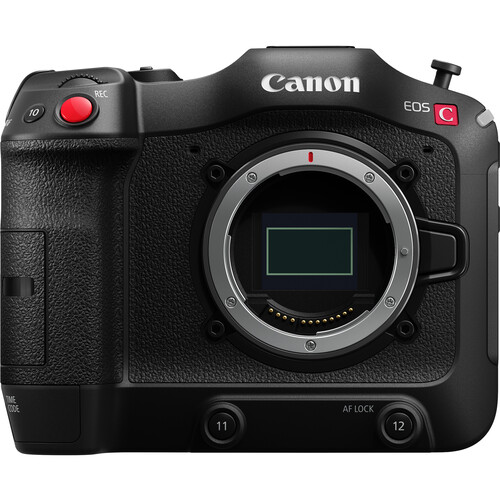
If you're already using Canon RF glass, or simply love the look of Canon color science, the Canon EOS C70 is the logical choice. It's a Super 35 sensor camera from the Cinema EOS line, meaning it shares the same color and image traits that made the C300 Mark II and C300 Mark III the default picks for many documentary and corporate shoots over the years.
The C70 features Canon's Dual Pixel CMOS AF, which has earned a strong reputation for smooth, dependable video autofocus. The face tracking is solid and it very rarely hunts in a distracting way. The body is compact for a cinema camera, though it retains a traditional camcorder-style grip that a lot of shooters actually prefer for handheld work.
One capability that the C70 has but the FX6 does not is the ability to shoot 4K in Super 35 crop mode with no restrictions. If you are working with S35 lenses, that makes a big difference. The C70 also supports internal Cinema RAW Light recording, which provides a good degree of grading latitude without the enormous file sizes associated with full RAW. Canon Log 2 and Canon Log 3 are also available for matching footage with other Canon cinema cameras.
The biggest drawback of the C70 is that it is only a Super 35 sensor camera. Therefore, you won't have the ability to take advantage of the shallow depth of field and low-light benefits provided by a full-frame sensor.
Additionally, while the RF mount provides you with access to Canon's high-quality native lenses, it's a relatively closed ecosystem compared to Sony's E-mount. If you're curious about pairing it with the right glass, check out our guide to the best Canon lenses for video.
Blackmagic Pyxis 6K: Budget Cinema Quality
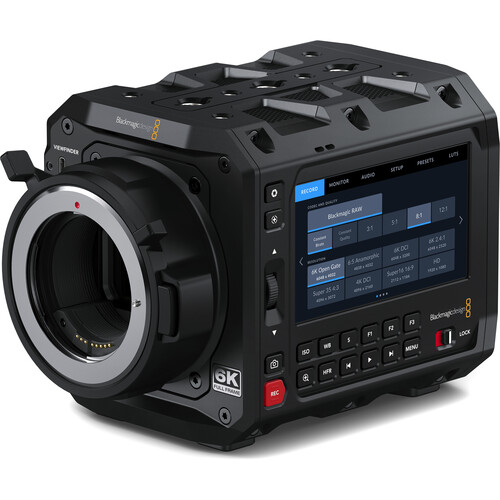
The Blackmagic Pyxis 6K is the wildcard of this group. This box-style cinema camera has a full-frame 6K sensor. It comes in three mounts (EF, L-mount, and PL). It's priced far below the FX6 or C70, making it a viable option for independent documentary filmmakers with a limited budget.
Blackmagic does internal codec recording better than anyone else. The Pyxis records Blackmagic RAW, which is one heck of a great color grading format. If you plan to heavily color grade in DaVinci Resolve (free with the camera), the round trip from capture to grade is as smooth as it can be. The Pyxis has 13 stops of dynamic range, and the 6K resolution gives you plenty of room to reframe in post while providing a very clean 4K output.
The Pyxis box style is both a blessing and a curse for documentary work. A box is great for rigging to gimbals, drones, or custom rigs. However, you will need to purchase a handle, monitor and cage to enable handheld shooting. Unfortunately, there is no built-in EVF, flip-out screen, or ND filters. The lack of ND is a problem when shooting outdoor documentary work where the lighting conditions are always changing. So budget for an external monitor if you go this route.
Autofocus is another area where the Pyxis falls behind the Sony and Canon alternatives. Blackmagic cameras have traditionally required manual focus, and even though they have improved, they still aren't on par with Sony's Eye AF or Canon's Dual Pixel system. For sit-down interviews that's totally fine, but for run-and-gun documentary shooting that requires reliable subject tracking, it can be a bottleneck. You can also find it on Amazon if you want to compare pricing.
Sony FX3A: The Compact Documentary Option
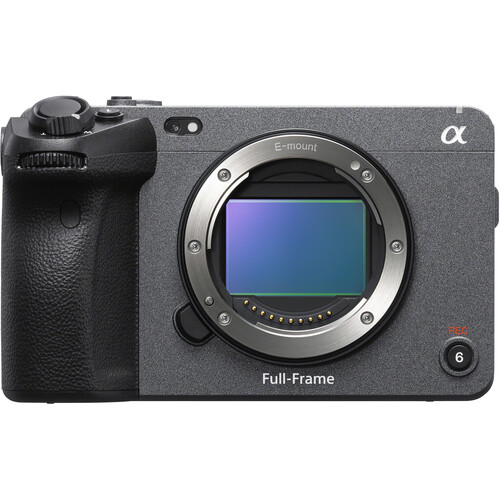
If the FX6 is too much camera for you, or simply too much money, the Sony FX3A deserves strong consideration. It has the same full-frame sensor and S-Cinetone color science as the FX6, but in a package that is even smaller and lighter. In reality, the FX3A is a mirrorless body with cinema camera features layered on top, which makes it very discreet for documentary situations where a large camera rig might draw unwanted attention.
You still get the same excellent autofocus, full-frame 4K, and S-Log3 for grading. The key differences versus the FX6 are no built-in ND filters, a single XLR input via the included handle rather than dual XLR, and no SDI output. For many solo documentary shooters, these are acceptable compromises. The FX3A uses all the same E-mount lenses, and you can always attach a variable ND filter to the front of your lens to make up for the lack of internal NDs.
The FX3A's form factor is especially handy as a B-cam beside an FX6, because the color science matches right out of the box. And for any sort of observational or undercover documentary work, a camera that looks like a regular photo camera draws considerably less attention than a full cinema rig. Check FX3A pricing at B&H.
Panasonic Lumix S5 II: The Budget Workhorse
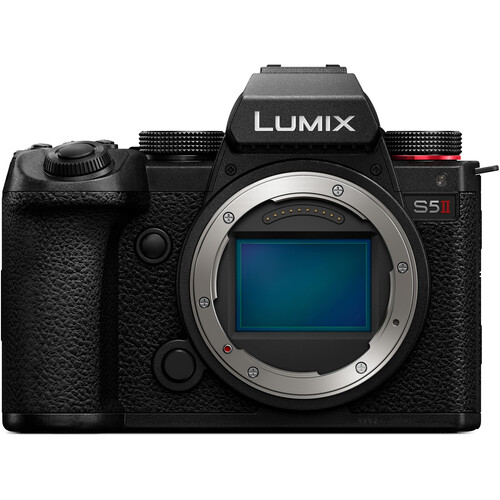
The Panasonic Lumix S5 II is not technically a cinema camera, and honestly that is part of its appeal. It's a full-frame mirrorless hybrid that performs well above what you might expect for video work.
The S5 II caused a real stir when it was released because it was the first Lumix camera to include phase-detection autofocus, which took care of the one issue that had been keeping Panasonic from being taken seriously by a lot of video professionals.
For documentary work on a budget, the S5 II is an excellent choice. You get full-frame 4K at up to 60fps, 5-axis in-body stabilization that actually works well for handheld shooting, V-Log for grading flexibility, and dual card slots. The IBIS really matters for documentary work when you can't always use a tripod or gimbal. It won't replace a properly stabilized cinema camera, but it smooths out handheld footage enough to be practical for many run-and-gun situations.
The L-mount ecosystem opens up Panasonic, Sigma, and Leica lenses. The Sigma Art lenses in L-mount offer exceptional value for video. And the body itself costs a fraction of what the FX6 or C70 will set you back, leaving more budget for lenses, audio gear, and lighting equipment.
The trade-offs include no internal ND filters, a 30-minute recording cap in certain modes, and the reality that it's fundamentally a photography camera. The menus, buttons, and ergonomics are all designed with photographers in mind, and you will notice that over the course of a long video shoot. It's also available on Amazon.
When choosing among these cameras it comes down to a few practical questions. Are you a solo operator? If so, autofocus reliability and built-in ND matter a lot more, which favors the FX6 and C70. What lenses do you already own? Canon RF shooters should go C70, Sony E-mount users stay in the Sony ecosystem, and Blackmagic's Pyxis offers EF, L, and PL options for vintage cinema glass.
Your post-production workflow matters too. DaVinci Resolve users will love Blackmagic RAW from the Pyxis, while Premiere and Final Cut editors will find Sony's XAVC and Canon's Cinema RAW Light well-supported.
And finally, think about what you're actually shooting. Interviews and controlled environments are forgiving, any camera here works. But for observational documentary work in unpredictable environments with mixed and changing light, the FX6's combination of autofocus, electronic ND, compact size, and low-light performance really separates it from the pack.
Frequently Asked Questions
What is the best camera for documentary filmmaking on a budget?
The Panasonic Lumix S5 II is currently the best value for documentary work. You get a full-frame sensor, solid autofocus, effective IBIS, and V-Log recording at a price that leaves room in the budget for lenses and audio equipment. The Blackmagic Pyxis 6K is another budget-friendly option if you value image quality and RAW recording more than autofocus and built-in convenience features. Both are available at B&H Photo.
Is the Sony FX6 worth it for documentary work?
For solo operators and small documentary crews, the FX6 is difficult to beat. The combination of electronic variable ND filters, reliable Eye AF, over 15 stops of dynamic range, and a compact full-frame body covers most of the practical challenges documentary shooters deal with on a daily basis. B&H reviewers who use the camera for documentaries regularly praise the low-light performance and the flexibility of the electronic ND system. The biggest downside is the price, which is considerably higher than mirrorless alternatives.
Cinema camera vs mirrorless for documentary filmmaking?
Cinema cameras like the Sony FX6 and Canon C70 include built-in ND filters, XLR audio inputs, SDI output, and dedicated video ergonomics. Mirrorless cameras like the S5 II or FX3A cost less and are more portable, but lack some pro video features. For serious documentary work, the built-in NDs and pro-audio connectors on a cinema camera save you from buying external accessories that add bulk and cost.
What lenses work best for documentary filmmaking?
A fast zoom lens such as a 24-70mm f/2.8 or 24-105mm f/4 will cover most all of your needs. What you want is a lens that will let you get a wide shot of an area and then narrow down to a close-up of an individual without having to change lenses. For the Sony FX6, the Sony 24-105mm f/4 G is a popular choice. For tighter interview type shots, an 85mm or 135mm prime opens up nicely. Check our guide on the best lenses for video for specific recommendations across mount systems.
Does the Sony FX6 have image stabilization?
The Sony FX6 does not have in-camera image stabilization (IBIS). Instead, it relies on the optical stabilization found in compatible lenses, and electronic stabilization that can be added in post using Sony's Catalyst software along with gyro data. When handholding a documentary camera, you'll want to use optically stabilized lenses or pair the camera with a gimbal. The Sony FX3A also lacks IBIS, while the Panasonic S5 II includes it.
What audio setup works best with a documentary camera?
The standard documentary audio setup is a shotgun mic on a boom for dialogue with a wireless lav as a backup. Both the Sony FX6 and Canon C70 have dual XLR inputs, allowing you to run two external microphones at the same time. The FX6 additionally supports 4-channel audio by combining XLR, multi-interface shoe, and built-in microphone inputs. For a full audio breakdown, see our post on audio repair in videography.