
Lighting Kit for Film: Build a Real Set Without Wasting Money
Lighting is what separates footage that looks like a film from footage that looks like a home video, and it's also where new filmmakers waste the most money. It's easy to buy a pile of cheap panels, find they're too weak to shape a scene, and start over.
Set lighting has changed a lot in the last few years. A single bright COB light with a good modifier can now do the work that used to take several fixtures, which changes what a starter kit should look like and when it makes sense to rent instead of buy.
Below is how COB lights changed the indie kit, a key light to start with, a portable second light, the step-up options, and the budget and rent-or-buy question.
A single amaran 200x S as your key light beats several weak panels, the Halo 100x covers the portable fill, and the Storm 80c kit or LS 600c Pro II class waits until paid work justifies it. Modifiers matter as much as the lights, because they change the look of every scene you shoot.
How COB Lights Changed the Indie Kit
Replacing a stack of weak LED panels with one bright point source that has a Bowens mount changes how you work, because it lets you shape the light perfectly with various modifiers.
You don't need ten different lights to light a scene, when one strong unit does all the heavy lifting. This setup relies on a key light, plus a fill and a backlight, to create a cinematic look. One source also means less cable and stand management across a shoot day.
A great key light needs high output that you can shape, a wide bi-color range to match your environment, and a fan that doesn't ruin your audio recording. The 200x S delivers that brightness, and its sturdier metal yoke holds position while you shoot. Bi-color means matching the environment without losing punch.
Building a kit today means picking a strong primary light, and then adding modifiers, stands, and enough power to keep everything running during a very long film shoot. If you skip the quality modifiers, you'll find your footage looks flat and lacks the depth you want. A single point source creates shadows that look more natural than cheap panels ever could.
Amaran 200x S: The Key Light Starter
The 200x S pushes 200W of bi-color light through a Bowens mount, controlled from the Sidus Link app with nine built-in effects, and runs on DC or AC power. It holds 4.6 stars from 47 ratings. Owners consistently praise the output: one says keeping that bright 200W while changing color temperature is exactly what matching mixed lighting on set demands.
An owner of both versions confirms the S upgrade fixed two gripes, with a sturdier more-metal yoke and a quieter internal fan than the original 200X.
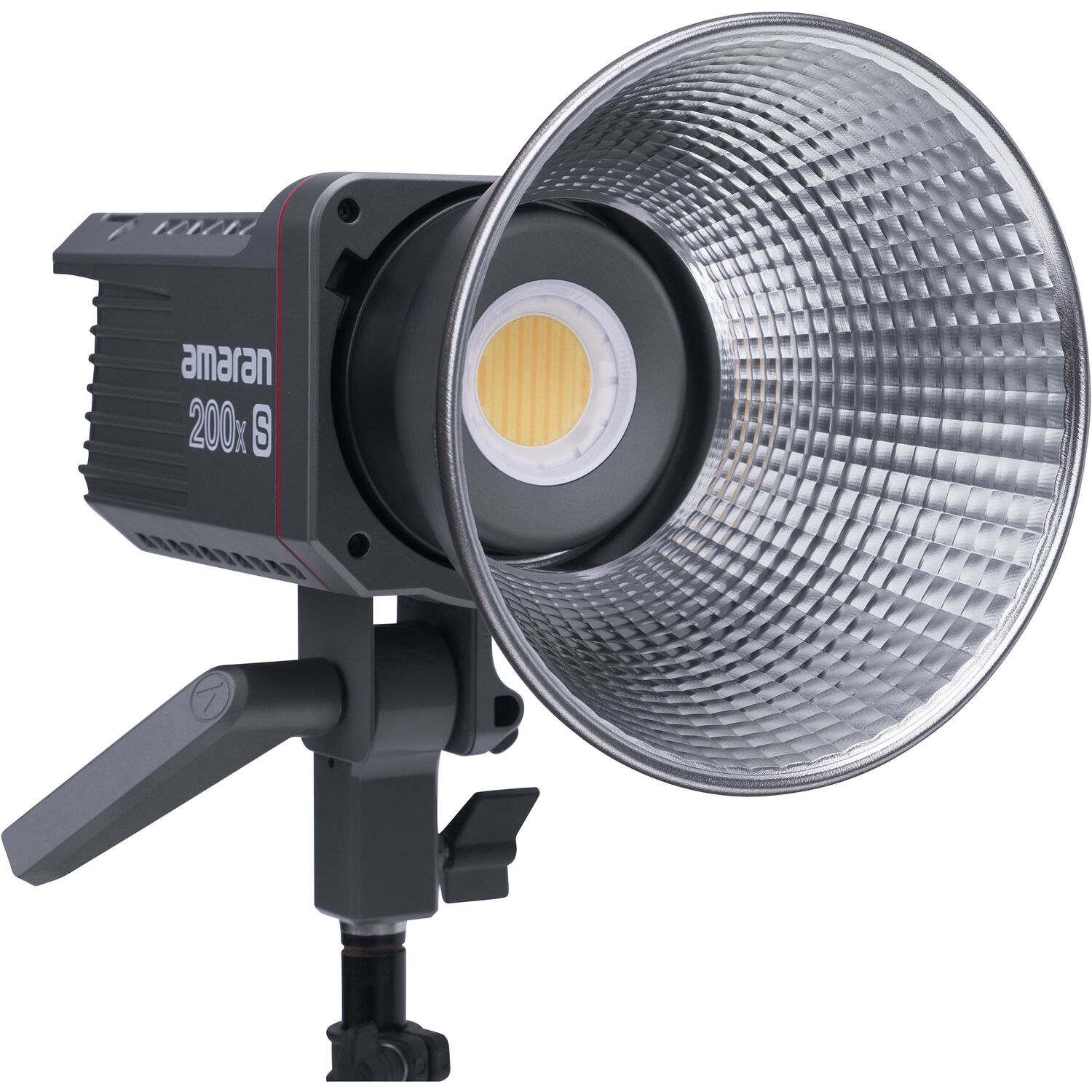
The verified complaints matter. The housing is plastic where cost cutting shows, and the tilt-lock handle needs a hard crank that begins slipping over time. Worse, one user's unit died at five months with a failed power supply, and their support emails went unanswered.
Buy it where returns are real, test the yoke and tilt lock immediately, and treat the lock gently rather than cranking it.
Amaran Halo 100x: The Portable Second Light
The amaran Halo 100x is a 100W bi-color COB light that works for those who need a portable second light without losing how well colors look or brightness on set. It includes a power block and a tilt bracket, which helps set it up quickly.
A buyer with over ten years in the industry wishes this class of light existed when they started, and pairs it with a compact stand, a V-mount battery and a softbox as a complete mobile kit. Another calls it a huge step over the 60x in punch.
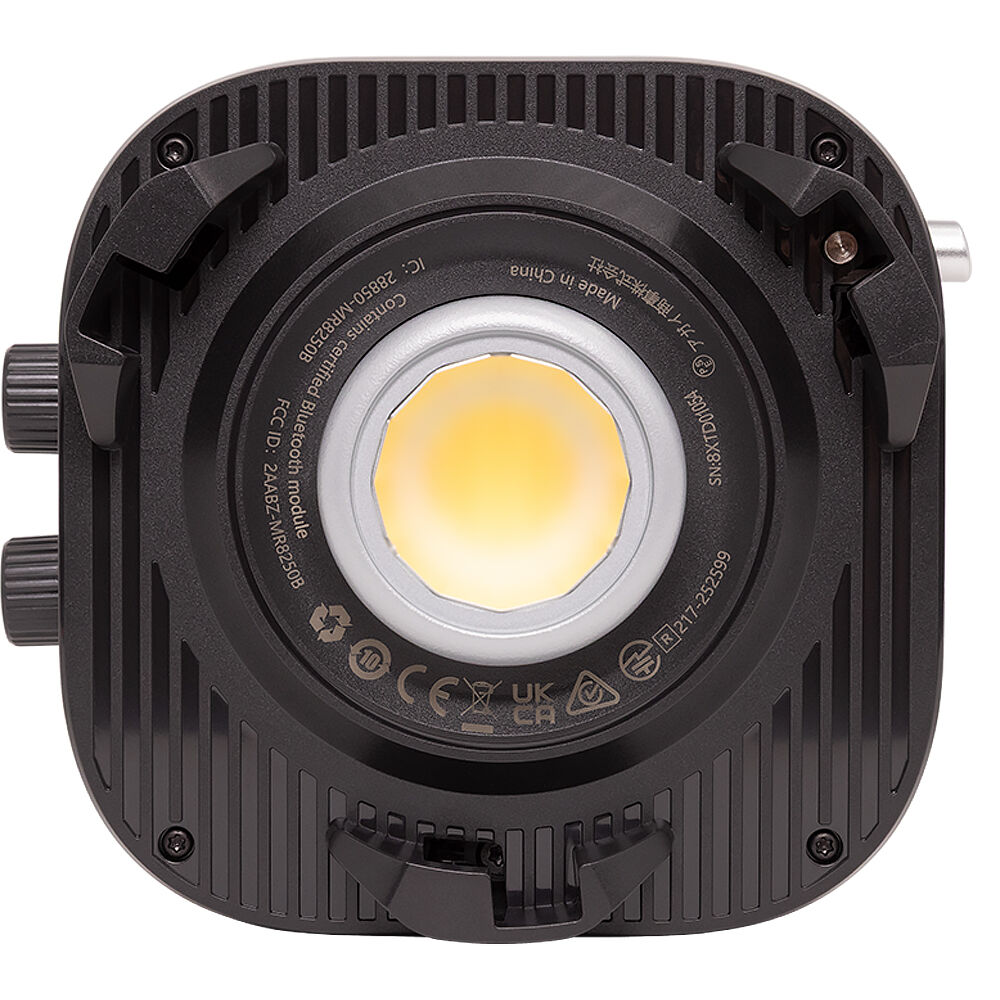
While this light is meant as a fill, it has enough punch to act as a key light if what you're doing doesn't require a large amount of power. The CRI is 96+ and the TLCI is 97+, so your skin tones look natural during the shoot. App control of color temperature makes matching your other lights quick, and the whole unit stays genuinely portable.
You should skip this gear if your main key light needs 200W to push through a heavy modifier because the 100W light won't be enough for your needs.
Using a weak light with a thick modifier results in shadows that are too thin and unflattering. It's better to stick with a stronger source than to struggle with gear that can't do the job. This light fills the gap for creators who move fast.
Stepping Up: Storm 80c Kit and the 600-Class
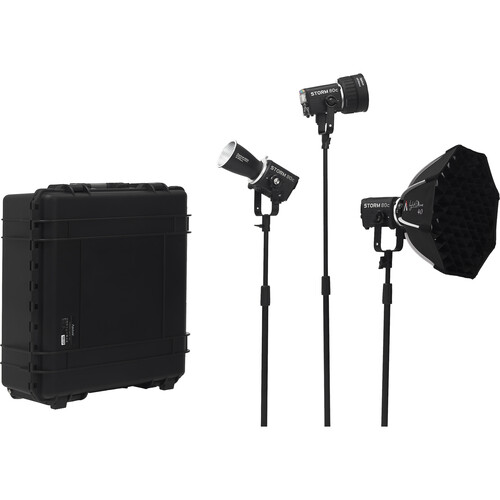
For a complete three-point setup without hunting for individual parts, the Aputure Storm 80c 3-light kit offers three heads that work together within the familiar Bowens ecosystem you know. This kit includes a lantern diffuser and a ProLock reflector, which help you shape the light for any scene.
The listing shows only one rating so far, too new for meaningful owner data, so judge it on contents: three 80c heads, mount protection covers, a lantern diffuser, a ProLock Hyper Reflector, and a wheeled case that moves the whole rig between locations.
When you move into paid work that demands full-frame output, the Aputure LS 600c Pro II provides a professional-grade RGB monolight that can handle these high-end tasks. This light features 15 effects, which allows you to change the vibe quickly without needing extra gear. It uses V-mount power, meaning you can run it off batteries when you're far from an outlet. Rent it first.
Buying high-end gear is a huge cost for any budget, so you'd rent the 600-class lights before you decide to own one for yourself.
Aputure's Storm 80c line anchors the ready-kit option for buyers who want one purchase instead of a shopping list. You can scale gear as what you do grows, while keeping costs low for now. Choose deliberately and the kit grows with your projects.
You need to realize that modifiers change the look more than adding another light, because a lantern creates a mood while a softbox works for interviews and a reflector adds real punch.
A softbox smooths skin for interview work, and a lantern fills a whole room when the scene needs natural ambience. Between those and a reflector for punch, one COB covers looks that used to need a truck of panels.
Power splits two ways: DC or AC outlets at home, V-mount batteries on location. You should plan your batteries per setup so you don't run out of juice mid-scene. Using a V-mount lets you move freely, though it costs more than a simple wall plug.
COB fans can be quite audible on quiet sets, but the 200x S has an improved fan that helps when you record dialogue right next to the gear. Position the light away from the mics so the audio stays clean.
Budget, Rent vs Buy
When you're building a kit, you should focus your money on a strong key light like the amaran 200x S first, then invest in modifiers and stands because they shape the final look.
A softbox, or a dome, changes the image more than adding another cheap light ever will. You don't need a large rig, if you have one bright source and tools to control it. It's better to have one great light than three weak ones that don't match each other.
After your main setup is set, look for a portable second light like the Halo 100x and a V-mount battery so you can move around without being tethered to a wall. This small light works as a fill, or even a key, when you're shooting on the run. A spare battery keeps the mobile kit alive away from outlets.
You should buy the 100W to 200W COBs that you use every week, but it makes sense to rent the Aputure LS 600c Pro II for big one-off jobs. High-end gear costs a lot, so renting saves you from spending on tools rarely used. Mixing brands is fine, as long as they use the Bowens mount for all modifiers.
Frequently Asked Questions
What is a basic film lighting starter kit?
A basic setup requires one strong COB key light, a reflector or softbox, and a stand, while a bounce board helps fill in the shadows. This combination shapes light effectively without spending your entire budget on unnecessary gear.
Should I buy bi-color or daylight only lights?
Bi-color units are great for mixed locations and fast turnarounds because they match environments, whereas daylight-only fixtures squeeze more output from every watt. Choose bi-color for unpredictable locations that demand fast matches.
How many lights do I need for a short film?
You generally need three lights for key, fill, and backlight for narrative work, though two lights plus a bounce covers most indie scenes effectively.
Are cheap LED panels worth the investment?
Cheap LED panels suit fill and small spaces, but COB lights beat them for the quality of shaping the light source. Stick with COB units when shadow and highlight control matters.
Can I use different brands of lighting equipment together?
You can mix brands since most fixtures use Bowens mounts, but app ecosystems differ between manufacturers, so expect separate apps.
Is the amaran 200x S suitable for outdoor shooting?
Yes, on AC power or a V-mount battery, but 200W fights the midday sun. Shoot in shade, wait for golden hour, or add ND to the lens. The light wins indoors and after dusk.