
Quick Release Camera Straps: Slide, Leash, Anchor Links and BlackRapid
A camera strap seems like the least interesting thing in the bag, until it gets in the way. It snags on a gimbal, tangles on a tripod, or has to come off every time the camera goes on a plate, and a strap that's a pain to remove usually ends up staying on when it shouldn't.
Quick-release straps fix that by clipping on and off in seconds, and the good systems let one strap move between bodies. The questions are how much you trust a small clip with an expensive camera, how the strap carries over a long day, and whether it plays nicely with your tripod plate.
Below is what quick release actually means, an all-rounder, a minimalist strap, and the anchor system and sling alternatives.
The Peak Design Slide remains the versatile all-rounder with a 4.8 rating across 7425 entries, while the Leash serves minimalists needing a pocket-sized option and the BlackRapid Sport Breathe offers sling carry. Anchor Links sold standalone let you swap one strap across every body you own, which changes the math if you shoot multiple bodies.
What Quick Release Actually Means
Most straps use an old-school tripod plate that screws on tight, but modern systems use clever anchors or carabiners to let you click your gear into place without fumbling with tiny bolts. This helps when you need to move from a handheld shot to a tripod quickly because every second counts during a shoot.
The lock keeps the camera steady while you work, which removes the low-grade worry that a bump sends your expensive glass to the floor - every shooter who has watched a strap slip off a shoulder knows that sound.
Using a unified system means you can swap one strap across different camera bodies easily, which saves money since you don't need a new strap for every single setup.
The click takes a second. Clip the camera off to mount it on a rig or tripod, then back again without re-threading anything, and the swap never touches your settings or your strap position. This makes your work feel much smoother, since you aren't fighting with your gear throughout the long day.
Peak Design Slide: The All-Rounder
This strap holds a 4.8 rating from over seven thousand reviews, and the recurring 5-star line is some variation of 'can't find anything bad to mention'. One buyer has noted that most straps cut into their shoulder after a few hours, but this design finally solved that problem. The wide design carries a heavy telephoto zoom on a full-size DSLR without the neck strain that narrower straps cause.
A veteran photographer with seventy years of experience says this piece is among the best-engineered photography accessories he has ever come across in his long life of shooting photos.
The metal locking clamps are very easy to use on the fly, so you can move your gear around fast when needed. You can configure it to be a sling, neck, or shoulder strap, depending on how you work each day. Whichever mode you pick, the camera rides where your hand can grab it.
The verified complaint list is short: one reviewer mentions a minor quibble with the adhesive on one component and calls the price hefty - and that is the strongest criticism 7,425 ratings surfaced.
Even with that gripe, the build justifies the spend for daily shooters, and the quick-release anchors let you swap the strap between different camera bodies across a multi-body kit. At this sample size the failure stories simply are not there.
Peak Design Leash: The Minimalist's Strap
The Leash works for people who want a light setup while they travel, because it fits right in a pocket when you don't need to carry the gear around.
You can wear it as a neck strap, a sling, or a shoulder strap, which covers documentary days, travel days, and the walk to set without swapping hardware. It runs thinner and roughly half the width of the Slide, which is the point for run-and-gun work where every ounce shows up by hour six - and where a strap that packs into a jacket pocket earns its spot in a travel bag.
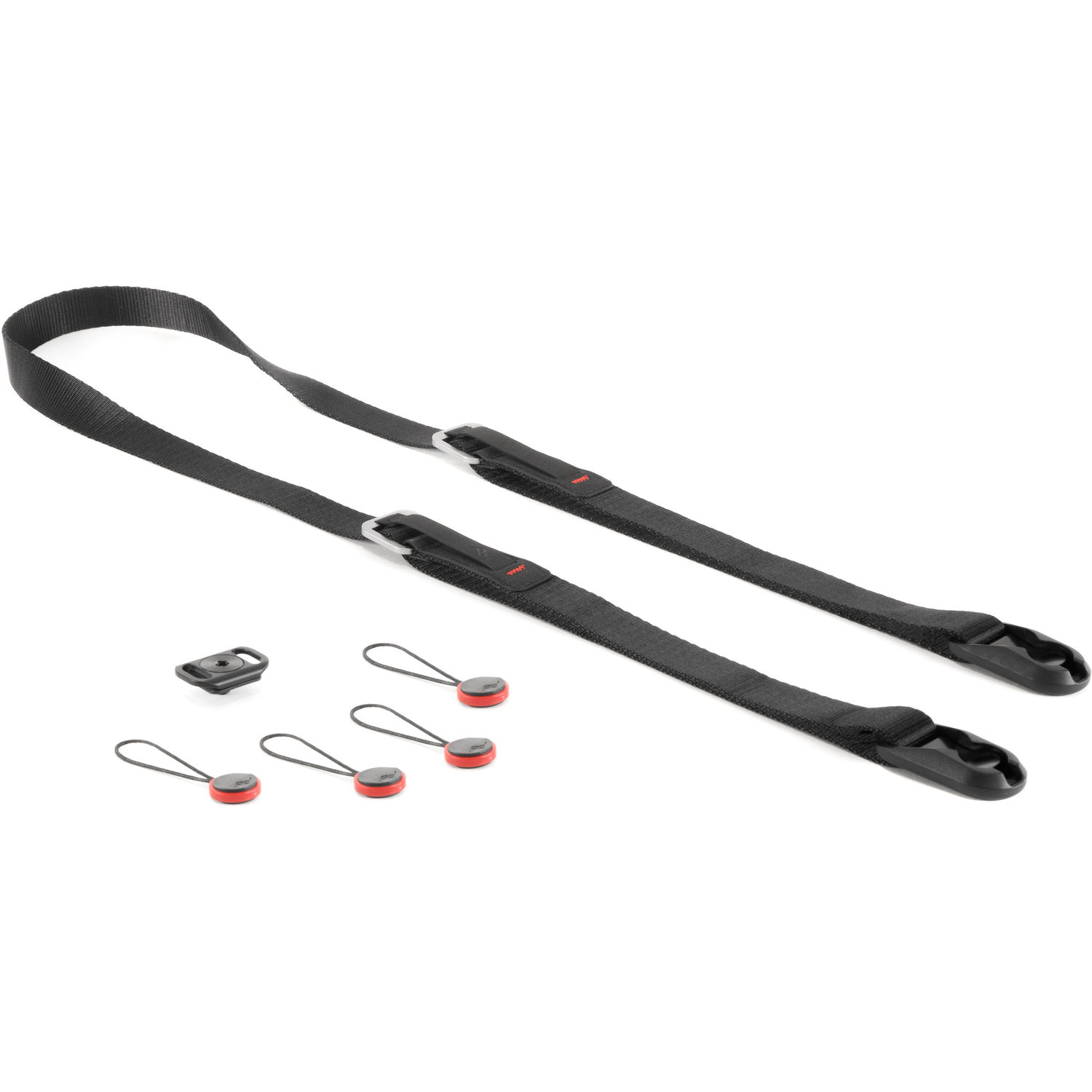
The Leash holds a 4.7 rating across roughly seven thousand ratings of its own - close behind the Slide with far less material. The quick release part lets you clip the camera fast, so the gap between seeing a moment and shooting it shrinks to a second.
For run-and-gun video, that gap is the difference between the shot and a story about the one that got away. It costs mid-range money, but the safety tether adds a layer of protection without adding any extra bulk. Pack it in a jacket pocket, clip it on at the location, and the travel math works.
Anchor Links and the Sling Alternative
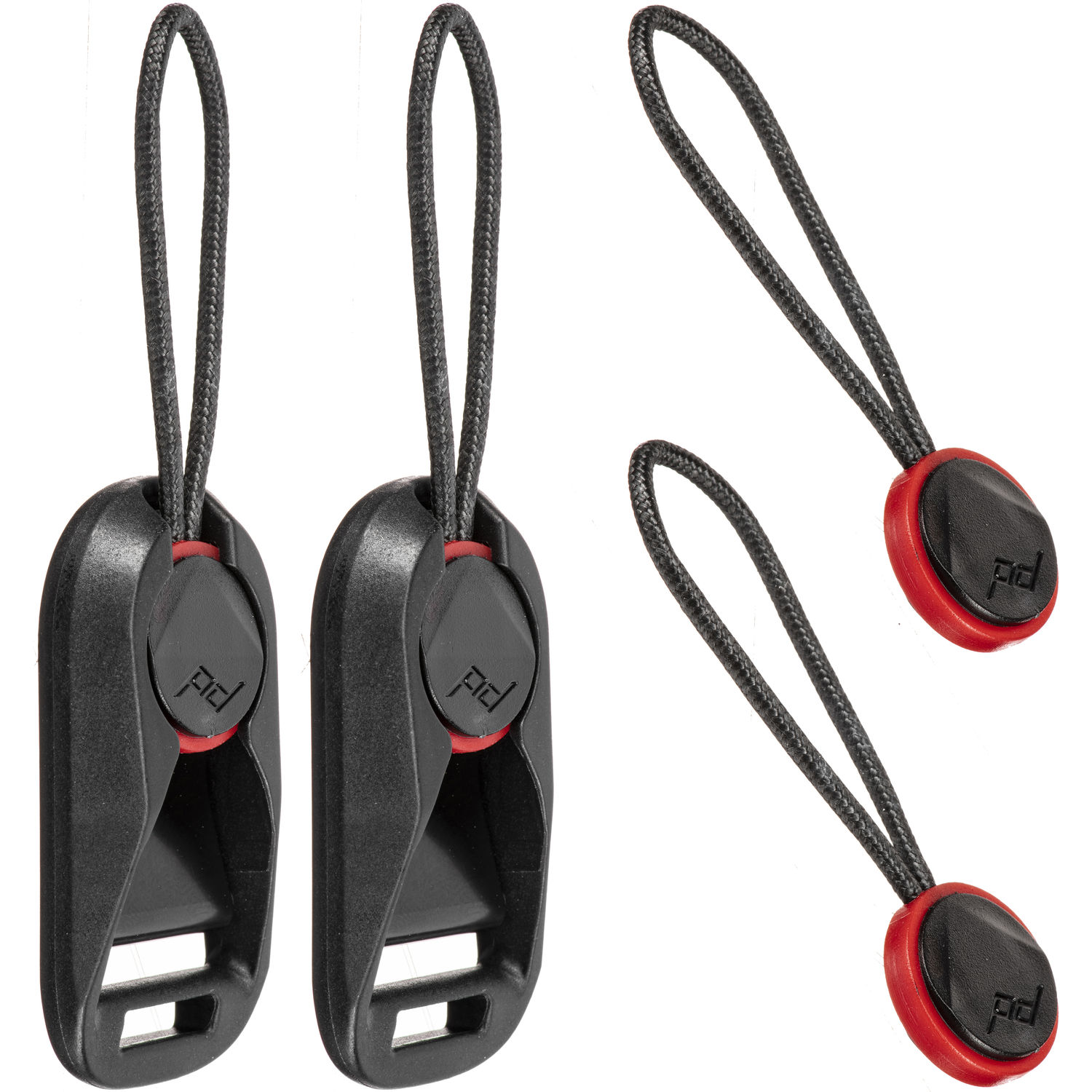
One strap for several bodies is the Anchor Links pitch: buy standalone anchor links, move your favorite strap across every rig, and skip buying new clips per camera. These anchors feature a red layer that shows when it's time to replace the part - Peak Design rates each anchor well above the weight of any mirrorless body plus a telephoto, but the cord is a consumable and the color coding makes the inspection take two seconds.
One strap plus a set of anchors per body costs less than a strap per body, and swapping takes seconds.
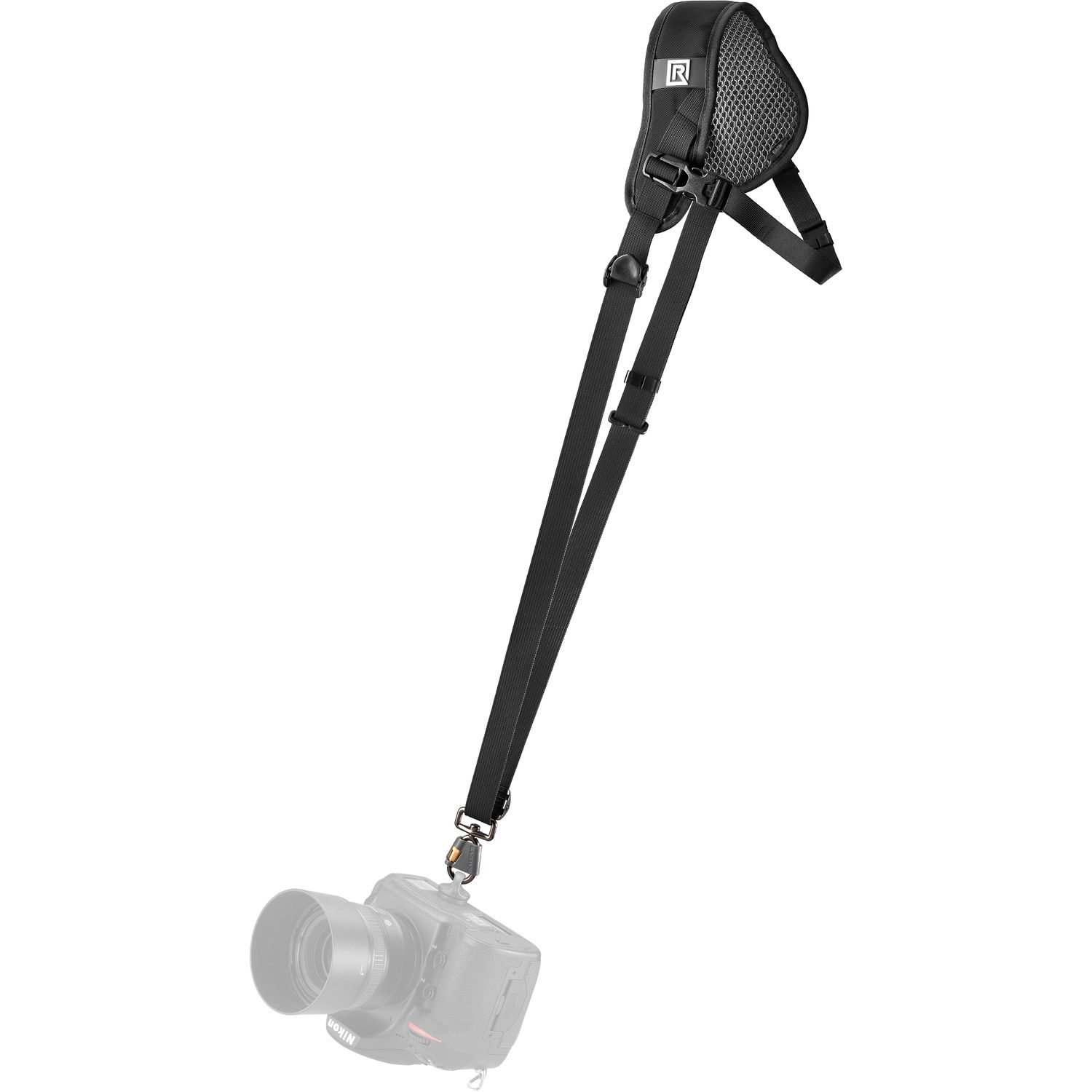
The BlackRapid Sport Breathe takes a different approach: a sling that runs across the body with an underarm stabilizer keeping it planted.
It attaches to the tripod socket, which moves the weight off your neck and onto your torso - a real difference with a body plus long lens hanging for six hours. It suits shooters who want the camera at the hip, ready to draw. You'll find that it keeps the camera steady, better than a neck strap.
With a rigged cinema camera, skip strap hardware entirely, because those small clips are rated for mirrorless weight, not a loaded body with rods, a matte box and a wireless kit bolted on. Large setups need dedicated mounting hardware, which stays locked tight during long days of filming. Match the hardware to the weight class or you risk both the camera and your back.
Frequently Asked Questions
Are quick release anchors safe?
These anchors are rated for far above the weight of your camera, but you should always check the red layer for any signs of wear. If the red shows through, it's time to replace the part immediately to keep your gear safe. Inspect the anchors the way you check your tires - fast, often, and before the expensive part is at risk.
Can I use the strap with my tripod?
The Anchor Mount plate works perfectly with standard 1/4-20 sockets, so you can move between your strap and tripod without any trouble. It makes switching between handheld and tripod work faster in the field, where the tripod plate already lives on the body. One plate serves the strap and the tripod head.
Can I use one strap for multiple cameras?
You can use one strap across different bodies if you buy extra anchors for each camera. This setup lets you swap equipment quickly during a busy shoot. Buy anchors, not straps.
Are wrist straps good for telephoto lenses?
Wrist straps are fine for light bodies, but they concentrate the whole load on one joint, which is exactly wrong for a heavy telephoto. A full strap spreads the load across the shoulders and back, which is what long glass needs on a shoot day that runs past sunset.
Do these straps work for cinema cameras?
Professional cinema cameras usually use rods or rig handles instead of standard quick release straps because the weight is so significant. Those specialized mounts provide the stability that no strap can, and the weight class makes that a physics answer, not a preference.